Trace analysis of volatile organic compounds in wastewater according to US EPA Method 624.1

16 Aug 2024

Thermo Fisher Scientific demonstrates an analytical method that meets the requirements outlined in US EPA Method 624.1 for the quantitation of volatile organic compounds (VOCs) in wastewater, using the Teledyne LABS Tekmar Lumin Purge and Trap (P&T) concentrator paired with the AQUATek LVA autosampler system along with a Thermo Scientific™ ISQ™ 7610 mass spectrometry (MS) system coupled with a Thermo Scientific™ TRACE™ 1610 gas chromatograph (GC) and Thermo Scientific™ Chromeleon™ Chromatography Data System (CDS). Learn about method linearity, detection limits, precision, and calibration checks essential for accurate VOC detection and quantitation in wastewater.

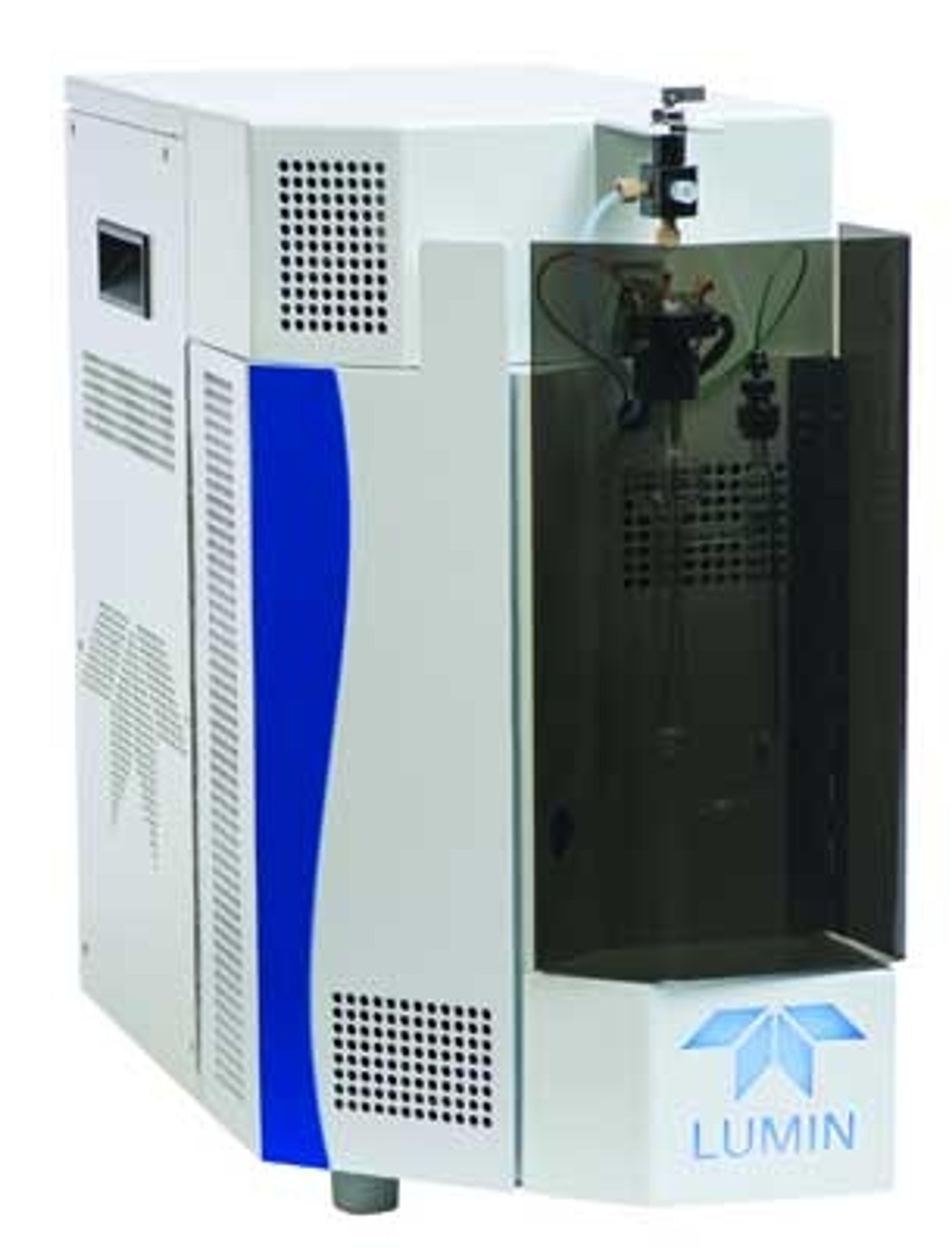
Lumin Purge and Trap Concentrator

Teledyne Labs

Tekmar's Lumin Purge and Trap Concentrator (PTC) is a sample preparation instrument used to remove Volatile Organic Compounds (VOCs) out of aqueous and solid sample types using Helium or Nitrogen. The VOCs are deposited onto a sorbent trap which is then heated to release the VOCs into a Gas Chromatograph (GC) system. This technique is standard for many EPA Methodologies as well as analytical options where concentration of VOCs is required. Tekmar has been the leader in this technology since its first PTC was released in the 1980s. Tekmar has continued to improve on this technique through eight generations of systems including the Lumin PTC to meet the ever increasing analytical challenges faced by laboratories.
(0)

Links

Tags

Mass SpectrometryMass spectrometry (MS) is a powerful analytical technique used to identify and quantify molecules based on the mass-to-charge ratio of gas-phase ions. It provides detailed information about the structure, composition, and properties of compounds and is widely used across fields such as environmental monitoring, materials science, drug discovery and development, food and beverage testing, and wider chemical research. Key MS techniques include tandem mass spectrometry (MS/MS), liquid chromatography–mass spectrometry (LS-MS) and inductively coupled plasma (ICP-MS). Choosing from these wide range of techniques and technologies can be a daunting task, so keep up to date with scientific applications, performance expectations, and customer reviews here all in one place. Visit our product directory to receive quotes direct from the manufacturer. GC-MS GC-MS (gas chromatography-mass spectrometry) instruments and equipment are used to separate, quantify and identify mixtures of small and volatile compounds, such as polycyclic aromatics, fatty acids and alcohols. Often used in drug detection, forensic investigation and environmental analysis for pesticides and contaminants, GC-MS is a powerful addition to your lab’s analytical capabilities. GC-MS/MS instruments equipped with a qTOF or triple quadrupole analyzers can give greater sensitivity and resolution to your analysis. Find the best GC-MS instruments and equipment in our peer-reviewed product directory: compare products, check customer reviews and receive pricing direct from manufacturers.Environmental AnalysisEnvironmental analysis describes a variety of tests that determine the effect of chemicals, processes and particulates such as persistent organic pollutants (POPs) have on the environment.Water AnalysisAnalytical methods used to test the purity of drinking water include determining the level of contaminants abides to the level set by the Environmental Protection Agency (EPA).
Trace analysis of volatile organic compounds in wastewater according to US EPA Method 624.1