
ResourceMaterials
Top Tips for Avoiding Particle Sizing Failures in your Laser Diffraction Method
24 May 2017Particle size defines the performance of a wide range of different products, meaning measuring relevant particle size data is therefore essential in many industries. This whitepaper provides helpful tips on how to develop an efficient, robust method that will deliver reliable and reproducible data. It covers effective sampling, sample preparation, pressure titration and measurement optimization, in addition to giving troubleshooting advice and tools.
Related products
Request Quote for All Products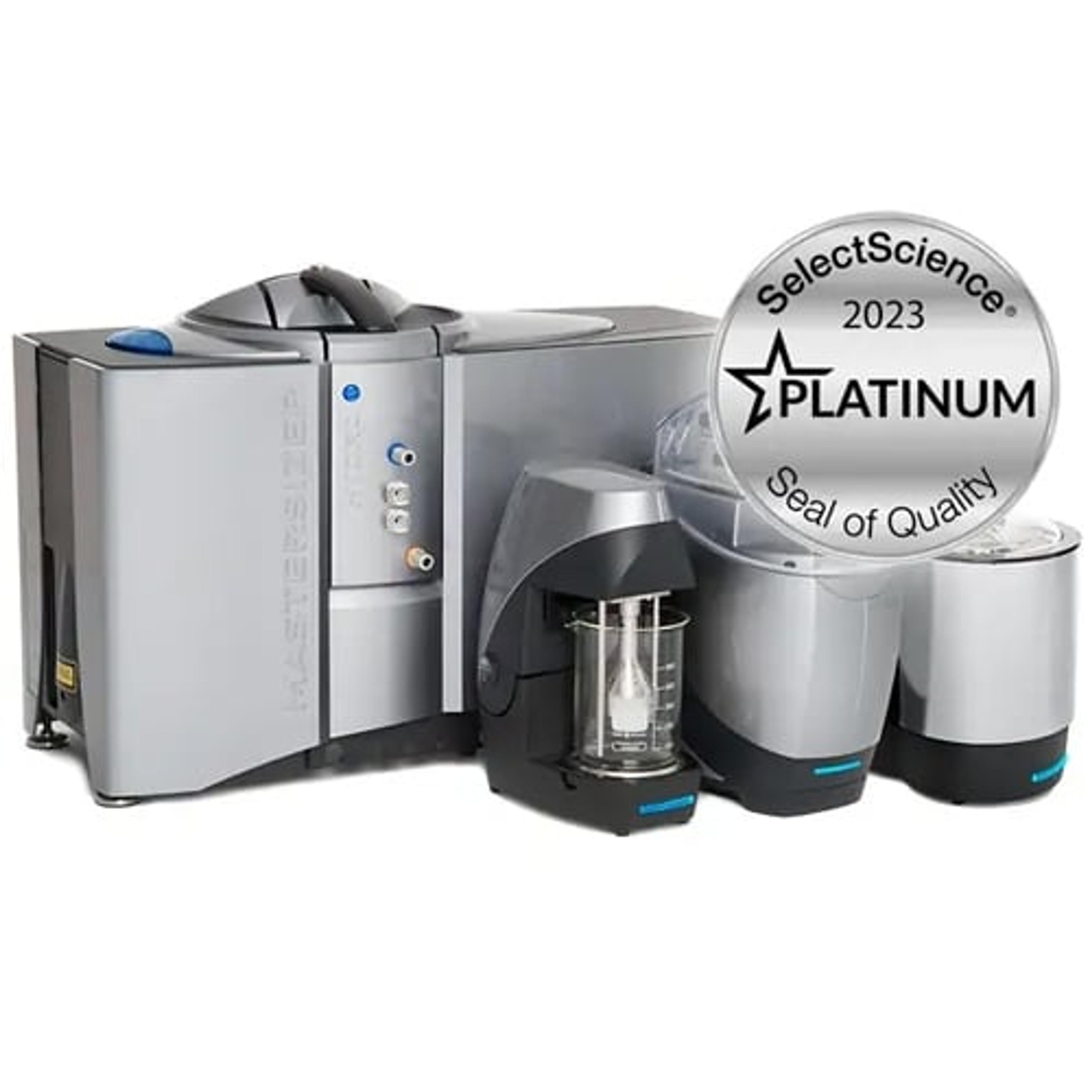
Mastersizer 3000
Malvern PanalyticalWorld’s most widely used particle size analyzers, the smartest way to measure particle size. There is a newer version of this product avilable, the Mastersizer 3000+ Ultra.
Links
Tags
Particle CharacterizationParticle characterization instruments are used to determine particle size distribution, shape, surface area, zeta potential, density and porosity of particles and materials. Multiple tecchniques are available for determining particle size, shape and count including dynamic light scattering (DLS), laser diffraction, electrozone (Coulter technique), imaging particle analysis and single particle optical sensing. Determine the density of your material with a gas pycnometer or examine its surface area and porosity with gas adsorption analyzers and mercury porosimeters. Find the best particle characterization instruments in our peer-reviewed product directory: compare products, check customer reviews and receive pricing direct from manufacturers.Software PlatformsSoftware platforms are useful for various stages of laboratory experiments from data collection to data storage and processing. For instance lab software is available for system control, data management, data analysis and qualification / validation.Particle Size AnalysisParticle size analysis describes the size distributions from sub-nanometer to millimeter of particulate samples. Size is an important physical property and the technique is often utilized in a range of industries, such as chemical, environmental and agriculture.Sample Preparation