The flexibility of stirred-tank bioreactors

29 Jan 2020

This executive summary explores the parameters that must be controlled for the most effective use of a stirred-tank bioreactor and describes a case study of an hiPSC-based drug-screening platform to identify modulators of cardiac hypertrophy.

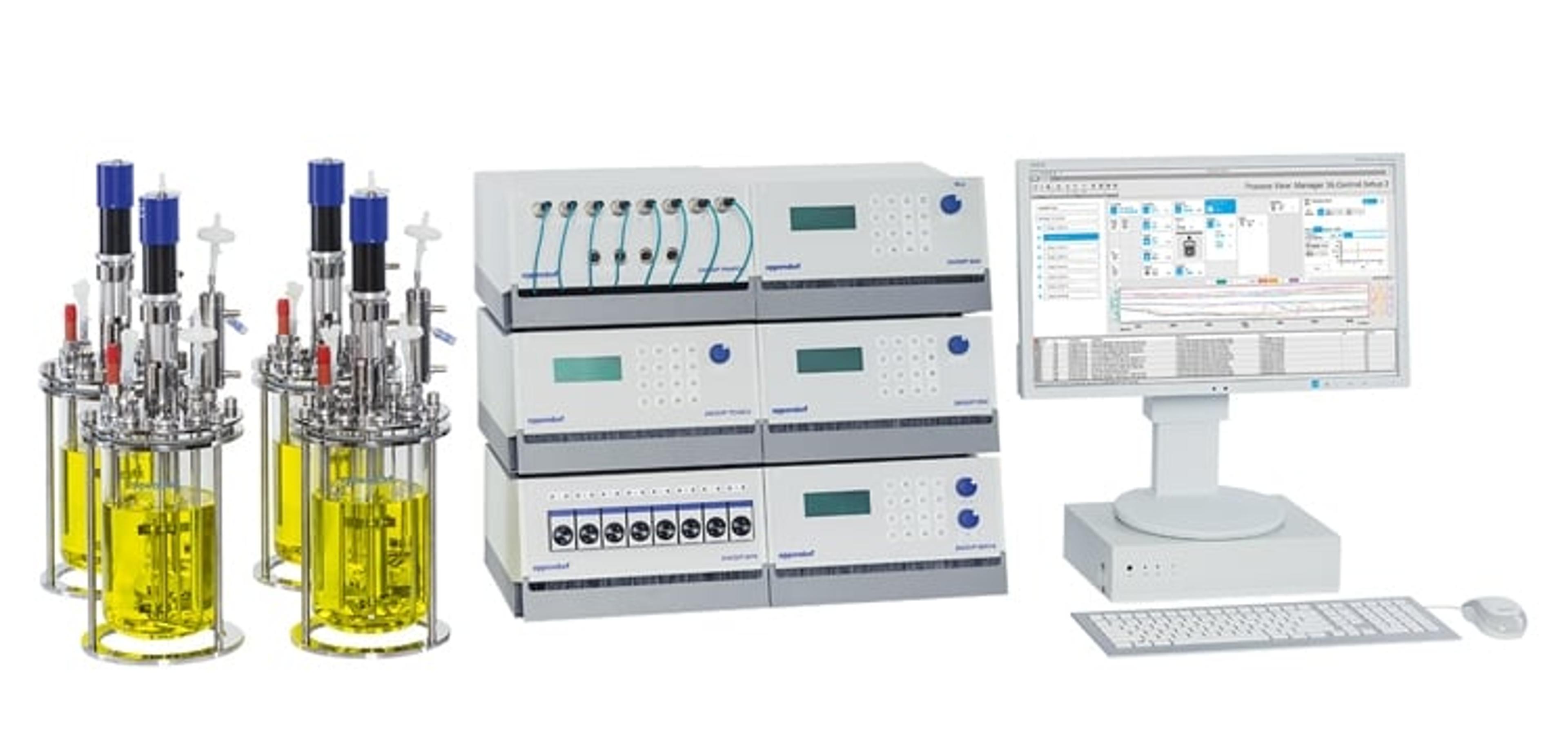
Eppendorf DASGIP® Parallel Bioreactor System

Eppendorf

DASGIP Parallel Bioreactor Systems for R&D and process development in both cell culture and microbiology allow for advanced bioprocess control and automation. Parallel processing, precise control of all relevant parameters, user-defined profiles and innumerable automation features result in accelerated and highly efficient process development. Our DASware software solutions support DoE, process historians and comprehensive data management. Configurable solutions address the unique requirements of microbial, phototrophic, mammalian and human cells, stem cell applications, as well as biofuel and biopolymer processes.   Eppendorf DASGIP® Parallel Bioreactor System Features: Advanced process control and parallel operation of up to 16 glass or single-use bioreactors; DASGIP Bioblock for advanced and user-friendly temperature control; Modular design of control units allows for flexible system configurations that meet the demands of specific applications; Control of agitation, pH, level and DO (including customizable cascade modes) in each bioreactor; Variable speed pumps for accurate liquid addition and operation in batch, fed-batch, continuous and cyclic perfusion mode; Optical absorbance measurement for online calculation of e.g. OD600 or cell dry weight; TMFC individual gas mixing of air, N2, O2 and CO2; Online calculation of OTR, CTR and RQ; DASware control Software for advanced process control; Compatible with DASware Software Suite for interconnectivity and bioprocess information management. Applications: Research and development in cell culture and microbiology as well as phototrophic applications; Lab scale fermentation of aerobe and anaerobe bacteria, yeasts and fungi; Cultivation of mammalian, insect and human cell lines; Special applications such as stem cell culture or biofuel/biopolymer development.

(2)

Links

Tags

Cell Lines Stem Cells and Primary CellsPrimary cell cultures, established cell lines and stem cells are vital for <i>in vitro</i> and <i>ex vivo</i> experimentation. High-quality cells, optimized for your applications, alongside optimized cell substrates, growth medium and supplements, are critical for experimental success. Explore a range of cells suitable for your applications, including isogenic cell lines, competent cells, induced pluripotent stem cell (iPSC)-derived cell lines, fungal/bacterial/mammalian cell lines, stem cells and cancer cell lines. Find the best cells for your research in our peer-reviewed product directory: compare products, check customer reviews and receive pricing direct from manufacturers.Bioprocessing / FermentationBioprocessing is the use of biological materials to perform commercial, scientific or medical research processes. Biological materials used include cells, enzymes and organisms. Usually bioprocessing requires a batch or continuous bioreactor such as a fermentor or cell culture system. The advantages of using a reactor include high productivity, easy configuration, adjustable values and automation.Cell / Tissue CultureCell culture or tissue culture is used to study the biology of cells or tissues and to isolate cellular products in an environment which can be manipulated and well defined. Accurately control your culture environment with bioreactors or culture incubators, bind your cells to a surface or together with an extracellular matrix. Distinguish cell types with differential media or proliferate cells with certain characteristics using selective media. Enrich your media with supplements such as growth factors, sera and vitamins. Find the best cell and tissue culture products, kits and equipment in our peer-reviewed product directory: compare products, check customer reviews and receive pricing direct from manufacturers.BioreactorStem Cell ResearchStem cells have the ability to produce identical daughter cells as well as progeny, which commit and differentiate. Stem cell research has exciting prospects of biomedical applications in cellular disease modeling, pharmaceutical screening, and regenerative medicine. Drug DevelopmentDrug development refers to the process of bringing a new drug to market.