
Sulfur Analysis in Crude Oil and High-Sulfur Fuels by WDXRF According to ASTM D2622-10
7 Dec 2012Sulfur compounds in petroleum cause various harmful influences such as air pollution, metal corrosion and catalyst degradation. Therefore, sulfur concentration of crude oil and high-sulfur fuels is monitored or controlled in refinery and production processes in the petroleum industry. This application note demonstrates quantitative analysis of high concentration sulfur in crude oil, high-sulfur diesel fuel and residual fuel oil according to ASTM D2622-10 on Rigaku ZSX Primus, a wavelength dispersive X-ray fluorescence (WDXRF) spectrometer.
Related products
Request Quote for All Products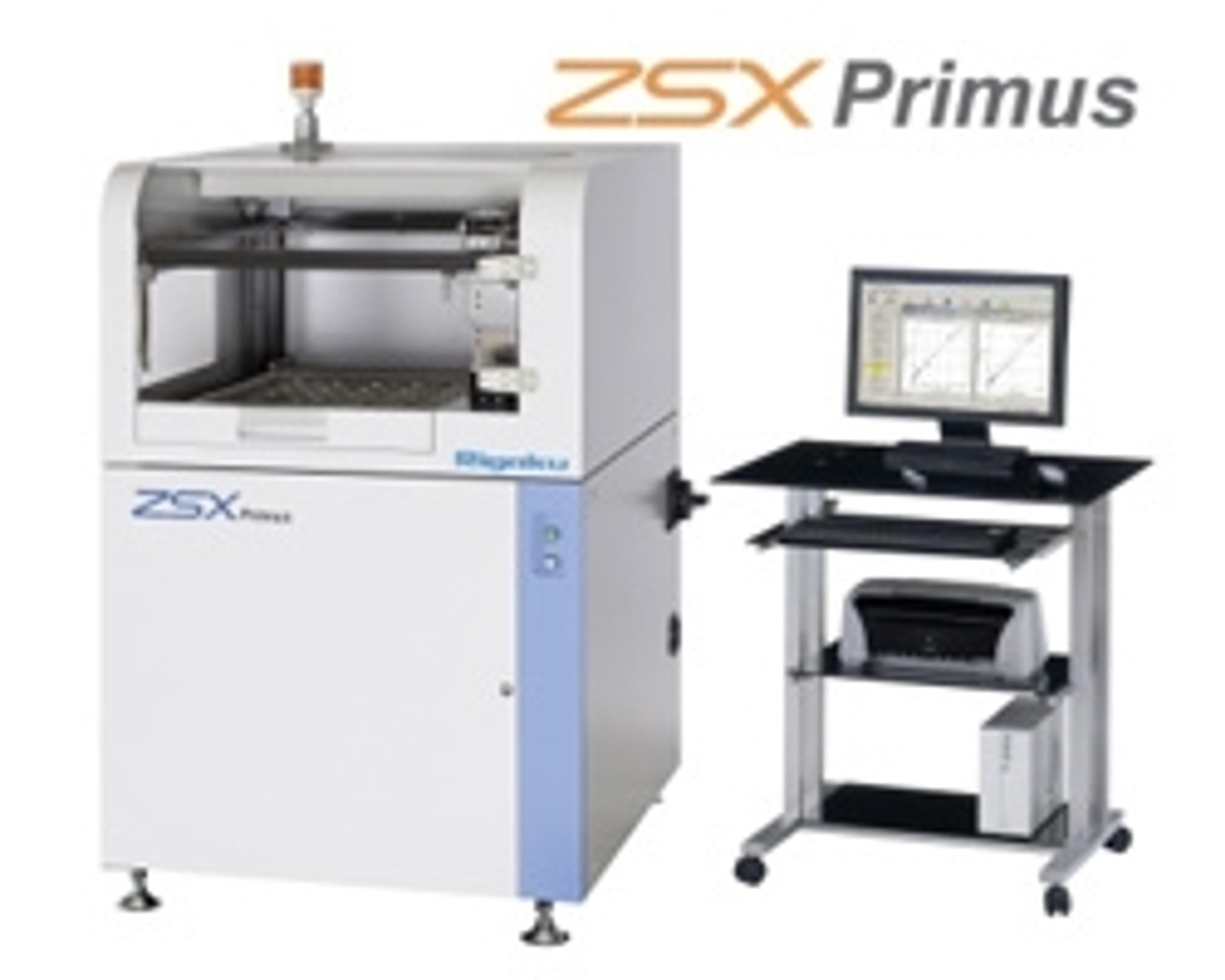
ZSX Primus
Rigaku CorporationRigaku ZSX Primus delivers rapid quantitative determination of major and minor atomic elements, from beryllium (Be) through uranium (U), in a wide variety of sample types — with minimal standards. The latest instrument in Rigaku's ZSX series, the ZSX Primus continues the tradition of delivering accurate results in a timely and seamless manner, with unsurpassed reliability, flexibility, and ease of use to meet any challenges in today's laboratory.Providing superior performance with the flexibility for analyzing the most complex samples, the ZSX Primus features a 30 micron tube, the thinnest end-window tube available in the industry, for exceptional light element (low-Z) detection limits.EZ-scan allows users to analyze unknown samples without any prior setup. This time saving feature requires only a few clicks of the mouse and a sample name to be entered. Combined with SQX fundamental parameters software, it provides the most accurate and rapid XRF results possible. SQX is capable of automatically correcting for all matrix effects, including line overlaps.ZSX Primus Features: Analysis of elements from Be to U Small footprint uses less valuable lab space Micro analysis to analyze samples as small as 500 μm Tube-below design is optimized for liquids and loose powders 30μ tube delivers superior light element performance Mapping feature for elemental topography/distribution Helium seal means the optics are always under vacuum

ZSX Primus II
Rigaku CorporationRigaku ZSX Primus II delivers rapid quantitative determination of major and minor atomic elements, from beryllium (Be) through uranium (U), in a wide variety of sample types — with minimal standards. ZSX Primus II features an innovative optics-above configuration. Never again worry about a contaminated beam path or down time due to sample chamber maintenance. The optics-above geometry eliminates cleaning worries and increases up time.Providing superior performance with the flexibility for analyzing the most complex samples, the ZSX Primus II features a 30 micron tube, the thinnest end-window tube available in the industry, for exceptional light element (low-Z) detection limits. Combined with the most advanced mapping package to detect homogeneity and inclusions, the ZSX Primus II allows easy detailed investigation of samples that provide analytical insights not easily obtained by other analytical methodologies. Available multi-spot analysis also helps to eliminate sampling errors in inhomogeneous materials.EZ-scan allows users to analyze unknown samples without any prior setup. This time saving feature requires only a few clicks of the mouse and a sample name to be entered.ZSX Primus II Features Analysis of elements from Be to U Tube above optics minimizes contamination issues Small footprint uses less valuable lab space Micro analysis to analyze samples as small as 500 µm 30μ tube delivers superior light element performance Mapping feature for elemental topography/distribution Helium seal means the optics are always under vacuum