ResourceMaterials

Structural Characterization of a Mesoporous Material

Structural Characterization of a Mesoporous Material

10 Nov 2015

Porous materials can have an enormous internal surface. They are used as catalysts, as molecular sieves, as adsorbents and in many more applications. Their ability to selectively adsorb molecules of certain size and shape is closely related to their internal pore size and geometry. SAXS is an ideal tool for the characterization of the structure and the pore size of such materials, i.e. the particle diameter D, the mean pore diameter d as well as the typical distance between the pores R can be determined. In this application note, a mesoporous material was studied with the SAXSpace system.

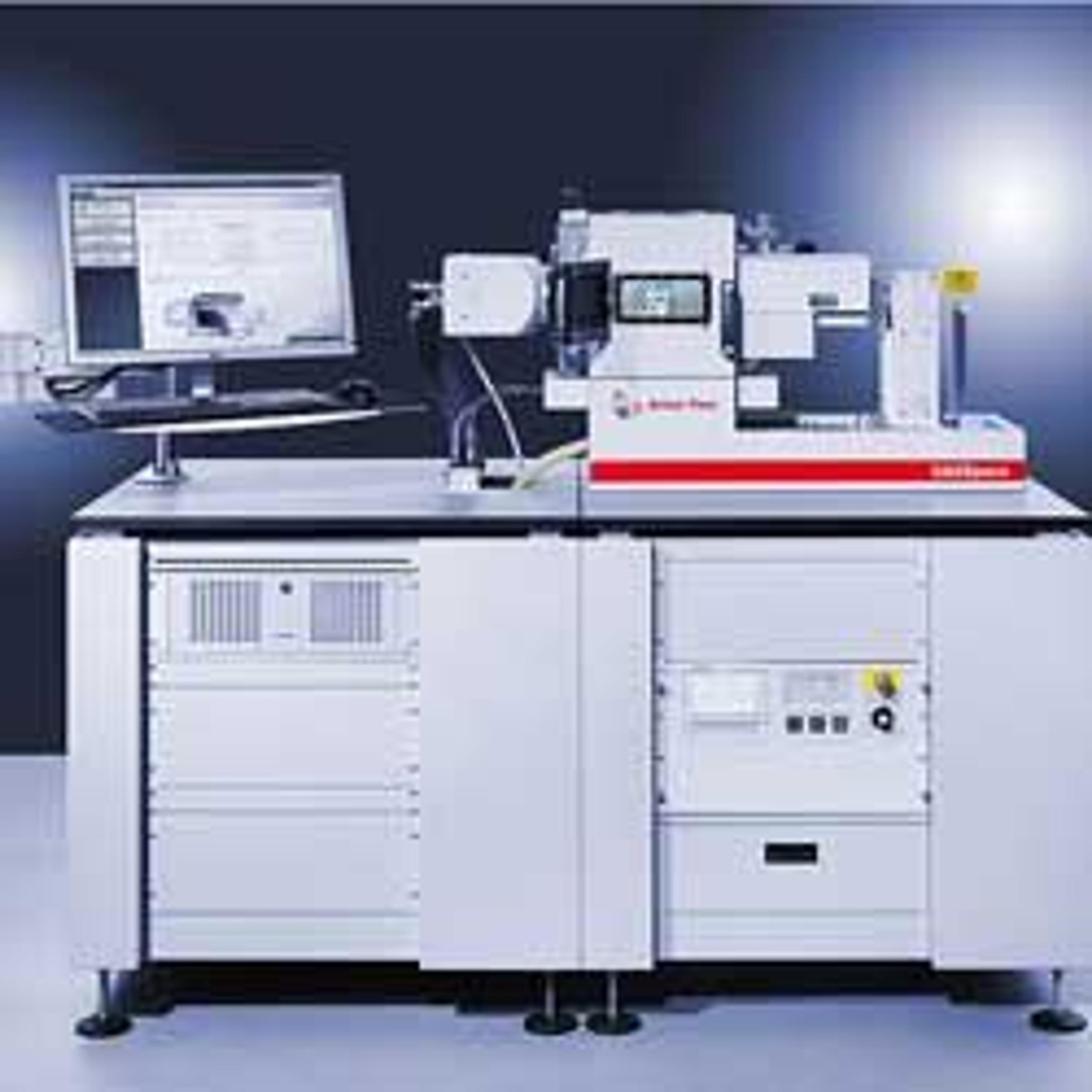
Modular System for Nanostructure Analysis: SAXSpace

Anton Paar

SAXSpace is a new nanostructure analyzer for small- and wide-angle X-ray scattering (SWAXS) studies of nanostructured materials. With its easy handling and push-button alignment, SAXSpace is ideally suited for routine SWAXS analysis and quality control applications. SAXS experts benefit from the spacious sample chamber and versatile sample stages, allowing for full experimental flexibility. This makes SAXSpace an ideal tool for investigating nanostructures in many different materials, including nanoparticles, biological macromolecules (Bio-SAXS), nanostructured surfaces (GI-SAXS), polymers and pharmaceuticals.

(1)

Links

Tags

Particle CharacterizationParticle characterization instruments are used to determine particle size distribution, shape, surface area, zeta potential, density and porosity of particles and materials. Multiple tecchniques are available for determining particle size, shape and count including dynamic light scattering (DLS), laser diffraction, electrozone (Coulter technique), imaging particle analysis and single particle optical sensing. Determine the density of your material with a gas pycnometer or examine its surface area and porosity with gas adsorption analyzers and mercury porosimeters. Find the best particle characterization instruments in our peer-reviewed product directory: compare products, check customer reviews and receive pricing direct from manufacturers.Non-Destructive TechniquesNon-destructive techniques (NDT) describes a variety of analytical techniques used to evaluate the properties of a material. Common methods include ultrasonic, magnetic-particle, liquid penetrant, radiographic, remote visual inspection (RVI), and eddy-current testing. NDT is regularly used in forensic engineering, civil engineering, mechanical engineering, electrical engineering, systems engineering, aeronautical engineering, and medicine.Surface Area TestingPhysisorption studies fundamental parameters essential for the characterization of materials such as the specific surface area and pore size distribution. Properties such as porosity, strength, hardness, permeability, separation selectivity, corrosion, and thermal stress resistance can all be directly correlated to the porous structure of a material.CatalystSurface AnalysisNanoporesSuperficially Porous ParticleNanoparticlesNanoparticles are between 1-100nm in size. Nanoparticles can be used for a wide variety of applications including biomedical, catalysis and electronics.
Structural Characterization of a Mesoporous Material