ResourceMaterials

Strength engineering in a nickel-base superalloy

17 Jul 2023

Nickel-base superalloys are complex alloys often containing more than ten elements. Alloying with an increasing amount of refractory elements is one way to improve high-temperature capability and creep resistance. Re and Ru are two such alloying elements, with Re being used to promote the alloy’s creep resistance, and Ru being used to reduce the formation of topologically close-packed phases. A detailed understanding of hardening mechanisms in the alloy and the effect of alloying elements on the γ matrix and γ’ precipitates is important in designing alloys with improved properties. In this application note, Bruker Nano combines nanoindentation with scanning probe microscopy (SPM) imaging to directly measure the properties of the individual phases.

Hysitron TI 980

Bruker Nano Surfaces and Metrology

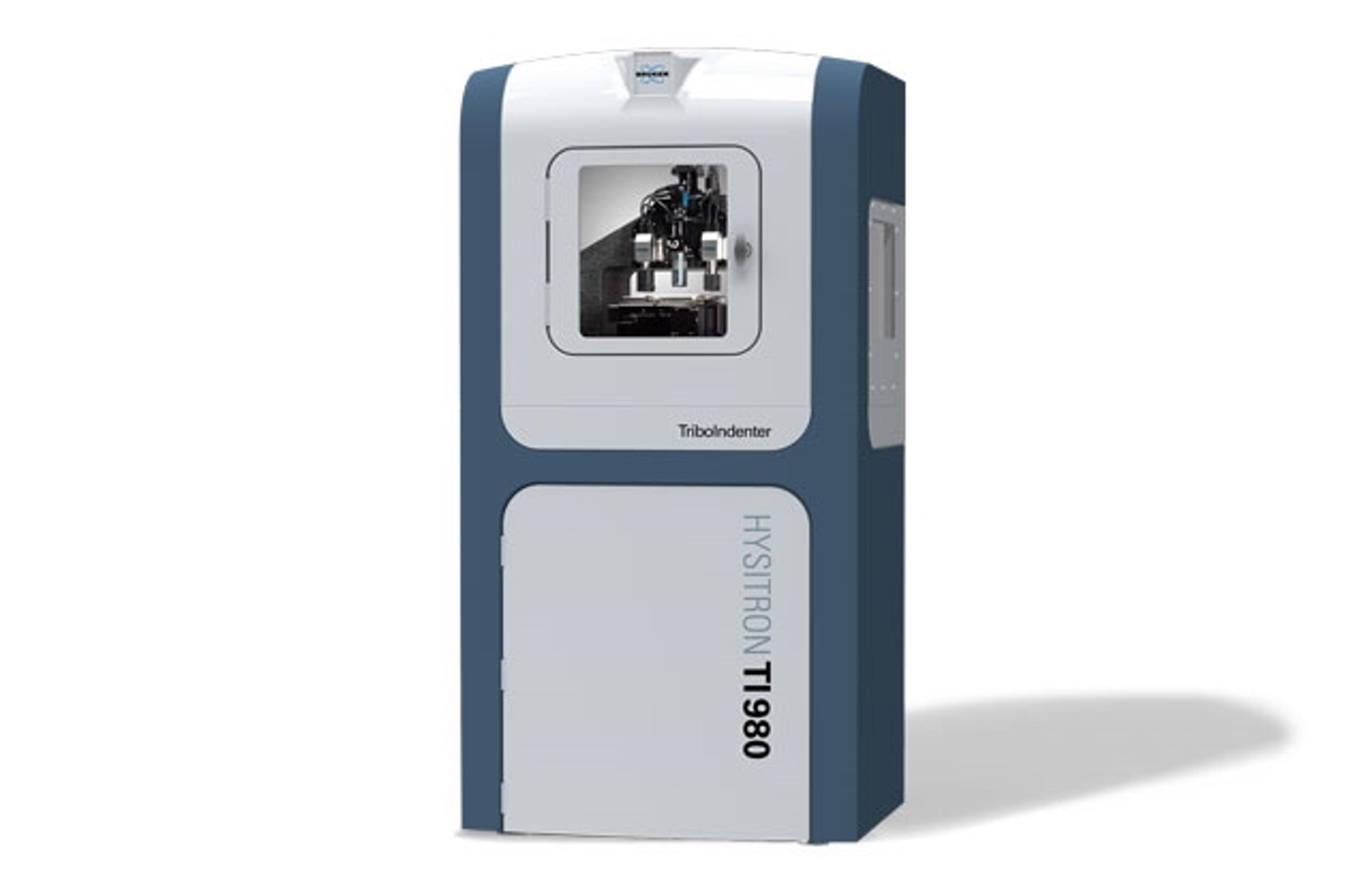
The Hysitron TI 980 nanoindenter achieves remarkable advances in control and throughput capabilities, testing flexibility, applicability, measurement reliability, and system modularity. This industry-leading system builds upon decades of Hysitron technological innovation to deliver new levels of extraordinary performance, enhanced capabilities, and ultimate versatility in nanomechanical characterization. 

(0)

Links

Tags

InterferometryInterferometry is an investigative technique used to analyze the pattern of interference created during the superposition of 2 or more waves. An interferometer is used to produce 2 or more overlapping waves. The interferometer is comprised of 2 or more telescopes, a detector and a correlator. The interferometer detector may utilize homodyne or heterodyne detection of the interference pattern.Mechanical TestingMechanical testing explores the elastic and inelastic nature of a material when force is applied. A mechanical test shows whether a material is suitable for its intended application by measuring hardness, tensile strength, elongation, elasticity, and fatigue limit.Non-Destructive TechniquesNon-destructive techniques (NDT) describes a variety of analytical techniques used to evaluate the properties of a material. Common methods include ultrasonic, magnetic-particle, liquid penetrant, radiographic, remote visual inspection (RVI), and eddy-current testing. NDT is regularly used in forensic engineering, civil engineering, mechanical engineering, electrical engineering, systems engineering, aeronautical engineering, and medicine.ProfilometersProfilometers are instruments used to measure a surface's profile, in order to quantify etch depth, deposited film thickness, and surface roughness. They operate in either contact or non-contact modes and may use optical or stylus techniques to make the actual measurements.Electron MicroscopyElectron microscopes (EM) are used to create high-resolution images of samples at the nanoscale by means of an accelerated beam of electrons as a source of illumination. Types of electron microscope include scanning electron microscopes (SEM), transmission electron microscopes (TEM), scanning transmission electron microscopes (STEM) and cryo-electron microscopes. Focused ion beam (FIB) microscopes are useful for modifying or milling a sample surface with nanometer precision, as well as imaging. Find the best electron microscopes in our peer-reviewed product directory: compare products, check customer reviews and receive pricing direct from manufacturers.Atomic Force Microscopy / Scanning Tunneling MicroscopyAtomic force microscopes (AFM) and scanning tunneling microscopes (STM) are high-resolution forms of scanning probe microscope (SPM) used to generate topological information of a sample down to the atomic scale. Instruments can generate an image of the surface topology, manipulate objects and reveal information on localized properties such as Young’s modulus, conductivity, and magnetism. High-quality STM and AFM probes optimized for your application are available, as well as other SPM-based instruments such as scanning ion conductance microscopes (SICM) & near-field scanning optical microscopes (NSOM). Find the best AFM and STM equipment in our peer-reviewed product directory: compare products, check customer reviews and receive pricing direct from manufacturers.MicroscopyMicroscopy is a technique used to observe small objects in detail, from cells to materials, using light or electron microscopes. It enables researchers to examine structures with high resolution, aiding in fields such as biology, medicine, and materials science. With advanced microscopy techniques, scientists can gain insights into cellular processes, tissue structures, and material properties. Explore the best microscopy solutions in our peer-reviewed product directory, compare products, read customer reviews, and get pricing directly from manufacturers.Alloys
Strength engineering in a nickel-base superalloy