
Soluble Fraction Analysis in Polypropylene for Quality Control Laboratories
26 Feb 2016The analysis of amorphous fraction is a fundamental task in the production of polypropylene. Traditionally, the amorphous or soluble content has been measured by solubility in xylene using manual wet chemistry methods that are time-consuming and involve large amounts of solvent. This application note examines the new CRYSTEX QC which is an innovative approach that automates the analysis of polypropylene samples.
Related products
Request Quote for All Products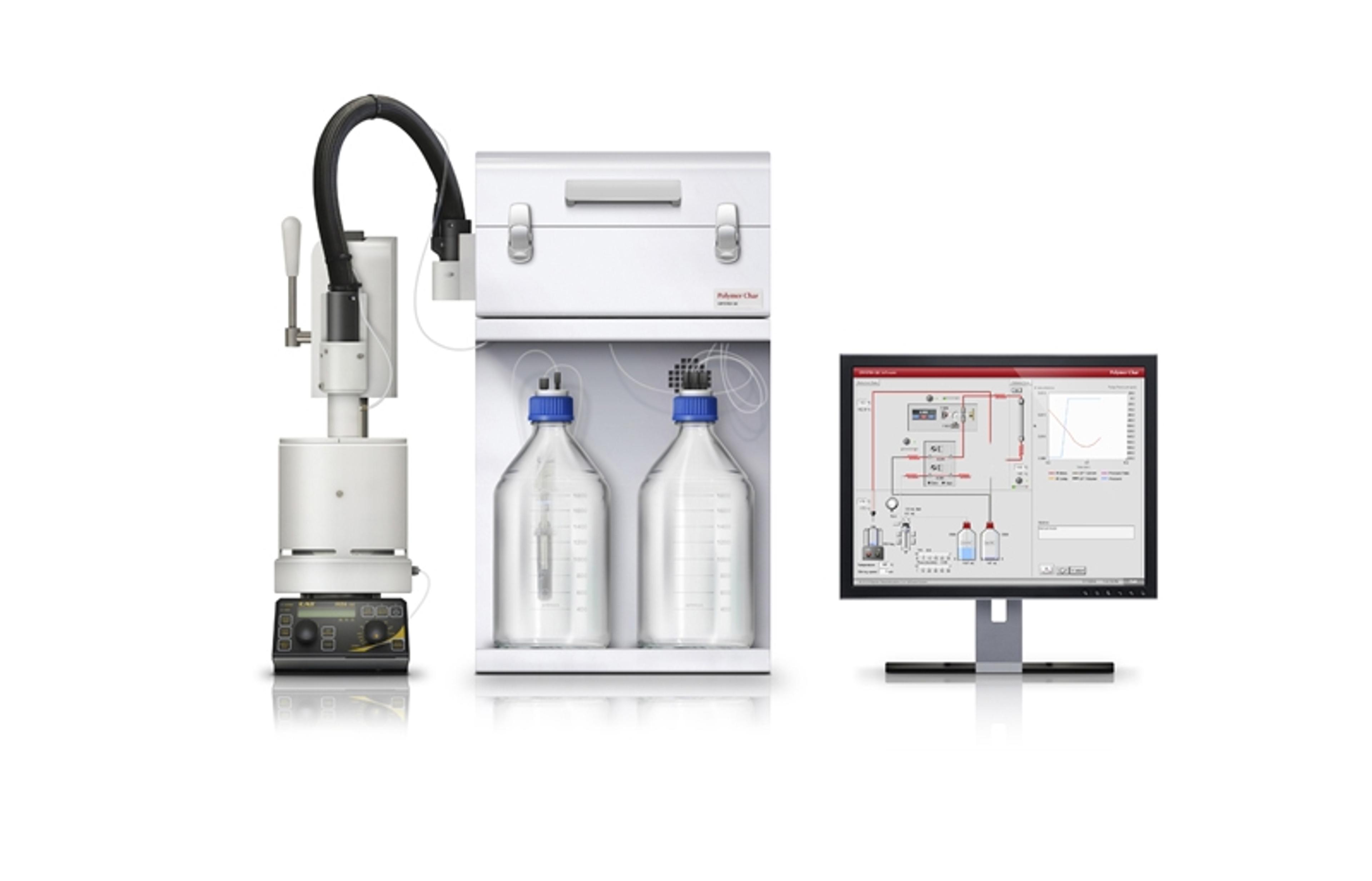
CRYSTEX QC
Polymer CharReliable and fully automated instrument for amorphous phase determination in PP/EP Manufacturing Quality Control laboratories. The CRYSTEX® QC instrument represents a step forward in technology for automation of the Xylene Solubles determination in polypropylene copolymers. Reliable instrument for continuous operation in the manufacturing plant laboratory, it requires minimum bench space and utilities. CRYSTEX® QC overcomes all difficulties of the old-style gravimetric methods based on traditional wet chemistry. This modern quantitative chemical analysis method eliminates the use of any laboratory glassware, external filtration or extraction devices, as well as all the associated tedious manual operations. A representative amount of sample is introduced by the operator in dry form, without the need of accurate weighing, in a 150 mL disposable vial. The instrument automates all the analysis process, including precise dosing of specified amount of solvent, control of sample dissolution, separation of soluble fraction from crystalline matrix and injection to the online detectors. The crystalline and amorphous fractions are separated through a crystallization and re-dissolution temperature cycle within a TREF column with optimized packing. Accurate and precise quantification is achieved by means of an infrared detector, so no analytical balance is used in CRYSTEX® QC method. Unlike other semi-automated approaches, no handling of any solvent by the operators is required for the CRYSTEX® QC analysis, which improves the safety and health levels in the laboratory. Furthermore, a low pressure pump is used to handle the solvent and polymer solutions within the instrument and the temperature at all key points is monitored and controlled accurately. Polymer Char also counts on CRYSTEX®, a different approach oriented to research laboratories which analyzes 3 samples at a time and with a wide flexibility in the analysis conditions. CRYSTEX® QC Key Features: Full automation of the Xylene Solubles method. No need for accurate weighing of sample or manual solvent handling. Designed for the Process Control / Quality Control laboratories in the manufacturing plants. Ready for continuous operation 24 / 7 in manufacturing control laboratories. Reliable system and user-friendly software. No external filtration or solvent evaporation required. High precision achieved by automation. Built-in IR4 detector for accurate quantification of the fractions and their ethylene content inthe case of copolymers. Intrinsic viscosity of crystalline matrix and amorphous fraction can be measured by online relative viscometer. The analytical signals are automatically acquired by the built-in detectors, and processed to generate the full CRYSTEX® QC electronic report.