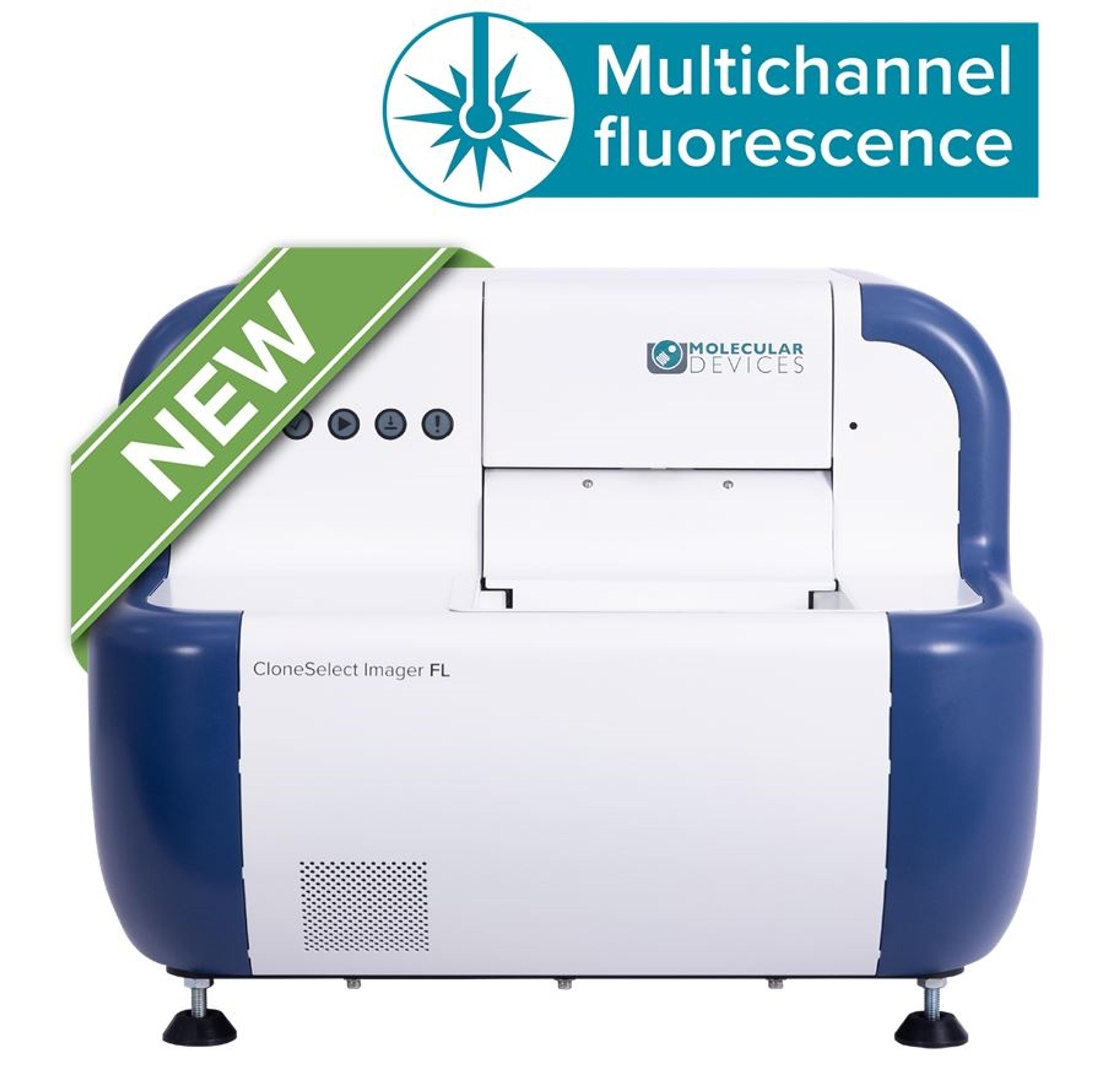
Single-cell dispensing and screening of cell lines for monoclonality verification using the impedance-based single-cell dispenser and high-throughput fluorescence-based imager

2 Mar 2023

There is an unmet need in the industry for a device that allows the fast and efficient isolation of single cells while preserving their integrity and providing insurance for their clonality. Performing gene editing, single-cell dispensing, and screening to develop a stable monoclonal cell line is a long and labor-intensive process. The optimization of these steps through different approaches, such as high-throughput screening and/or automation, can increase the efficiency and yield of the monoclonal cell-line development process. In this combined application note, Molecular Devices shows the impedance-based single-cell dispenser and automated fluorescence-based high-throughput imaging screening to obtain monoclonal cell lines through robust single-cell selection.

Links

Tags

Cell Lines Stem Cells and Primary CellsPrimary cell cultures, established cell lines and stem cells are vital for <i>in vitro</i> and <i>ex vivo</i> experimentation. High-quality cells, optimized for your applications, alongside optimized cell substrates, growth medium and supplements, are critical for experimental success. Explore a range of cells suitable for your applications, including isogenic cell lines, competent cells, induced pluripotent stem cell (iPSC)-derived cell lines, fungal/bacterial/mammalian cell lines, stem cells and cancer cell lines. Find the best cells for your research in our peer-reviewed product directory: compare products, check customer reviews and receive pricing direct from manufacturers.FluorescenceThe emission of fluorescence occurs when a photon of energy is supplied to a fluorescent chemical compound by an external source, causing it to become excited. Fluorescence can be detected and measured for different purposes using microplate readers, fluorescence microscopes, fluorescence scanners, and flow cytometers.AutomationAutomation in laboratories and manufacturing processes enhances efficiency, precision, and scalability by reducing the need for manual intervention. It plays a critical role in improving productivity, minimizing human error, and accelerating workflows in fields like diagnostics, drug development, and industrial testing. Automation technologies include robotic systems, automated liquid handlers, and process control systems that streamline complex tasks and ensure consistent, reproducible results. Explore our peer-reviewed product directory to discover the best automation solutions, compare options, read user reviews, and get prices directly from manufacturers.Cell ImagingCell imaging can be achieved using a number of techniques including confocal microscopy, transmission electron microscopy, atomic force microscopy, and light sheet microscopy.High ThroughputHigh throughput experiments allow the simultaneous processing of several samples. This parallelization reduces the cost per experiment and increases reproducibility and output volume of data.ScreeningUsing robotics, data processing and control software, liquid handling devices and sensitive detectors, screening allows a researcher to quickly conduct millions of chemical, genetic or pharmacological tests.CHO
Single-cell dispensing and screening of cell lines for monoclonality verification using the impedance-based single-cell dispenser and high-throughput fluorescence-based imager