
ResourceSeparations
Setting up two, three and four electrode experiments
8 Mar 2021Electrochemical experiments range from simple potentiostatic (chronoamperometry) to cyclic voltammetry (potentiodynamic), to complex AC techniques such as impedance spectroscopy. Moreover, each individual technique may have multiple possible experimental setups, often with a best option. This note discusses one aspect of these setups: the number of electrodes (or probes) used.
Related products
Request Quote for All Products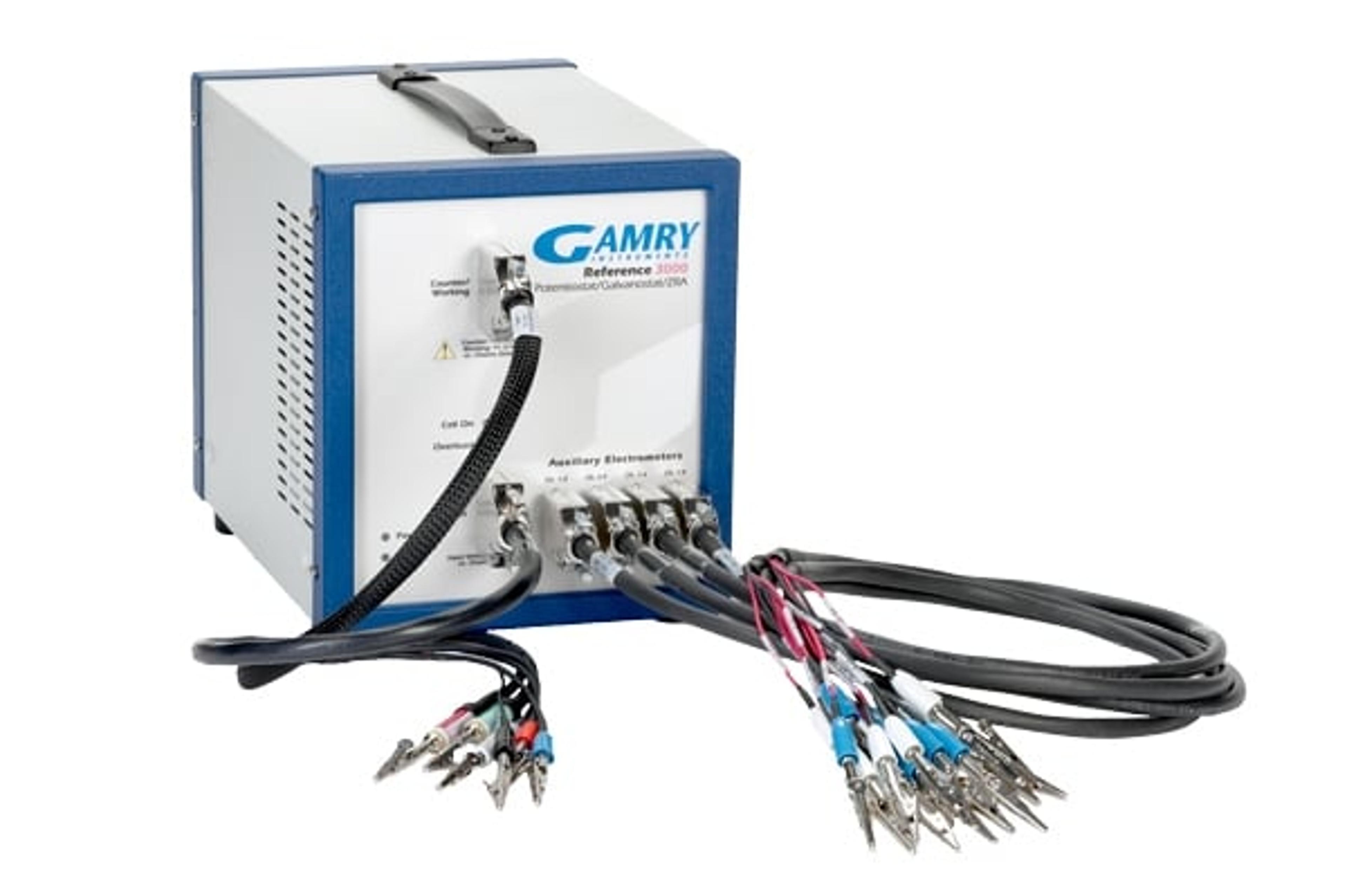
Reference 3000AE Potentiostat
Gamry InstrumentsThe 3000AE is useful for testing multiple cells within a stack or measuring auxiliary voltages.

Reference 620 Potentiostat
Gamry InstrumentsA high-performance potentiostat suitable for applications in physechem, coatings, and corrosion.
Links
Tags
VoltammetryVoltammetry is a sensitive analytical technique for elemental detection. In a voltammeter the current is measured in the system whilst the voltage is varied. Usually 3 metal electrodes are required including the reference, auxiliary and working electrodes. In polarography, a subclass of voltammetry, the working electrode used is a dropping mercury electrode (DME). The 2 main types of voltammetry are cyclic and linear sweep voltammetry.Mechanical TestingMechanical testing explores the elastic and inelastic nature of a material when force is applied. A mechanical test shows whether a material is suitable for its intended application by measuring hardness, tensile strength, elongation, elasticity, and fatigue limit.ElectrochemistryPotentiostat