Selecting Buffers to Remove Uncertainty in Tryptic Digestion

Selecting Buffers to Remove Uncertainty in Tryptic Digestion

4 Nov 2015

Protein digestion is a fundamental technique employed in biopharmaceutical and proteomic applications. It is used to analyze the sample and identify structural features or post-translational modifications (PTMs). Despite its widespread use, protein digestion still provides many analytical challenges. This application note demonstrates how Thermo Scientific™ SMART Digest™ kits remove uncertainty associated with conventional solution-based tryptic digestion protocols, resulting in higher reproducibility and sample characterization.

Thermo Scientific™ SMART Digest™ Kits

Thermo Fisher Scientific

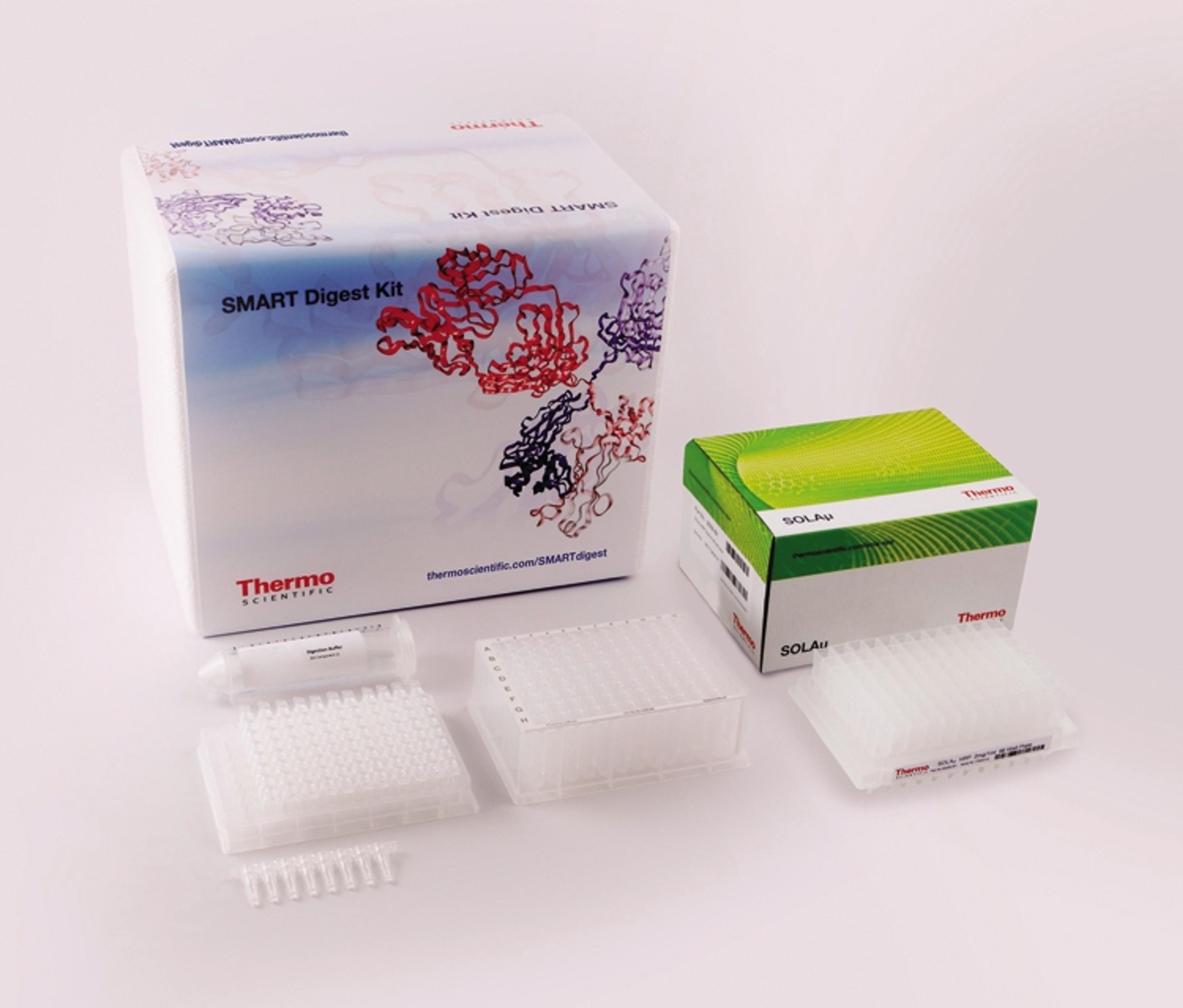
Obtain high quality analytical results from protein digests by using Thermo Scientific™ SMART Digest™ Kits. A significant advance in sample preparation for biopharmaceutical and protein research, the kits provide fast and simple protein digestion with high reproducibility, high sensitivity, and high levels of data quality in a format that's compatible with automation. The SMART Digest Kits are a significant improvement over current in-solution protein digestion technologies, which are not reproducible, have poor sensitivity, and employ protracted methodologies not amenable to automation.   Features: Easy and simple Significantly increased speed of sample processing. 3-step sample preparation. Easily automate entire protocol for high-throughput processing. Reliable results Increased reproducibility over existing protocols. Higher sensitivity. Higher data confidence.

(2)

Links

Tags

ProteomicsProteomics is the systemic bioinformatics study of proteins and amino acids, including their structure, size, function and identification. Tools used in proteomics include chromatography, blotting and gels, protein arrays, mass spectrometry and ELISA and associated analysis software. Analyzers and proteomic systems should be sensitive, high resolution, fast and may be automated for high-throughput.Protein PurificationProtein purification is a vital step in drug discovery, therapeutics, biotech and life science research. The purification process typically involves subcellular or membrane protein extraction with cell lysis kits, separation of proteins from cell debris by filtration or spin columns, and the isolation of proteins of interest from other proteins and impurities with affinity purification (including fusion protein tags and antibody binding proteins A, G and L), immunoprecipitation or chromatographic methods, such as ion exchange, size exclusion and immobilized metal affinity chromatography. All purification methods come in multiple formats for your laboratory needs, including agarose or magnetic beads, resins, columns and filter plates. Find the best protein purification equipment in our peer-reviewed product directory: compare products, check customer reviews and receive pricing direct from manufacturers.BiopharmaceuticalsBiopharmaceuticals are proteins and other compounds (such as nucleic acids) produced by living organisms that have uses as therapeutics or for in vivo diagnostics. The most well known example of a biopharmaceutical product, and the first to be approved for therapeutic use, was recombinant human insulin.Post-Translational ModificationsDigestionProtein Quantification
Selecting Buffers to Remove Uncertainty in Tryptic Digestion