ResourceSeparations

Routine Proteome Analysis Using 50 cm µPAC™ Columns

6 Dec 2018

The practice of bottom-up proteomics relies to a large extent on the separation performance that can be achieved with state-of-the art nano LC-MS/MS equipment. Depending on the sample complexity or the instrument time that can be dedicated to a certain sample, different LC columns and corresponding LC-MS/MS methods are often required. When aiming for comprehensive proteome analysis with deep coverage, relatively long columns (lengths up to 75 cm) are typically operated with long and shallow solvent gradients, delivering the highest chromatographic performance. This is indeed a good strategy if very complex samples need to be analyzed and when as much information as possible needs to be retrieved from these samples. However, daily routine proteome analysis often deals with much less complex samples or demands increased sample throughput, making total analysis times above 120 min undesirable or even impossible.

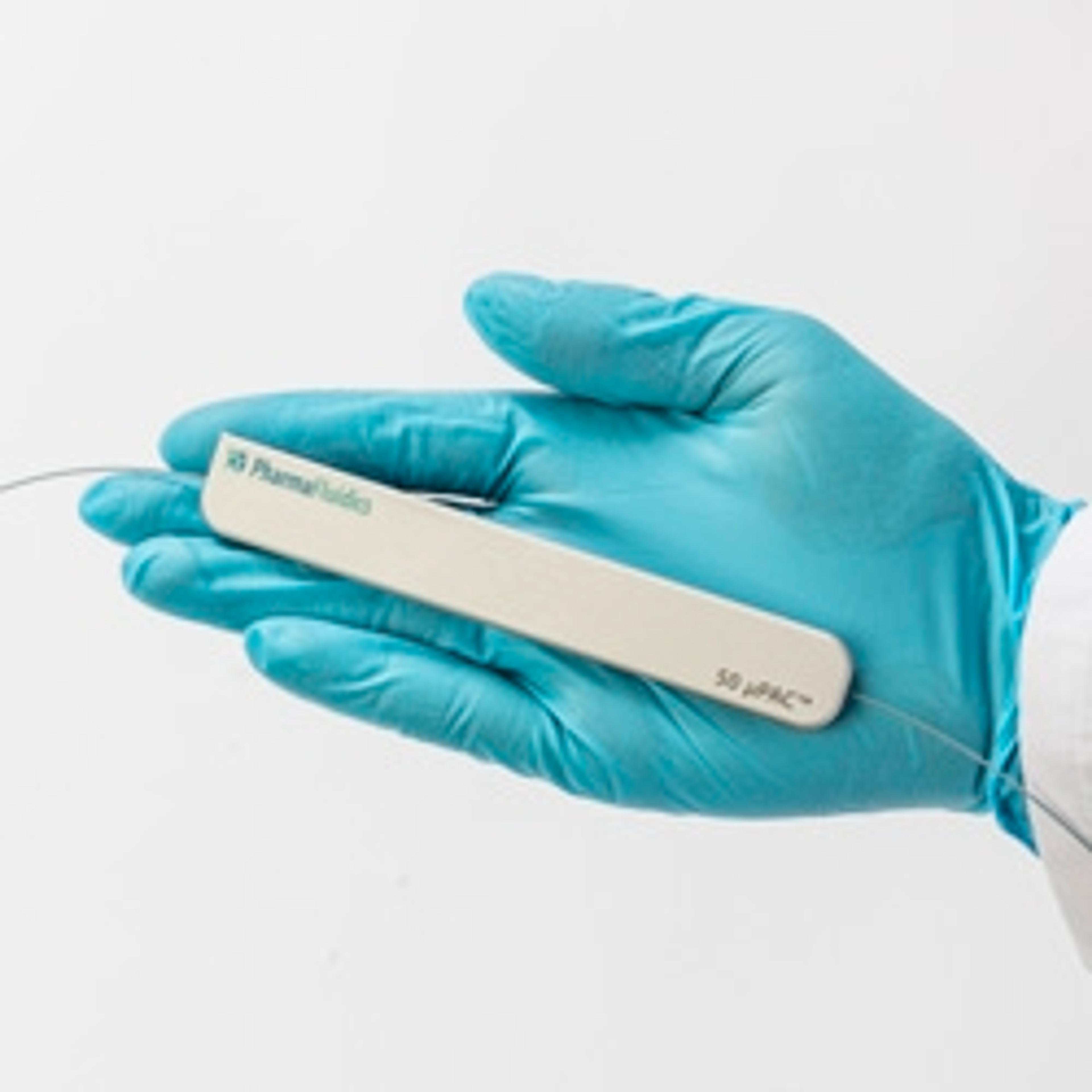
50 cm µPAC™ column

PharmaFluidics

With an internal volume of 3µL, this 50 cm long RP-C18 µPAC™ column is perfectly suited to perform high throughput analyses with shorter gradi­ent solvent times (30, 60 and 90-minute gradients) and it can be used over a wide range of flow rates, between 100 and 2000 nL/min. µPAC™ column, 50 cm length, with pillar array backbone at interpillar distance of 2.5µm, C18.

(0)

Links

Tags

NanoLCNano LC is a nano scale liquid chromatography technique typically used for proteomic applications. The nano refers to the very low flow rate of the mobile phase in the system. The advantage of nanoLC is its high sensitivity. Often the system is integrated with a mass spectrometer in nano LC-MS or nano LC-MS/MS. When using nanoLC equipment consider column choice, software and accurate and precise flow rate control.ProteomicsProteomics is the systemic bioinformatics study of proteins and amino acids, including their structure, size, function and identification. Tools used in proteomics include chromatography, blotting and gels, protein arrays, mass spectrometry and ELISA and associated analysis software. Analyzers and proteomic systems should be sensitive, high resolution, fast and may be automated for high-throughput.Routine QuantitationChromatographyChromatography is a powerful technique used to separate and analyze components of mixtures based on their chemical properties. It is widely used in fields like biochemistry, pharmaceuticals, and environmental analysis. By exploiting differences in the interaction of substances with a stationary phase and a mobile phase, chromatography enables precise purification and quantification of compounds. Whether you're working with complex biological samples or industrial chemicals, chromatography is essential for obtaining high-quality results. Browse our peer-reviewed product directory to find the best chromatography systems, compare products, read customer reviews, and get pricing directly from manufacturers.NanofabricationNanotechnologyLC-MSLiquid Chromatography-Mass Spectrometry (LCMS) is a powerful analytical technique that combines the separation power of liquid chromatography with the detection capabilities of mass spectrometry. It is widely used for qualitative and quantitative analysis of complex mixtures in pharmaceuticals, proteomics, and environmental studies. Browse our peer-reviewed product directory to find the best LCMS systems, compare products, check reviews, and get pricing directly from manufacturers.
Routine Proteome Analysis Using 50 cm µPAC™ Columns