
ResourceSeparations
Reliable Multiple Sclerosis Diagnostics with FocusGel: Isoelectric Focusing of Serum and Cerebrospinal Fluid (CSF)
17 Apr 2016This application note looks at how FocusGel can be used for isoelectric focusing (IEF) providing less false positives than traditional agarose gels and improved handling due to its non-toxicity. The results from this can then be used in the diagnosis of Multiple Sclerosis (MS).
Related products
Request Quote for All Products
2D HPE™ Large Gel NF 12.5% Kit
SERVA Electrophoresis GmbHPrecast gels for large format horizontal 2D electrophoresis (255 x 200 mm).
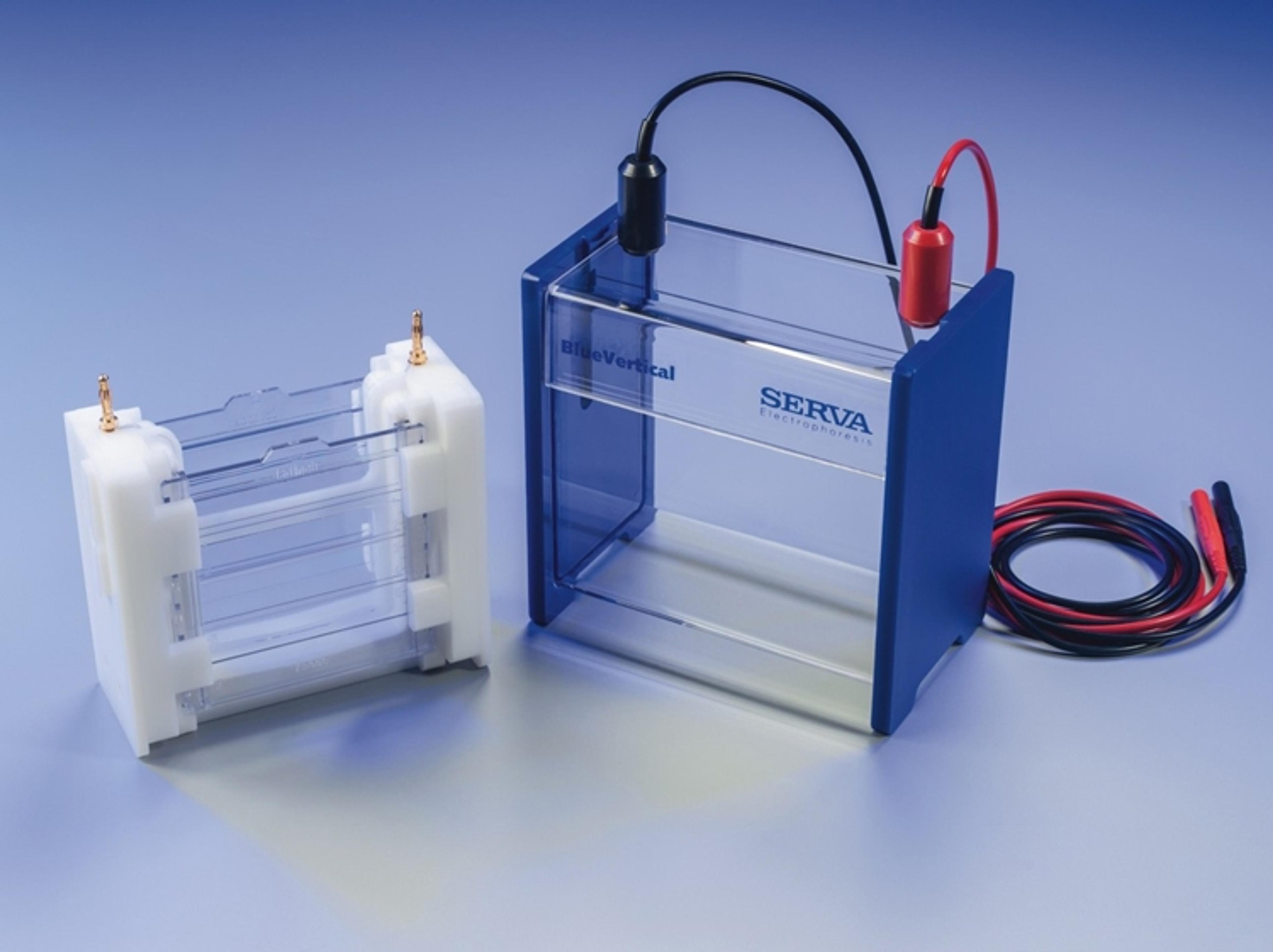
BlueVertical™ PRiME™
SERVA Electrophoresis GmbHHigh quality gel tank system with an innovative inner core unit for convenient and easy handling

HPE™ BlueHorizon™
SERVA Electrophoresis GmbHOptimized performance in cooled flatbed electrophoresis like 1D SDS PAGE, 2D electrophoresis, IEF.
Links
Tags
Capillary ElectrophoresisCapillary electrophoresis (CE) is used to separate molecules based on charge, size and hydrophobicity. Pressure, voltage or a vacuum is used to introduce the sample to fused silica capillaries. Fluorescence, UV/Vis, UV or diode array detectors are used to visualize components. Types of CE systems include capillary electrochromatography (CEC), capillary zone electrophoresis and capillary gel electrophoresis. Find the best capillary electrophoresis equipment in our peer-reviewed product directory: compare products, check customer reviews and receive pricing direct from manufacturers.ElectrophoresisElectrophoresis equipment is used to separate mixtures of protein, DNA or RNA, based on their electric charge, size and other physical characteristics, by passing them through a medium such as a polyacrylamide gel, an agarose gel or a capillary tube. Electrophoresis equipment includes horizontal and vertical gel electrophoresis chambers, isoelectric focusing systems, 2D electrophoresis and capillary electrophoresis instruments. Precast gels with a gradient can be used or gels can be hand cast. Samples are run alongside ladders or markers to identify the approximate size of a molecule. Separated proteins and nucleic acids in the gel can be stained or probed with fluorescent markers and then imaged and detected using gel documentation instruments, transilluminators, densitometers and scanners. Find the best electrophoresis equipment in our peer-reviewed product directory: compare products, check customer reviews and receive pricing direct from manufacturers.Sample PreparationSample preparation can improve the quality and speed of separation techniques. Products to assist sample preparation include filtration equipment, evaporators, membranes and sieves.AntibodiesAntibodies are used in techniques such as confocal and fluorescence microscopy, flow cytometry, ELISA, ELISPOT, immunohistochemistry, western blotting and immunopreciptation. Select specific antigen reactivity, high specific affinity, low non-specific binding, monoclonal or polyclonal, primary or secondary antibodies and associated conjugates such as an enzyme or dye for visualization.ProteomicsProteomics is the systemic bioinformatics study of proteins and amino acids, including their structure, size, function and identification. Tools used in proteomics include chromatography, blotting and gels, protein arrays, mass spectrometry and ELISA and associated analysis software. Analyzers and proteomic systems should be sensitive, high resolution, fast and may be automated for high-throughput.PCR and Thermal CyclingPolymerase chain reaction (PCR) kits and thermal cyclers are used for the in vitro amplification of DNA permitting subsequent analysis and experimental procedures. Explore a range of high-quality polymerase, primers and nucleotides or simplify your workflow with a PCR mastermix. Find reverse transcription PCR (RT-PCR) and cDNA synthesis kits for RNA products and libraries. Quantitatively measure the amplification of DNA with real-time PCR (qPCR) and droplet digital PCR (ddPCR) kits and systems, and discover automated PCR setup solutions to increase throughput. Alternative DNA amplification methods also include recombinase polymerase amplification (RPA) kits. Find the best PCR kits and thermal cyclers and purification equipment in our peer-reviewed product directory: compare products, check customer reviews and receive pricing direct from manufacturers.Gel Doc / Image AnalysisGel documentation (gel doc) or gel imaging systems are used for the analysis of proteins, antibodies and nucleic acid immobilized in polyacrylamide or agarose gels, membranes or microarrays. Explore a range of a gel imaging systems, densitometers, scanners, transilluminators or UV lamp + CCD cameras for your image analysis solutions. Colorimetric, fluorescent and/or radioisotopic samples can be visualized and documented for further analysis. See gel doc / Image analysis software for quantitative 1D and 2D analysis of your samples. Find the best gel doc / image analysis products in our peer-reviewed product directory: compare products, check customer reviews and receive pricing direct from manufacturers.ImmunologyImmunological techniques measure and characterize immune responses. Immunology kits and analysis systems often use techniques such as ELISA, radioimmunoassay (RIA) and immunodiffusion assays, Immunohistochemistry, and flow cytometry. Immunologists use equipment such as flow Cytometers, plate readers, plate washers and fluorescent microscopes.Cell-Based AssaysCell-based assays are used to monitor the presence, quantity and activities of a desired cellular analyte including drug molecules or biomarkers. This can reveal information on cell health (apoptosis, cytotoxicity, viability and proliferation assays), cell metabolism, cell migration and cell signaling mechanisms. Find the best cell-based assay products, kits and equipment with our peer reviewed product directory: compare products, check customer reviews and receiving pricing direct from manufacturers.DNA SequencingDNA sequencing, such as sanger sequencing, is a biological technique that determines the precise order of nucleotide bases in a fragment or template of DNA. DNA sequencers and genetic analyzers are based on capillary electrophoresis, where labeled DNA fragments are electrophoretically separated by size as they migrate through a polymer. Find the best DNA sequencing products, including DNA sequencing kits, genomic libraries and genetic identity kits in our peer-reviewed product directory: compare products, check customer reviews and receive pricing direct from manufacturers.Protein PurificationProtein purification is a vital step in drug discovery, therapeutics, biotech and life science research. The purification process typically involves subcellular or membrane protein extraction with cell lysis kits, separation of proteins from cell debris by filtration or spin columns, and the isolation of proteins of interest from other proteins and impurities with affinity purification (including fusion protein tags and antibody binding proteins A, G and L), immunoprecipitation or chromatographic methods, such as ion exchange, size exclusion and immobilized metal affinity chromatography. All purification methods come in multiple formats for your laboratory needs, including agarose or magnetic beads, resins, columns and filter plates. Find the best protein purification equipment in our peer-reviewed product directory: compare products, check customer reviews and receive pricing direct from manufacturers.Clinical ChemistryBiochemistry (or clinical chemistry) involves the analysis of bodily fluids using chemical tests. Techniques used include HPLC, chromatography, spectroscopy, mass spectrometry, immunochemical, electrophoresis, turbidometric / spectrophotometric assay, MRI and ISE analysis. Tests are often carried out on plasma or serum but urine (urinalysis) and fecal specimens are also processed.Clinical GeneticsMolecular Genetics covers the analysis of hereditary genetic disease and chromosomal abnormalities. Genetics can be analysed using DNA, RNA, and protein microarrays, PCR, RT PCR and DNA sequencing. Genetic equipment includes genetic workstations, thermal cyclers, cooling blocks and electrophoresis products. Diagnostic kits are used for DNA / RNA extraction and purification.Gel ImagingGel imaging captures high-resolution images of electrophoresis gels to analyze DNA, RNA, and proteins. Essential in molecular biology, this technique helps visualize results for accurate quantification and documentation. Discover top imaging systems and compare user-reviewed options in our directory.Sample HandlingProper and careful handling of samples is important in scientific studies to ensure the integrity of specimens. This will prevent deterioration and cross contamination, and improve the accuracy of sample tracking procedures.