ResourceSeparations

Rapid and Sensitive Analysis of a 93-Compound Forensic Panel in Urine Using the QTRAP®/Triple Quad™ 4500 LCMS/MS System

18 Jun 2017

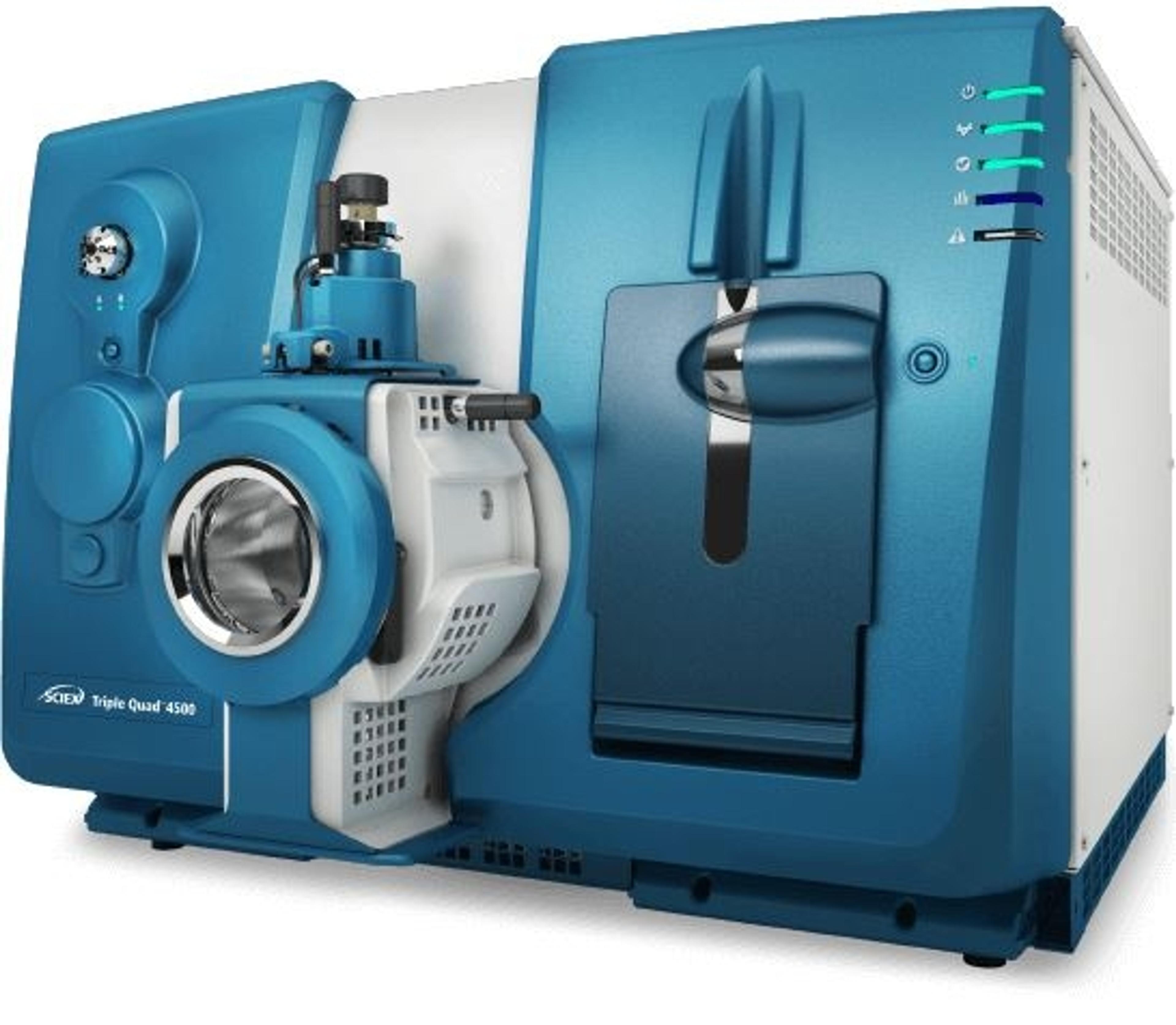
In this technical note, we describe a rapid and sensitive analysis of a comprehensive panel of forensic compounds in human urine using the ExionLCTM AC HPLC system and the QTRAP®/Triple Quad™ 4500 LC-MS/MS system (Figure 1). This forensic panel contains 93 compounds, and a total of 212 MRM transitions (including internal standards) are monitored.

QTRAP 4500 system

SCIEX

The QTRAP 4500 system takes the legendary 4000 QTRAP platform and intelligently re-engineers it to set a new benchmark for reliable quantitation and library searching – with 100-fold more full-scan sensitivity over basic triple quadrupoles in the same class.  The LC-MS/MS workhorse is intelligently re-engineered. As one of the only triple quadrupole instruments with optional Linear Accelerator Trap technology, the QTRAP 4500 system enables powerful, unique workflows that deliver a new level of confidence in your data. High-confidence library searching and fast eQ electronics for UHPLC: The 4500 series uses proven eQ electronics delivering polarity switching speeds of 50 msec and scan speeds of 20,000 Da/sec, creating a potent solution for detecting unexpected contaminants. Combined with a single comprehensive library of thousands of QTRAP spectra for library matching, contaminants at the lowest levels can be confidently identified on a UHPLC time scale.   Features: Simultaneously quantitate MRMs and perform full scan library searches for non-targeted contaminants. Achieve a 100X increase in full-scan sensitivity over triple quads providing an enhanced level of confidence for forensic toxicology applications. Boost selectivity with quantitative MRM3 workflows – and reduce the need for extensive sample cleanup or labor-intensive chromatography methods. Obtain comprehensive peptide sequence confirmation and simplify MRM assay development for peptide quantitation.  

(9)

Links

Tags

LC-MSLC-MS (liquid chromatography-mass spectrometry) systems and equipment are used for separation and quantitative analysis of complex mixtures, combining liquid chromatography and mass spectrometry. Quantify proteins, contaminants, pesticides or screen for drug metabolites with a high level of sensitivity. LC-MS systems and equipment include reverse phase, normal phase and specialized columns integrated with various MS detectors such as time-of-flight (TOF), quadrupole, orbitrap or ion trap mass analyzers. LC-MS/MS instruments equipped with a qTOF or triple quadrupole analyzer give greater sensitivity and resolving power to your analysis. Find the best LC-MS equipment in our peer-reviewed product directory: compare products, check customer reviews and receive pricing direct from manufacturers.Mass SpectrometryMass spectrometry (MS) is a powerful analytical technique used to identify and quantify molecules based on the mass-to-charge ratio of gas-phase ions. It provides detailed information about the structure, composition, and properties of compounds and is widely used across fields such as environmental monitoring, materials science, drug discovery and development, food and beverage testing, and wider chemical research. Key MS techniques include tandem mass spectrometry (MS/MS), liquid chromatography–mass spectrometry (LS-MS) and inductively coupled plasma (ICP-MS). Choosing from these wide range of techniques and technologies can be a daunting task, so keep up to date with scientific applications, performance expectations, and customer reviews here all in one place. Visit our product directory to receive quotes direct from the manufacturer. Forensic InvestigationForensic investigation is a diverse collection of scientific techniques and methods for the identification and characterization of chemicals relating to crime scene investigations.UrineThe analysis of urine is important in medicinal, anti-doping, forensic and life sciences applications. The ability to evaluate what someone has ingested through their urine enables fast detection and diagnosis of certain illnesses.