ResourceMaterials

Quantitative Mechanical Property Mapping at the Nanoscale with PeakForce QNM

4 Mar 2013

The scanning probe microscope (SPM) has long been recognized as a useful tool for measuring mechanical properties of materials. Until recently though, it has been impossible to achieve truly quantitative material property mapping with the resolution and convenience demanded by SPM researchers. A number of recent SPM mode innovations have taken aim at these limitations, and now, with Bruker’s PeakForce QNM®, it is possible to identify material variations unambiguously and at high resolution across a topographic image. This application note discusses the principles and benefits of the PeakForce QNM imaging mode.

PeakForce QNM

Bruker Nano Surfaces and Metrology

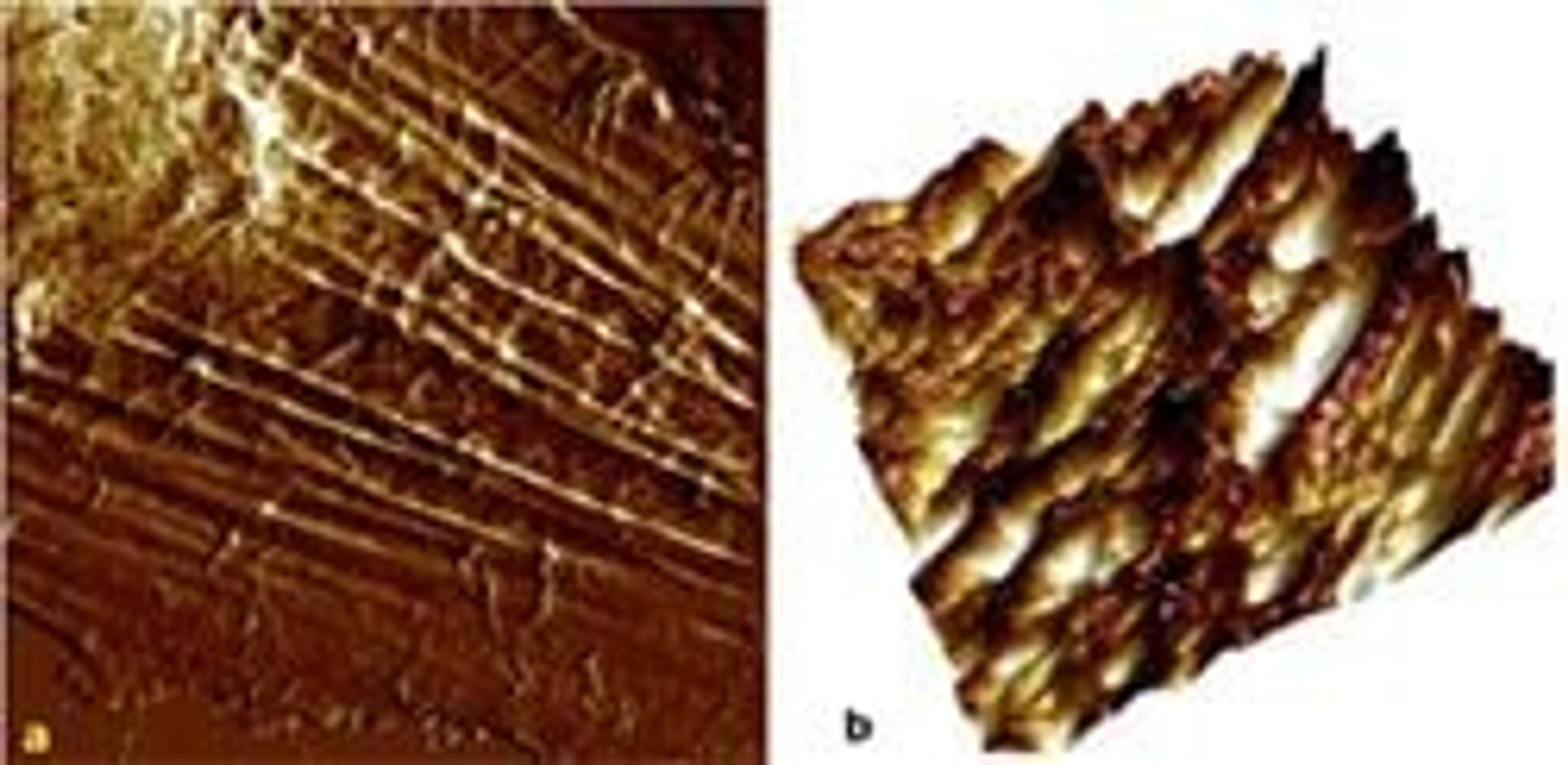
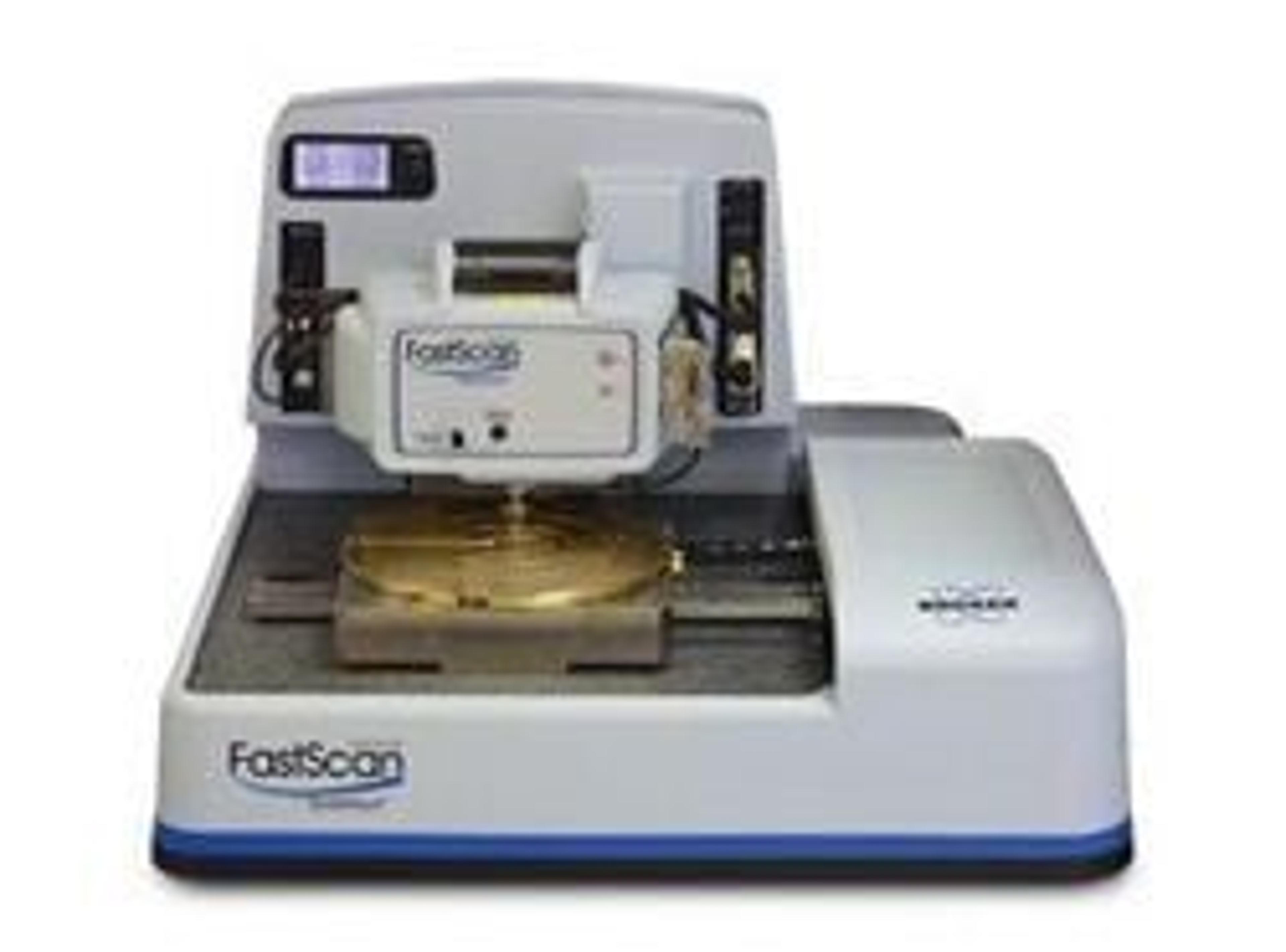
Unprecedented quantitative characterization of materials on the nanoscale PeakForce QNM® (Quantitative Nanomechanical Property Mapping) allows quantitative nanomechanical mapping of material properties, including modulus and adhesion, while simultaneously imaging sample topography at high resolution. PeakForce QNM and its counterpart mode PeakForce Mapping are based on Bruker's exclusive PeakForce Tapping® technology, which records very fast force response curves at every pixel in the image. The force control made possible by this technique leads to longer probe lifetimes and improved sample integrity, as well as correlated, high-resolution nanomechanical and topographic data. These capabilities dramatically exceed those of any other technique for nanoscale materials characterization, changing the perception and use of AFM.

(0)

Links

Tags

Mechanical TestingMechanical testing explores the elastic and inelastic nature of a material when force is applied. A mechanical test shows whether a material is suitable for its intended application by measuring hardness, tensile strength, elongation, elasticity, and fatigue limit.Atomic Force Microscopy / Scanning Tunneling MicroscopyAtomic force microscopes (AFM) and scanning tunneling microscopes (STM) are high-resolution forms of scanning probe microscope (SPM) used to generate topological information of a sample down to the atomic scale. Instruments can generate an image of the surface topology, manipulate objects and reveal information on localized properties such as Young’s modulus, conductivity, and magnetism. High-quality STM and AFM probes optimized for your application are available, as well as other SPM-based instruments such as scanning ion conductance microscopes (SICM) & near-field scanning optical microscopes (NSOM). Find the best AFM and STM equipment in our peer-reviewed product directory: compare products, check customer reviews and receive pricing direct from manufacturers.Polymeric MaterialsPolymeric materials are widely used in industries ranging from biomedical devices to packaging and electronics. Research into these materials focuses on their properties, including strength, flexibility, and degradation. Advances in polymer science have enabled the development of more sustainable and high-performance materials. Explore the best polymeric material products in our peer-reviewed product directory; compare products, check reviews, and get pricing directly from manufacturers.PolymersPolymers are large molecules made up of many repeat units. Natural polymers such as DNA and proteins are essential to life, whereas synthetic polymers such as polystyrene and polyethylene are used widely due to their functionality. Typical techniques for analysis include GPC, SEC, DSC, FT-IR and NMR.