
Quantitation of 12 Benzodiazepines and Metabolites in Urine Using Ultrahigh Resolution LC-MS for Forensic Toxicology Use
12 Sept 2010This application note shows that the Thermo Scientific Exactive benchtop LC-MS instrument provides quantitative analysis of 12 benzodiazepines, from 10 ng/mL to 5000 ng/mL in urine, using ultrahigh resolution full scan data acquisition in a 6-minute method. The accuracy, precision, LOQ, and linearity range of the method meet the demands of today’s forensic toxicology laboratories.
Related products
Request Quote for All Products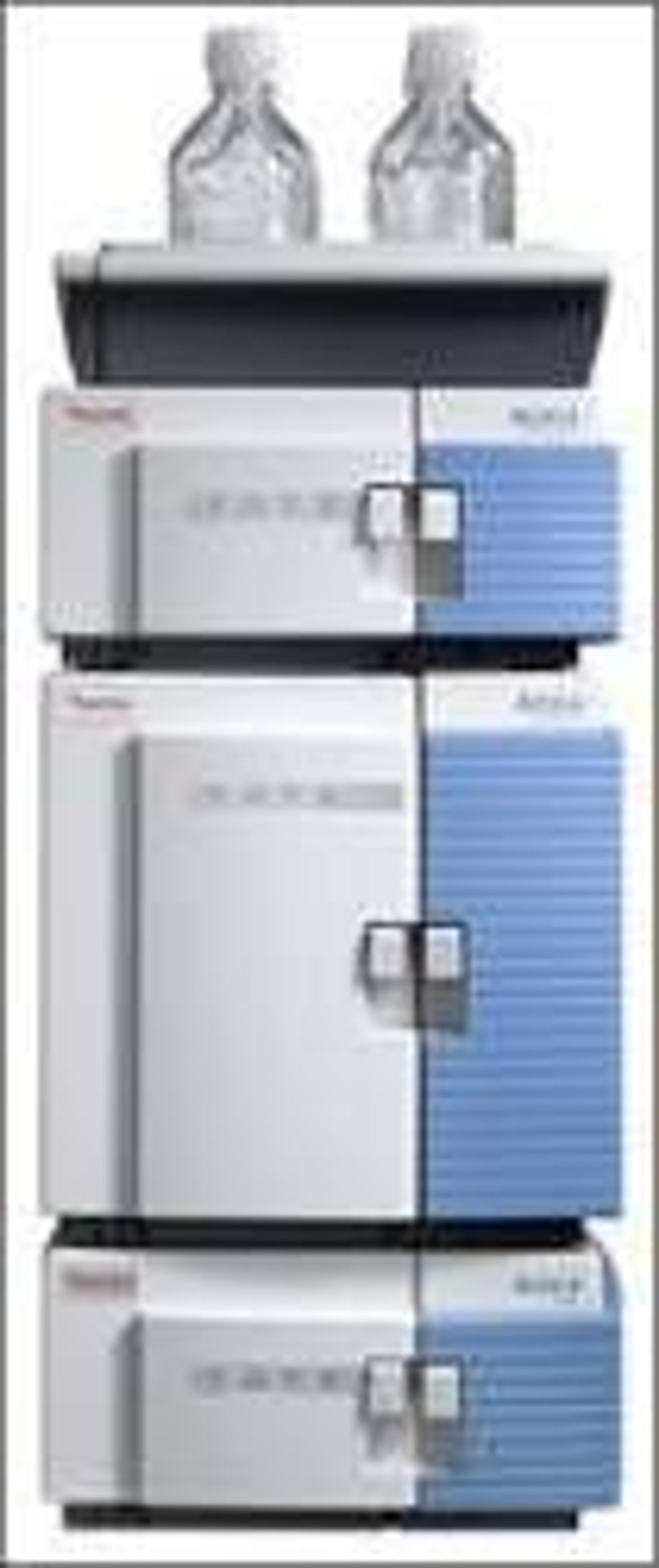
Thermo Scientific Accela™
Thermo Fisher ScientificThermo Scientific Accela - HPLC and U-HPLC in a Single System The Thermo Accela™ high-speed chromatographic system provides fast, efficient chromatographic separations over an expansive range of flow rates and pressures. Thermo Accela is designed to optimize performance of sub-two micron particle columns, providing seamless operation spanning conventional LC pressures from short LC columns, up to 15,000 psi for long-column separations of complex bio mixtures. Features of the Thermo Accela include: The Accela Pump assures rapid and reproducible transfer of even the most complex and aggressive gradients. This quaternary pump is capable of handling pressures up to 15,000 psi with a delay volume of only 65 µL, enabling high speed chromatographic separations. The Accela Autosampler has a specialized diamond coated high pressure valve that can handle the rigors of constant high pressure injections while the unique sampling design enables 30 second injection cycles. This autosampler integrates isothermal injection and separation to provide superior reproducibility by eliminating all external environmental influences to the chromatography. The Accela PDA has been optimized for the detection of high speed chromatographic separations. The short 1 cm flow cell pathlength combined with the incredible minimized flow cell volume of 2 µL, renders this Patented LightPipe™ flowcell as the premium choice for fast separations. The extremely low level of dispersion in the LightPipe flowcell retains the excellent peak shape and chromatographic resolution from the column. Thermo Scientific Accela, coupled with the sub-two micron particle columns, provides fast, controlled separations with high efficiency and resolution, accelerating LC and LC/MS applications. The High Speed LC System for today’s modern laboratory. Advantages of the Thermo Accela include: Optimized system delay volumes for fast separations Flexible sample format accepts vials or plates Quaternary pump capable of conventional and ultra-high pressures Patented LightPipe technology provides maximum sensitivity and resolution Complete chromatography solution with Thermo mass spectrometers
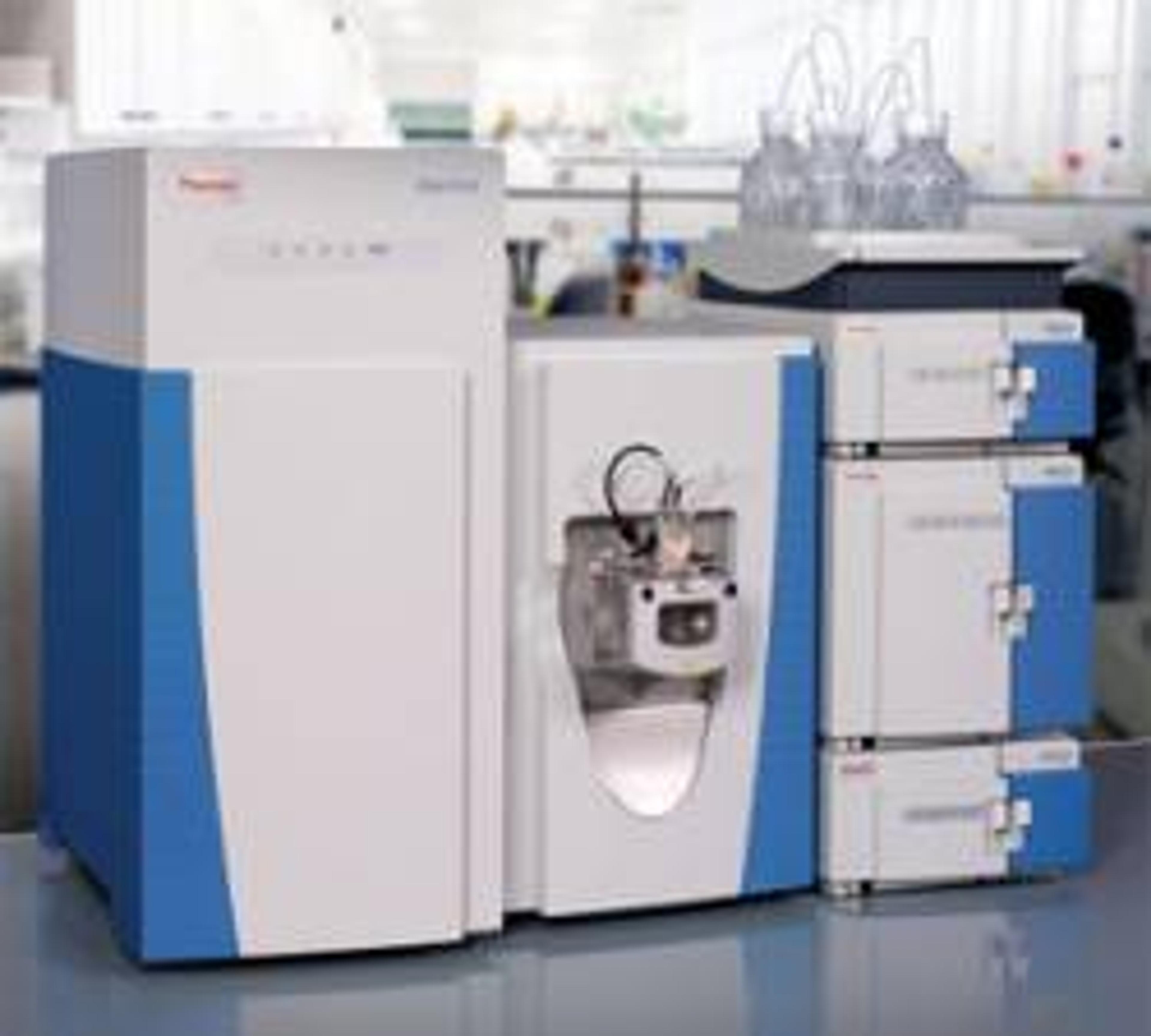
Thermo Scientific Exactive™
Thermo Fisher ScientificExactive is an easy to use benchtop system combining premium performance with a simple, intuitive interface, resulting in a LC-MS system that’s smaller, faster as well as affordable for virtually any lab. With fast scanning and positive/negative mode switching, Exactive provides sub-ppm mass accuracies at resolutions of up to 100,000. Fully compatible with U-HPLC, Exactive is ideal for solving the most demanding analytical challenges, including complex samples containing pesticides, metabolites or other target compounds. Whatever your application or budget, step up to Exactive. Thermo Scientific Exactive™ Features: High Resolving Power (up to 100,000) provides precise mass accuracy for complex sample analysis. Mass accuracy of better than 2ppm in full scan using fully automated AGC and mass calibration procedures. Scan Speed operating at a 10Hz scanning frequency Exactive is fully compatible with U-HPLC and ensures exact mass measurement for fast chromatography applications. Fast Polarity Switching without sacrificing mass accuracy in any scan, a full cycle of 1 positive and 1 negative scan performed within 1 second. All-Ion-Fragmentation (AIF) with multiple dissociation techniques; in source collisional induced dissociation (CID) and high energy collisional dissociation (HCD), provides MS and MS/MS data. Intuitive software interface.