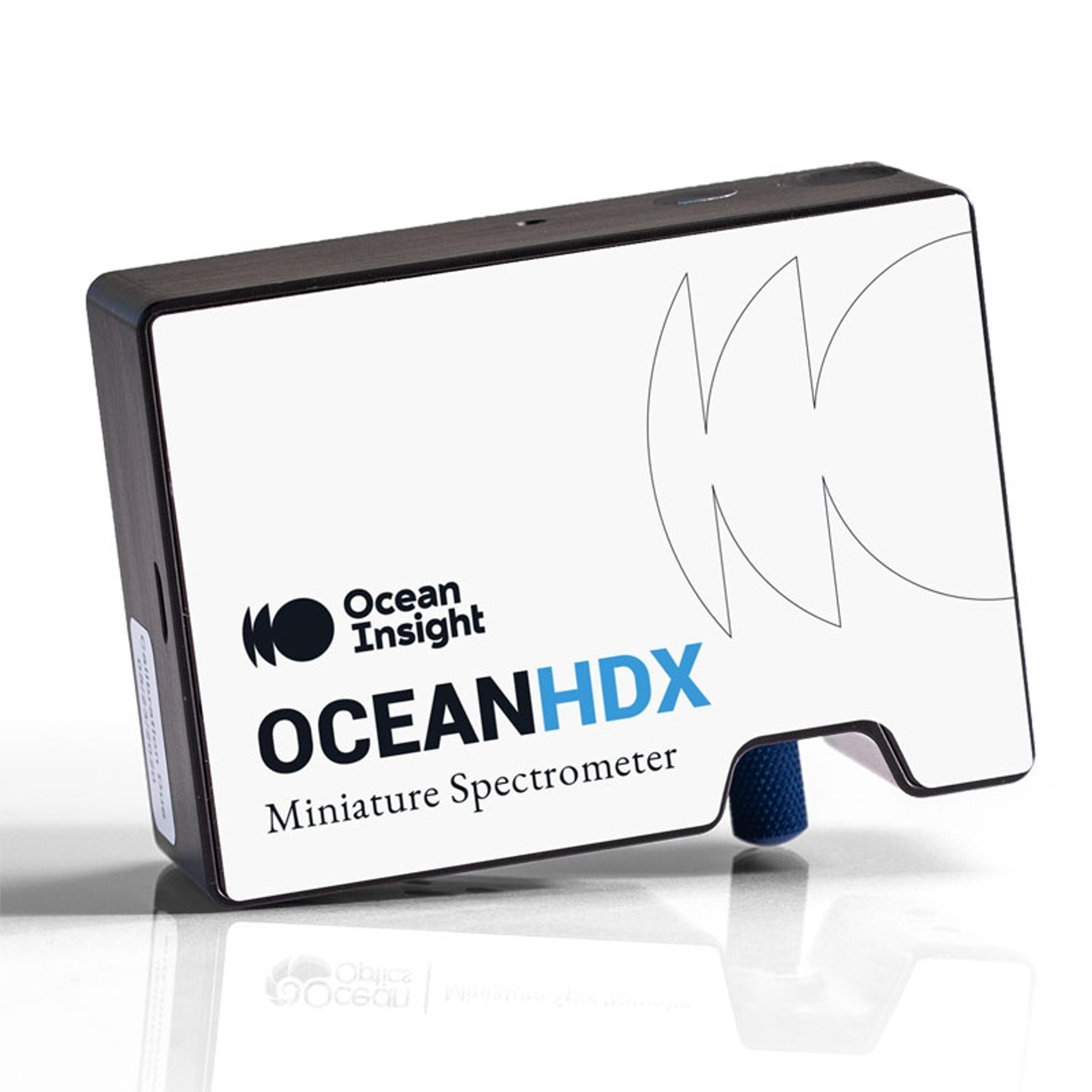
Quantifying Protein Concentration using UV Absorbance Measured by the Ocean HDX Spectrometer

10 Dec 2018

Proteins are a common sample in clinical, diagnostic and research labs. Studies involving protein extraction, purification or labeling, or working with proteins extracted from cells or labeled for study of the interactions between biomolecules, are common. Determination of protein concentration is a critical part of protein studies. In this application note, we use an Ocean HDX spectrometer to generate a standard curve for bovine serum albumin (BSA). High sensitivity in the UV, ultra-low stray light performance and upgraded optics make the Ocean HDX ideal for UV absorbance measurements.

Ocean HDX Raman Spectrometer - Compact, Affordable Spectrometer for 785 nm Raman Excitation

Ocean Optics

The Ocean HDX Raman spectrometer is a compact, high-performance spectrometer for 785 nm Raman excitation applications. This small-footprint instrument unlocks Raman signature data from 150 cm-1 to 3400 cm-1, is available with a 25 µm or 50 µm entrance slit, and can be combined with a laser, probe and sample holder to measure solids, powders and liquids. Applications range from authentication of spirits and analysis of cannabinoids, to identification of polymers and characterization

(0)

Links

Tags

Protein PurificationProtein purification is a vital step in drug discovery, therapeutics, biotech and life science research. The purification process typically involves subcellular or membrane protein extraction with cell lysis kits, separation of proteins from cell debris by filtration or spin columns, and the isolation of proteins of interest from other proteins and impurities with affinity purification (including fusion protein tags and antibody binding proteins A, G and L), immunoprecipitation or chromatographic methods, such as ion exchange, size exclusion and immobilized metal affinity chromatography. All purification methods come in multiple formats for your laboratory needs, including agarose or magnetic beads, resins, columns and filter plates. Find the best protein purification equipment in our peer-reviewed product directory: compare products, check customer reviews and receive pricing direct from manufacturers.Protein QuantificationThe detection and quantification of proteins in a sample is vital across life sciences, pharmaceutical research and clinical diagnostics, and a variety of equipment is available to scientists to simplify the workflow. Proteins of interest can be easily labeled and detected on light-based detection instruments. Immunoassay kits allow you to identify a specific protein of interest and protein detection beads or antibody microarrays allow you to identify multiple specific proteins at once. Protein interactions and enzyme activity can also be monitored with protein-protein interaction assays. Additionally, the biophysical characterization of proteins is made easy with biokinetic analyzers. Find the best protein detection and quantification products in our peer-reviewed product directory: compare products, check customer reviews and receive pricing direct from manufacturers.SpectroscopySpectroscopy is a technique that analyzes the interaction of light with matter to study molecular properties, concentrations, and structural information. Widely used in chemical, pharmaceutical, and environmental analysis, spectroscopy offers insights into molecular composition and helps identify unknown compounds. It plays a key role in quality control, research, and diagnostics. Browse our peer-reviewed product directory to compare spectroscopy tools, read reviews, and get prices directly from manufacturers.UVUltraviolet (UV) light is used in a variety of applications, including disinfection, spectrophotometry, and molecular biology. UV light can damage DNA, making it a powerful tool in sterilization and in studies of mutagenesis and gene repair. Explore UV-related products in our peer-reviewed product directory; compare products, check reviews, and get pricing directly from manufacturers.Protein Biology