
ResourceLife Sciences
Protein quantification in small-volume samples
11 Feb 2022This application note from Tecan describes the implementation of the NanoQuant Plate for protein measurements with regard to essential assay parameters such as linearity, uniformity, and reproducibility.
Related products
Request Quote for All Products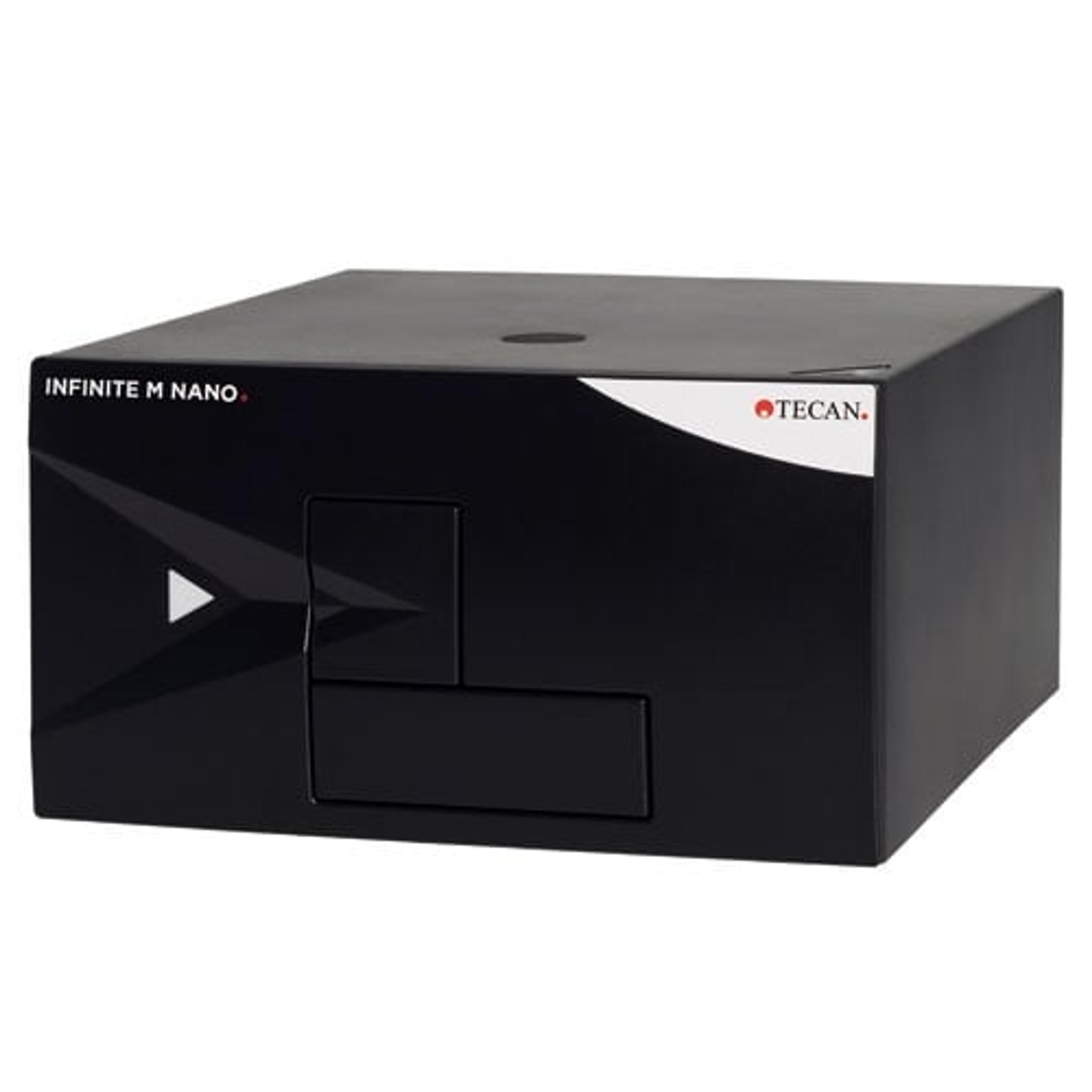
Infinite M Nano
TecanThe Infinite M Nano absorbance plate reader offers optimum sensitivity for ELISAs and low volume nucleic acid or protein quantification assays. Its automated pathlength correction combined with the low volume NanoQuant Plate™ consistently deliver highly precise results day after day, independent of sample volumes. The Infinite M Nano is one of six new tailored reader configurations based on the acclaimed Infinite 200 PRO. This upgradeable reader is designed to simplify your target applications and fit your needs and budget perfectly.
Links
Tags
MicroplatesMicroplates are multi-well plates used to increase the throughput of biological investigations. The number of wells microplates contain can range from 6 to 3243 wells, with the 96-well format being the most commonly used. Microplates can come tailored for a range of applications including cell culture, PCR, filtration, storage, non-binding surface, protein crystallization, as well as pre-coated, deep well and normal Standard microplates. Additionally, options for microplate colors include clear , black, white or black with clear bottom and white with clear bottom for absorbance microplate reader applications. Find the best microplates for your lab in our peer-reviewed product directory: compare products, check customer reviews and receive pricing direct from manufacturers.Protein QuantificationThe detection and quantification of proteins in a sample is vital across life sciences, pharmaceutical research and clinical diagnostics, and a variety of equipment is available to scientists to simplify the workflow. Proteins of interest can be easily labeled and detected on light-based detection instruments. Immunoassay kits allow you to identify a specific protein of interest and protein detection beads or antibody microarrays allow you to identify multiple specific proteins at once. Protein interactions and enzyme activity can also be monitored with protein-protein interaction assays. Additionally, the biophysical characterization of proteins is made easy with biokinetic analyzers. Find the best protein detection and quantification products in our peer-reviewed product directory: compare products, check customer reviews and receive pricing direct from manufacturers.FluorescenceThe emission of fluorescence occurs when a photon of energy is supplied to a fluorescent chemical compound by an external source, causing it to become excited. Fluorescence can be detected and measured for different purposes using microplate readers, fluorescence microscopes, fluorescence scanners, and flow cytometers.Protein DetectionProtein detection techniques are essential for understanding protein expression, localization, and function. Methods such as western blotting, ELISA, and mass spectrometry are commonly used in research and diagnostics. Browse our peer-reviewed product directory to find the best tools for protein detection, compare products, check reviews, and get pricing directly from manufacturers.LuminescenceLuminescence techniques detect and measure light emitted by substances during chemical reactions or biological processes. Widely used in assays for diagnostics, environmental monitoring, and drug screening, luminescence-based methods offer high sensitivity. Explore leading systems and products in our directory.Protein BiologyThe analysis of protein expression, identity and function is vital for many areas of life science research and drug discovery. Some of the most commonly used techniques in protein analysis include Western blotting, electrophoresis and mass spectrometry.