ResourceGeneral Lab
Production of Polyhydroxybutyrate from Lignocellulosic Hydrolysates—Optimization of Bacillus sacchari Fermentation and Scale Up from 2L to 200L
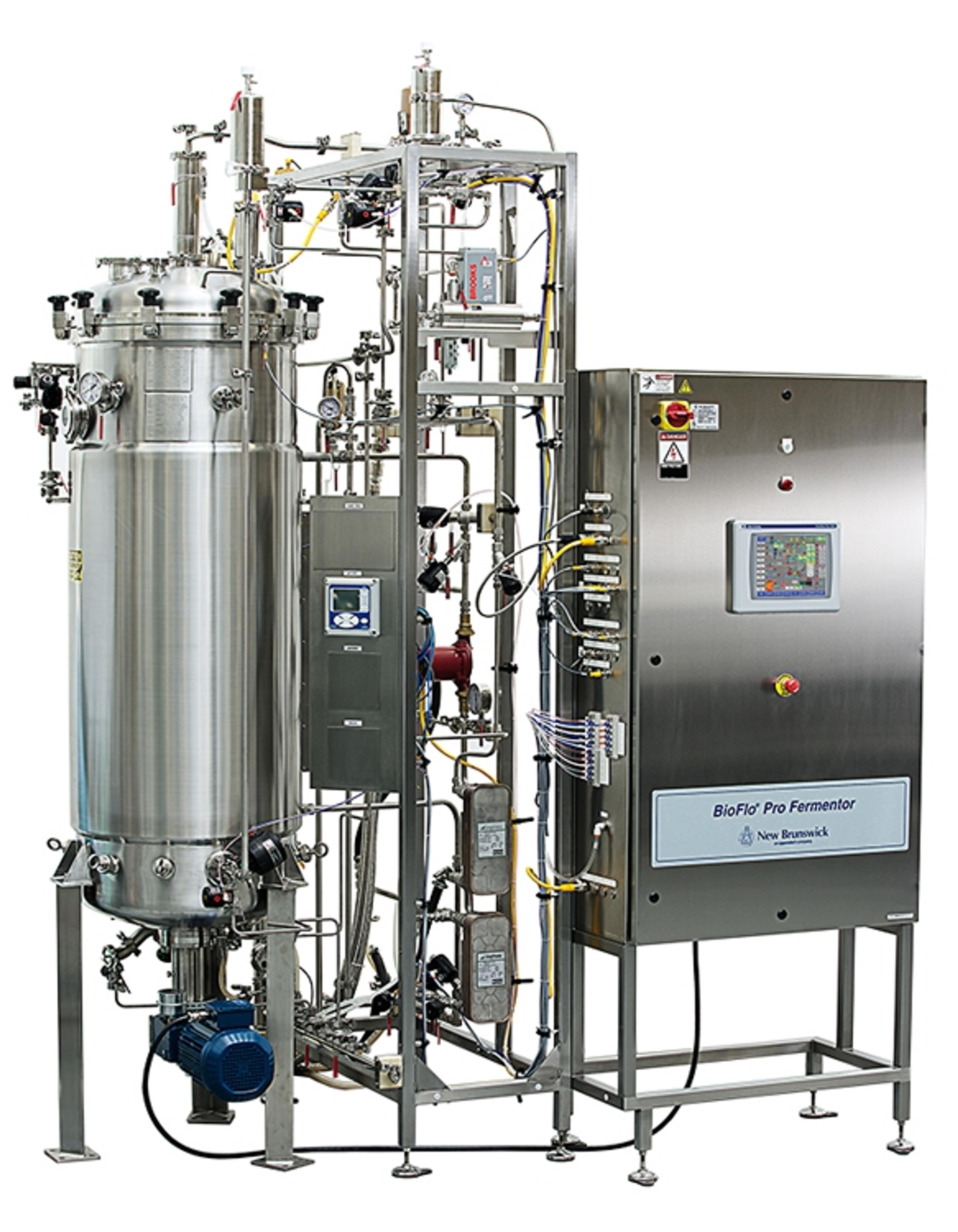
19 Feb 2016Polyhydroxyalkanoate (PHA) biopolymers are naturally produced by bacterial strains from sugars, this group includes polyhydroxybutyrate (PHB). PHB is seen as an environmentally friendly alternative to many fossil fuel plastics, however the production process is more expensive and so less environmentally friendly plastics are still being used. In this application note from Eppendorf an alternative method of PHB production is described using Eppendorf New Brunswick™ BioFlo®/CelliGen® 115 and New Brunswick BioFlo 415, 610 and Pro fermentation systems.
Links
Tags
Sample PreparationSample preparation can improve the quality and speed of separation techniques. Products to assist sample preparation include filtration equipment, evaporators, membranes and sieves.Heating EquipmentA range of heating equipment is available for different laboratory applications including furnaces, ovens and hotplates. Furnace systems include vacuum furnaces and ultra-high temperature furnaces and ovens comprise of convection and vacuum ovens.IncubatorsLaboratory incubators are used to provide a stable environment to cultivate and store samples in, giving you optimal control of temperature, humidity, oxygen and CO<sub>2</sub> levels. Incubators are necessary equipment for cell culture and microbial research. Control temperature with heated or refrigerated incubators, or the levels of CO<sub>2</sub> and oxygen with CO<sub>2</sub> incubators. Using environmental chambers, create a humid climate for testing samples. Find the best incubators in our peer-reviewed product directory: compare products, check customer reviews and receive pricing direct from manufacturers.MicrobiologyMicrobiology is the study of microorganisms including protists, prokaryotes, fungi, and, often, viruses. Microorganisms are a useful research tool as genetic vectors and, in immunology, for antibiotic susceptibility testing, cellular biology and genetics. Microorganisms commonly grow readily in incubators with microbial culture media; this can contain chromogenic supplements to differentiate between cell lines. Estimate your culture’s density of microorganisms with colony counters, or screen and select colonies for desirable clones with automated colony pickers. Additionally, equipment is available to monitor environments for the presence of microbes and identify with microbial identification instruments. Find the best microbiology products in our peer-reviewed product directory: compare products, check customer reviews and receive pricing direct from manufacturers.Environmental Monitoring and TestingEnvironmental monitoring and testing uses handheld portable analyzers, kits, spectrometers or chromatography systems for air, water, soil, food and other sample testing. Useful features of analyzers such as BOD and COD include portability, easy calibration, automation and sensitivity. Environmental test kits for pH, water, moisture, etc, should be accurate, sensitive, reliable, fast and easy to use.Automation Supplies / AccessoriesAutomated accessories and consumables make lab processes fast, efficient and reliable. Useful automation accessories include microplate sealers, label printers and reagent reservoirs.Particle CharacterizationParticle characterization instruments are used to determine particle size distribution, shape, surface area, zeta potential, density and porosity of particles and materials. Multiple tecchniques are available for determining particle size, shape and count including dynamic light scattering (DLS), laser diffraction, electrozone (Coulter technique), imaging particle analysis and single particle optical sensing. Determine the density of your material with a gas pycnometer or examine its surface area and porosity with gas adsorption analyzers and mercury porosimeters. Find the best particle characterization instruments in our peer-reviewed product directory: compare products, check customer reviews and receive pricing direct from manufacturers.Water PurificationThere are a number of water purification methods available to remove contamination from laboratory water. These systems include demineralization, reverse osmosis, filtration and ultrafiltration. A combination of methods is sometimes necessary to achieve purified water suitable for use in experiments.Bioprocessing / FermentationBioprocessing is the use of biological materials to perform commercial, scientific or medical research processes. Biological materials used include cells, enzymes and organisms. Usually bioprocessing requires a batch or continuous bioreactor such as a fermentor or cell culture system. The advantages of using a reactor include high productivity, easy configuration, adjustable values and automation.BioprocessingBioprocessing is the use of biological systems for the conversion of raw materials to desired products. This includes the research, development and manufacturing stages of production and can refer to food processing, small-molecule pharmaceutical manufacture, production of recombinant protein therapeutics, or the generation of renewable energy.Environmental ContaminationContaminants in the environment are harmful chemicals that are present in the air, land and water. These include pesticides, pharmaceuticals, persistent organic pollutants (POPs) and many more.Fuel and Energy