
ResourceSeparations
Performance of Thermal Desorption for Quantitative Analysis of Long-Chain Hydrocarbons
4 Dec 2018This study investigates the ability of Markes’ thermal desorption (TD) systems to monitor semi-volatile organic compounds (SVOCs), using a wide range of n-alkanes (n-C16 to n-C44) as a model. Markes demonstrate how modern TD technology delivers robust and repeatable results for compounds across this wide boiling range and can therefore be used to enhance GC–MS analysis of trace SVOCs in air and other matrices. It's also shown how highly repeatable re-collection of TD samples is a convenient approach to validating analyte recovery in accordance with standard methods.
Related products
Request Quote for All Products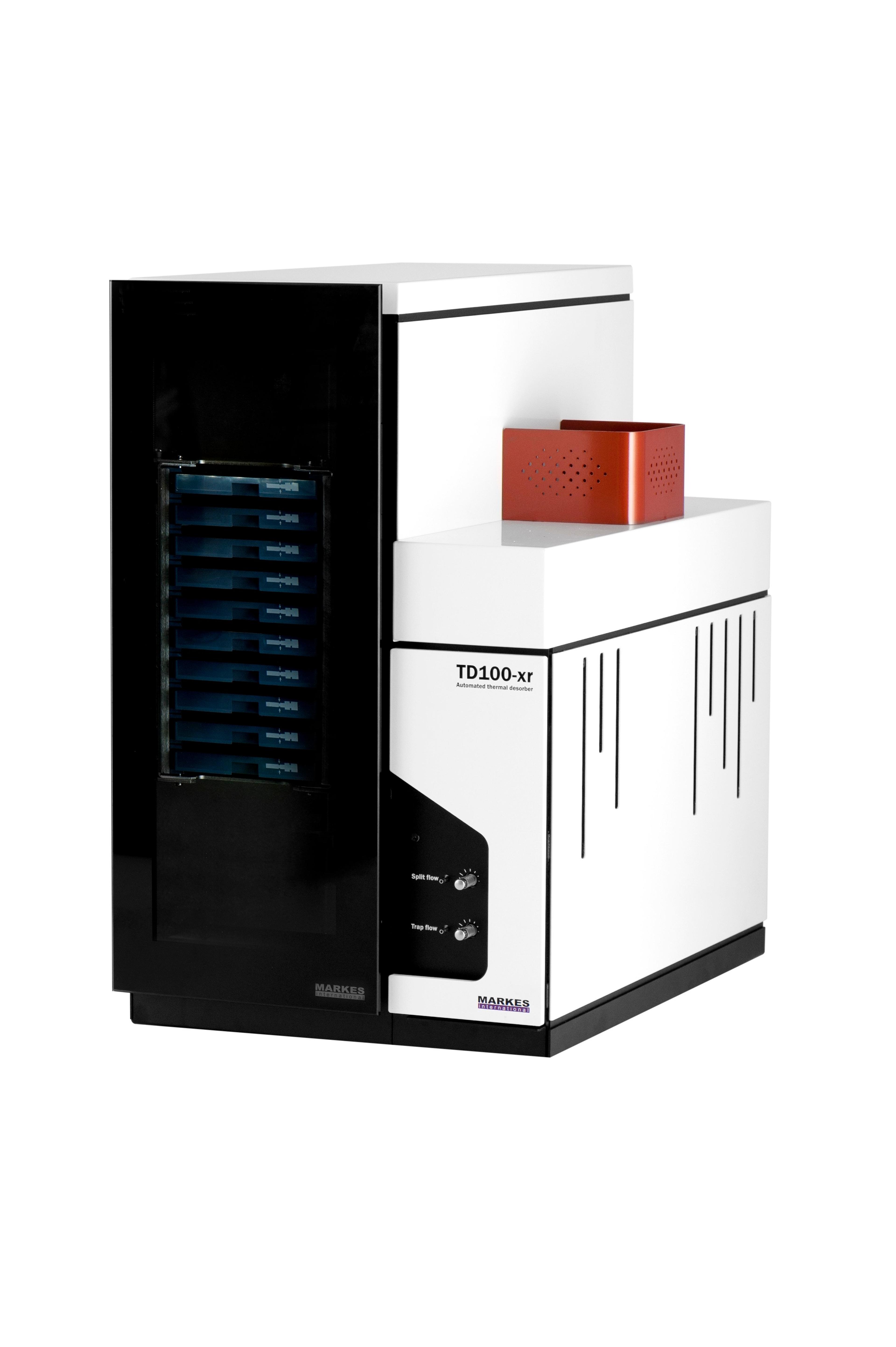
TD100-xr
Markes International LtdFully-automated analytical thermal desorption instrument for GC or GC–MS
Links
Tags
Gas ChromatographyGas chromatography (GC) is an analytical technique used to separate and quantitate mixtures of small and volatile compounds. Gas chromatographs or GC systems include components such as GC columns, detectors, pumps and autosamplers. Choose from packed or capillary GC columns, flame ionization (FID), photoionization (PID) electron capture detectors and selective or non-selective detectors. Find the best gas chromatographs in our peer-reviewed product directory: compare products, check customer reviews and receive pricing direct from manufacturers.HydrocarbonThermal DesorptionThermal desorption is a technique used to release volatile compounds from solid samples by heating them. It is often used in environmental testing and analysis of complex materials. Explore thermal desorption systems in our peer-reviewed product directory; compare products, check reviews, and get pricing directly from manufacturers.Semi Volatile Organic CompoundsSemi volatiles organic compounds (SVOCs) are a groups of compounds that have a low boiling point and evaporate above room temperature. SVOCs include phenols and polynuclear aromatic hydrocarbons (PAH).