ResourceSpectroscopy

Performance and Application Comparisons for Single and Three Reflection Diamond Crystals for the MIRacle ATR Accessory

Performance and Application Comparisons for Single and Three Reflection Diamond Crystals for the MIRacle ATR Accessory

17 Sept 2015

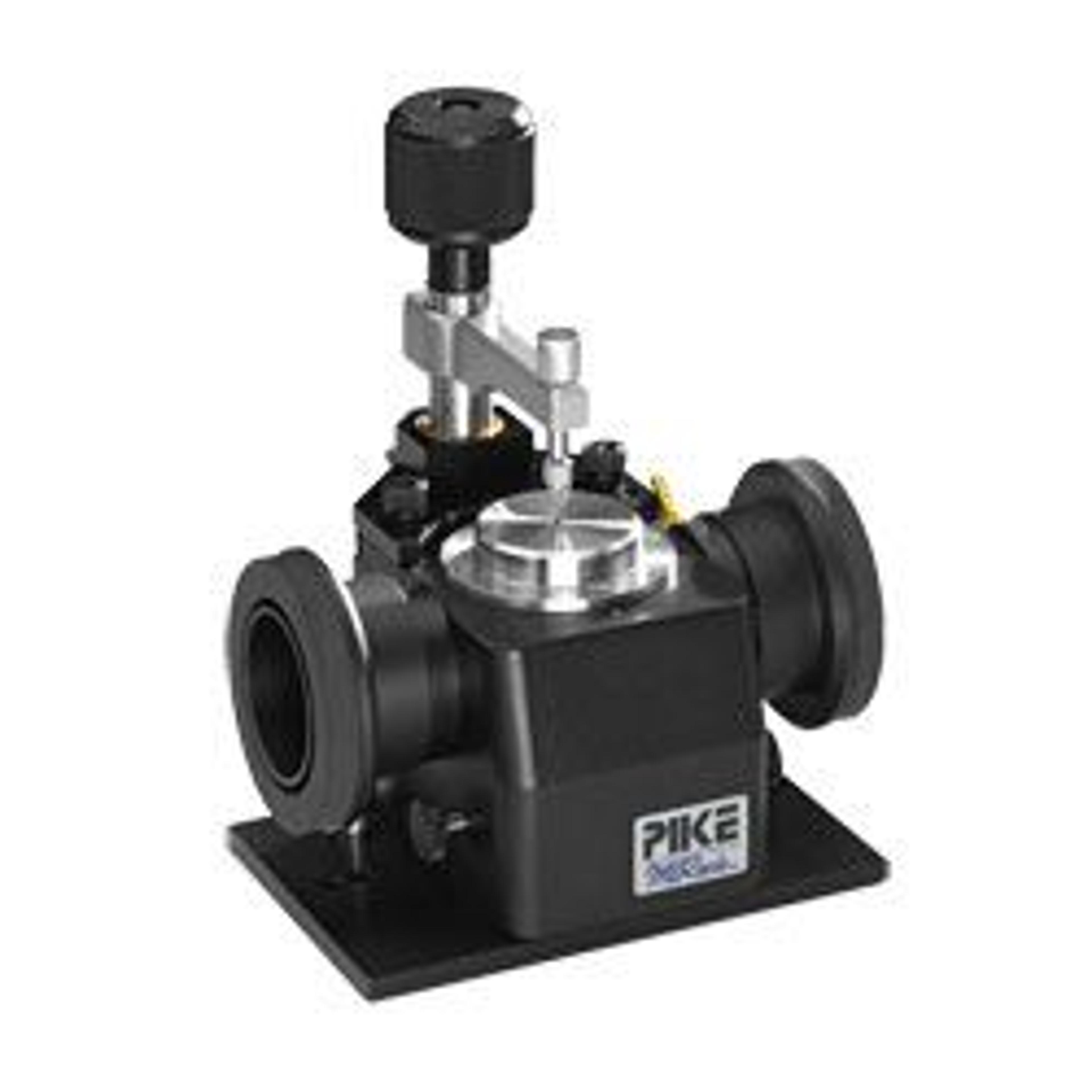
Single reflection attenuated total reflection (ATR) accessories have become a leading sampling tool for Fourier transform infrared (FTIR) spectroscopy due to the ease and speed of sampling by this method. Further advancement in ATR sampling comes from the optimization of the ATR crystal choice and optical features, particular diamond, which provides a unique, long lasting and chemically inert sampling medium and its use grows as users discover the benefits of this material. IR absorption by the sample can be optimized for high concentration and low concentration components, by adjusting for angle of incidence of the IR beam or the refractive index of the ATR crystal, for example. This application note characterizes the performance of single and three reflection diamond ATR crystal plates using the MIRacle™ ATR accessory.

Links

Tags

Infrared / IR SpectroscopyInfrared (IR) spectroscopy measures the interaction of infrared light with a sample, including transmission, reflectance & absorbance, facilitating the identification of analytes. Equipment used for quantitative analysis includes Fourier-transform infrared (FTIR) spectrometers, infrared cameras, FTIR gas analyzers, as well as attenuated total reflectance (ATR) accessories and pellet or film presses. Find the best IR spectroscopy products in our peer-reviewed product directory: compare products, check customer reviews and receive pricing direct from manufacturers.Particle CharacterizationParticle characterization instruments are used to determine particle size distribution, shape, surface area, zeta potential, density and porosity of particles and materials. Multiple tecchniques are available for determining particle size, shape and count including dynamic light scattering (DLS), laser diffraction, electrozone (Coulter technique), imaging particle analysis and single particle optical sensing. Determine the density of your material with a gas pycnometer or examine its surface area and porosity with gas adsorption analyzers and mercury porosimeters. Find the best particle characterization instruments in our peer-reviewed product directory: compare products, check customer reviews and receive pricing direct from manufacturers.Non-Destructive TechniquesNon-destructive techniques (NDT) describes a variety of analytical techniques used to evaluate the properties of a material. Common methods include ultrasonic, magnetic-particle, liquid penetrant, radiographic, remote visual inspection (RVI), and eddy-current testing. NDT is regularly used in forensic engineering, civil engineering, mechanical engineering, electrical engineering, systems engineering, aeronautical engineering, and medicine.Surface Area TestingPhysisorption studies fundamental parameters essential for the characterization of materials such as the specific surface area and pore size distribution. Properties such as porosity, strength, hardness, permeability, separation selectivity, corrosion, and thermal stress resistance can all be directly correlated to the porous structure of a material.Refractive IndexDiamond
Performance and Application Comparisons for Single and Three Reflection Diamond Crystals for the MIRacle ATR Accessory