
Perfect Fit for Lyophilized Moisture Analysis
9 Dec 2014This application note presents the Computrac® Vapor Pro® Rx as an excellent alternative to Karl Fischer titration for testing lyophilization closures. The instrument is highly durable, and since it uses no solvents or reagents, it is a greener alternative to Karl Fischer analysis.
Related products
Request Quote for All Products
Computrac® Vapor Pro®
Arizona Instrument LLCComputrac® Vapor Pro® - Green Karl Fischer Alternative, Moisture Specific Relative Humidity Sensor Technology The Computrac® Vapor Pro® provides a GREEN, fast, easy, and cost-effective alternative to Karl Fischer titration methods. It is an ideal choice for companies who want to make quality products as efficiently as possible by saving time and money, improving dryer efficiencies and eliminating costly rework and downtime expenses.Computrac® Vapor Pro® Features: Temperature Calibration Interface (TCI) Module (optional) 21 CFR Part 11 Compliant (optional) No Toxic Reagents or Specialized Glassware Automatic, Menu Driven Operation Requires Minimal User Skills Automatic Sample Loading Self-Diagnostics Alert Operator of any Instrument Problems Security Feature Restricts Access to Program and Instrument Settings Optional Multi-Point Temperature Calibration Module utilizes NIST-Traceable RTD to ±1°C Validation Package and Validation Services Available Real-Time Graph of Moisture Curve and Rate of Moisture Loss Accuracy, Durability, Reliability, Consistency and Speed Continuous Display of Test Time, Current Temperature, Programmed Test Temperature, Current Microgram Water Measurement, and Calculated Moisture Content Statistical Features Calculate Mean, Standard Deviation and Coefficient of Variation (C.V.) Easy Setup of Product Methods to Ensure Optimum Test Results Flexible Ending Criteria to Ensure Accurate Test Results Programmable Temperatures to ±1°C
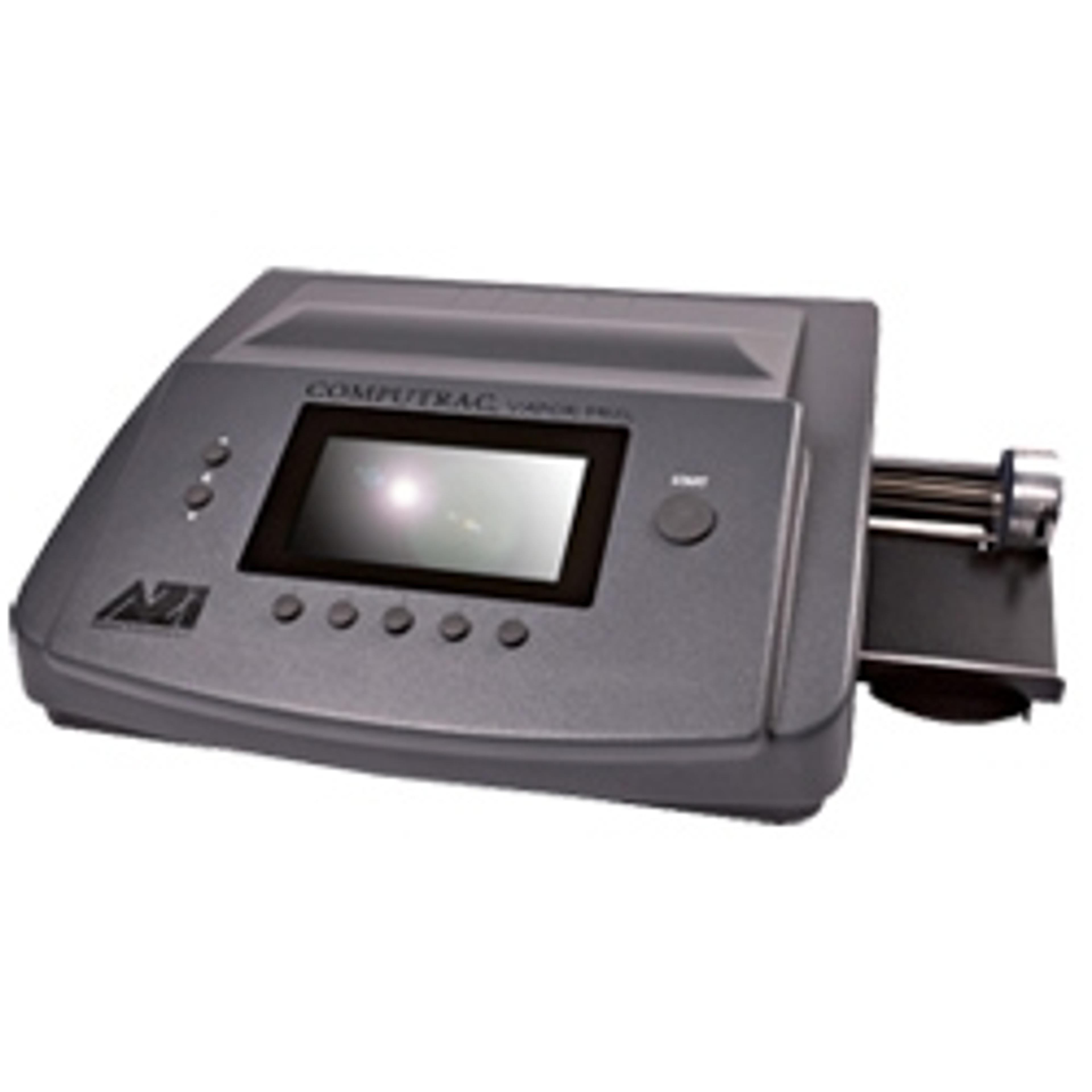
Computrac® Vapor Pro® Rx
Arizona Instrument LLCComputrac® Vapor Pro® Rx - Green Karl Fischer Alternative, Moisture Specific Relative Humidity Sensor Technology. The Computrac Vapor Pro® Rx Moisture Specific Analyzers are accurate, durable and easy to operate, do not require reagents or specialized glassware, and are suitable for both the production floor or laboratory. Comprehensive services are provided, including Technology Transfer, IQ/OQ/PQ, on-site service, sample testing, and calibration.Computrac® Vapor Pro® Rx Features: Temperature Calibration Interface (TCI) Module (optional) 21 CFR Part 11 Compliant (optional) No Toxic Reagents or Specialized Glassware Automatic, Menu Driven Operation Requires Minimal User Skills Automatic Sample Loading Self-Diagnostics Alert Operator of any Instrument Problems Security Feature Restricts Access to Program and Instrument Settings Optional Multi-Point Temperature Calibration Module utilizes NIST Traceable RTD to ±1°C Validation Package and Validation Services Available Real-Time Graph of Moisture Curve and Rate of Moisture Loss Accuracy, Durability, Reliability, Consistency and Speed Continuous Display of Test Time, Current Temperature, Programmed Test Temperature, Current Microgram Water Measurement, and Calculated Moisture Content Statistical Features Calculate Mean, Standard Deviation and Coefficient of Variation (C.V.) Easy Setup of Product Methods to Ensure Optimum Test Results Flexible Ending Criteria to Ensure Accurate Test Results Programmable Temperatures to ±1°C Accepts Multiple Vial Sizes | Maintains Sealed Vial Integrity