ResourceSpectroscopy

Path to Resolving Power Beyond 250: A Comprehensive Trapped Ion Mobility Spectrometry Analytical Model

Path to Resolving Power Beyond 250: A Comprehensive Trapped Ion Mobility Spectrometry Analytical Model

6 Nov 2015

In trapped ion mobility spectrometry (TIMS), ions are radially confined in a quadrupolar field and axially trapped by an electric field gradient (EFG) that counteracts the drag force exerted from a flow of gas. After ions reach a mobility-dependent equilibrium position inside the trap, the magnitude of the EFG is decreased such that ions elute over a user defined timescale (~10 ms to 1 s). Recently, an analytical model for TIMS was derived and, in part, experimentally verified. A central, but not yet fully explored component of the model involves the fluid dynamics at work in the analyzer (i.e.: gas velocity, pressure gradient, flow profile, etc.). This poster characterizes the fluid properties using computational fluid dynamics (CFD) simulations and ion mobility experiments.

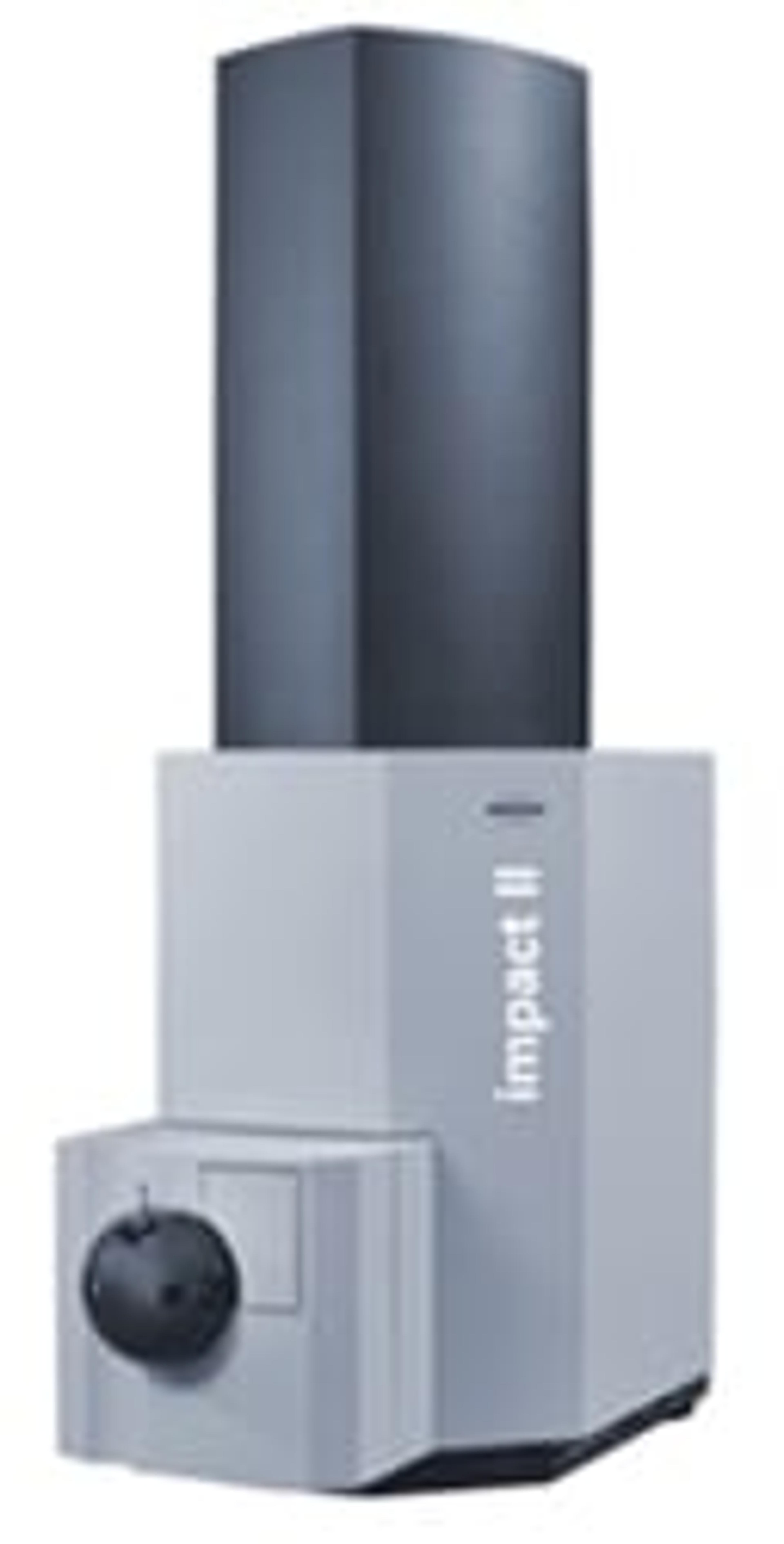
Impact II

Bruker Daltonics

 Robustness to sample variation, low picogram sensitivity, and simplicity in delivering highly precise and reproducible MS and MS/MS data without the need for tuning or optimization.

(4)

Links

Tags

Mass SpectrometryMass spectrometry (MS) is a powerful analytical technique used to identify and quantify molecules based on the mass-to-charge ratio of gas-phase ions. It provides detailed information about the structure, composition, and properties of compounds and is widely used across fields such as environmental monitoring, materials science, drug discovery and development, food and beverage testing, and wider chemical research. Key MS techniques include tandem mass spectrometry (MS/MS), liquid chromatography–mass spectrometry (LS-MS) and inductively coupled plasma (ICP-MS). Choosing from these wide range of techniques and technologies can be a daunting task, so keep up to date with scientific applications, performance expectations, and customer reviews here all in one place. Visit our product directory to receive quotes direct from the manufacturer. MicrofluidicsMicrofluidics is the science of manipulating small volumes of fluids in micro-sized channels. It is widely used in diagnostics, drug development, and lab-on-a-chip technologies. Microfluidic devices can enable rapid, cost-effective, and high-throughput analysis of biological samples. Browse our peer-reviewed product directory to find the best microfluidic devices, compare products, check reviews, and get pricing directly from manufacturers.Gas AnalysisGas analysis is used to measure the composition of gases in various environments, such as industrial processes, air quality monitoring, and environmental studies. Techniques like gas chromatography and mass spectrometry are commonly used. Explore gas analysis tools in our peer-reviewed product directory; compare products, check reviews, and get pricing directly from manufacturers.Ion Mobility Spectrometry