
Particle Diameter Distribution of Subnano Gold Particles using the Small-Angle X-ray Scattering Method
Particle Diameter Distribution of Subnano Gold Particles using the Small-Angle X-ray Scattering Method
28 Dec 2015By using the small-angle x-ray scattering method, it is possible to evaluate the size distribution of powders, microparticles dispersed in liquid, and particles/pores distributed in thin films. In particular, it is possible to evaluate the average size and distribution of sub-nanometer particles, which are difficult to evaluate with a TEM or DLS. In this application note, the size distribution of gold nanoparticles in organic solvent was evaluated.
Related products
Request Quote for All Products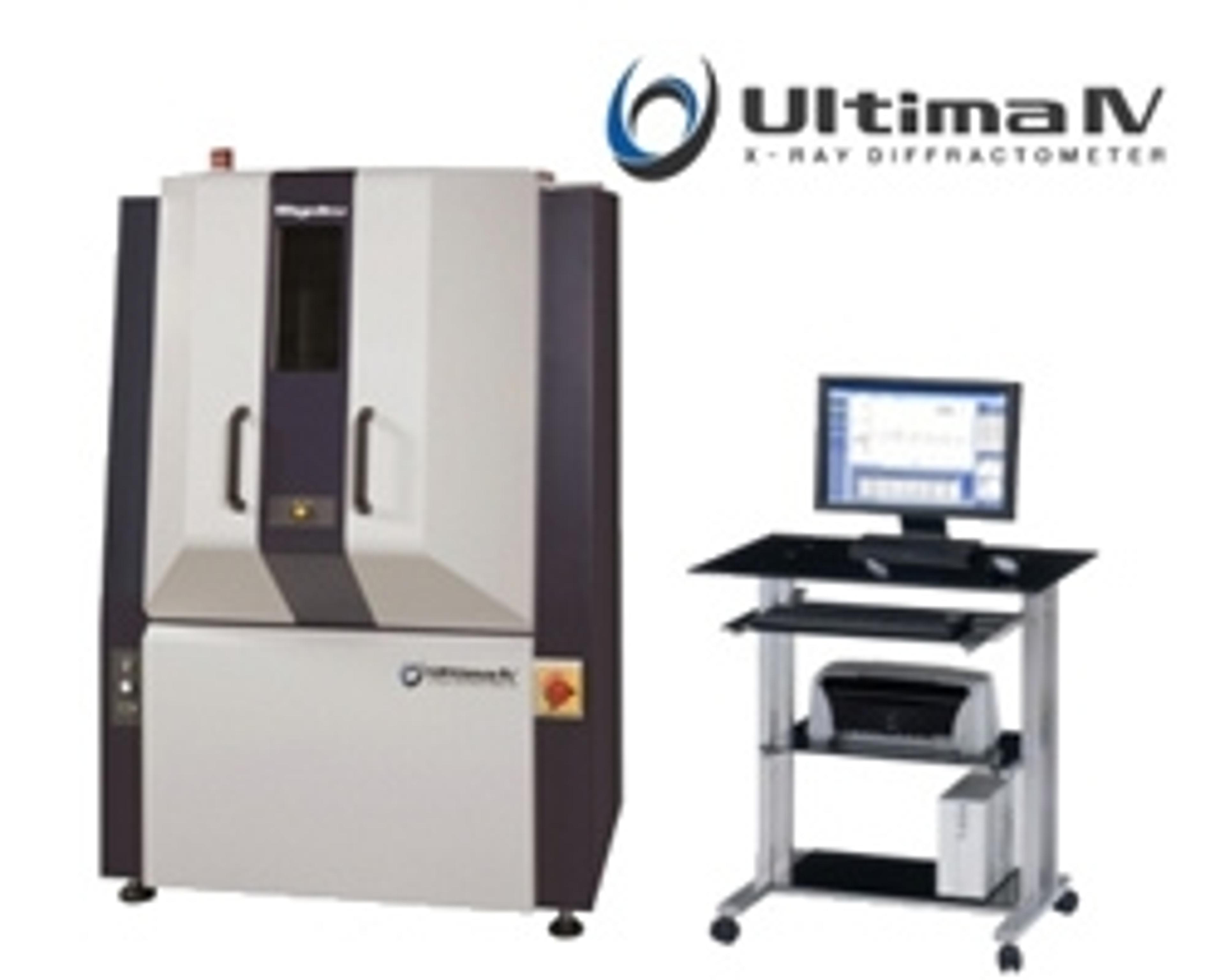
UltimaIV
Rigaku CorporationThe Ultima IV represents the state-of-the-art in multipurpose X-ray diffraction (XRD) systems. Incorporating Rigaku's patented cross beam optics (CBO) technology for permanently mounted, permanently aligned and user-selectable parallel and focusing geometries, the Ultima IV X-ray diffractometer can perform many different measurements fast.With a multipurpose diffractometer, performance is measured by not only how fast you perform an experiment but also how fast you can switch between different types of experiments. Individual experiments are optimized with accessories like the D/teX Ultra high-speed position sensitive detector system, but the speed between experiments is radically improved with the combination of the automated alignment and CBO.The Ultima IV is the only XRD system on the market today that incorporates fully automatic alignment. When coupled with CBO and the in-plane arm, the automatic alignment capability makes the Ultima IV X-ray diffractometer the most flexible system available for multipurpose applications.UltimaIV Features: Full automated alignment under computer control. Optional in-plane diffraction arm for in-plane measurements without reconfiguration. Focusing and parallel beam geometries without reconfiguration. SAXS capabilities. Optional D/teX Ultra high-speed, position-sensitive detector system.

SmartLab
Rigaku CorporationThe SmartLab is the most novel high-resolution diffractometer available today. Perhaps its most novel feature is the SmartLab Guidance software, which provides the user with an intelligent interface that guides you through the intricacies of each experiment. It is like having an expert standing by your side. The system incorporates a high resolution θ/θ closed loop goniometer drive system, cross beam optics (CBO), an in-plane scattering arm, and an optional 9.0 kW rotating anode generator.Coupling a computer controlled alignment system with a fully automated optical system and the Guidance software makes it easy to switch between hardware modes, ensuring that your hardware complexity is never holding back your research.Whether you are working with thin films, nanomaterials, powders, or liquids the SmartLab will give you the functionality to make the measurements you want to make when you want to make them.SmartLab Features: Full automated alignment under computer control. Optional in-plane diffraction arm for in-plane measurements without reconfiguration. Focusing and parallel beam geometries without reconfiguration. SAXS capabilities.