
ResourceSpectroscopy
Nucleic Acid Quantitation and Analysis Using the QuickDrop Spectrophotometer
1 Feb 2019Spectrophotometry is a well-established technique used to quantitate and analyze biological substances. Of these substances, nucleic acids are one of the most routinely measured in life science laboratories. Determining the concentration and purity of these samples is extremely important for many downstream experiments such as PCR, qPCR, sequencing, and DNA microarrays.
Related products
Request Quote for All Products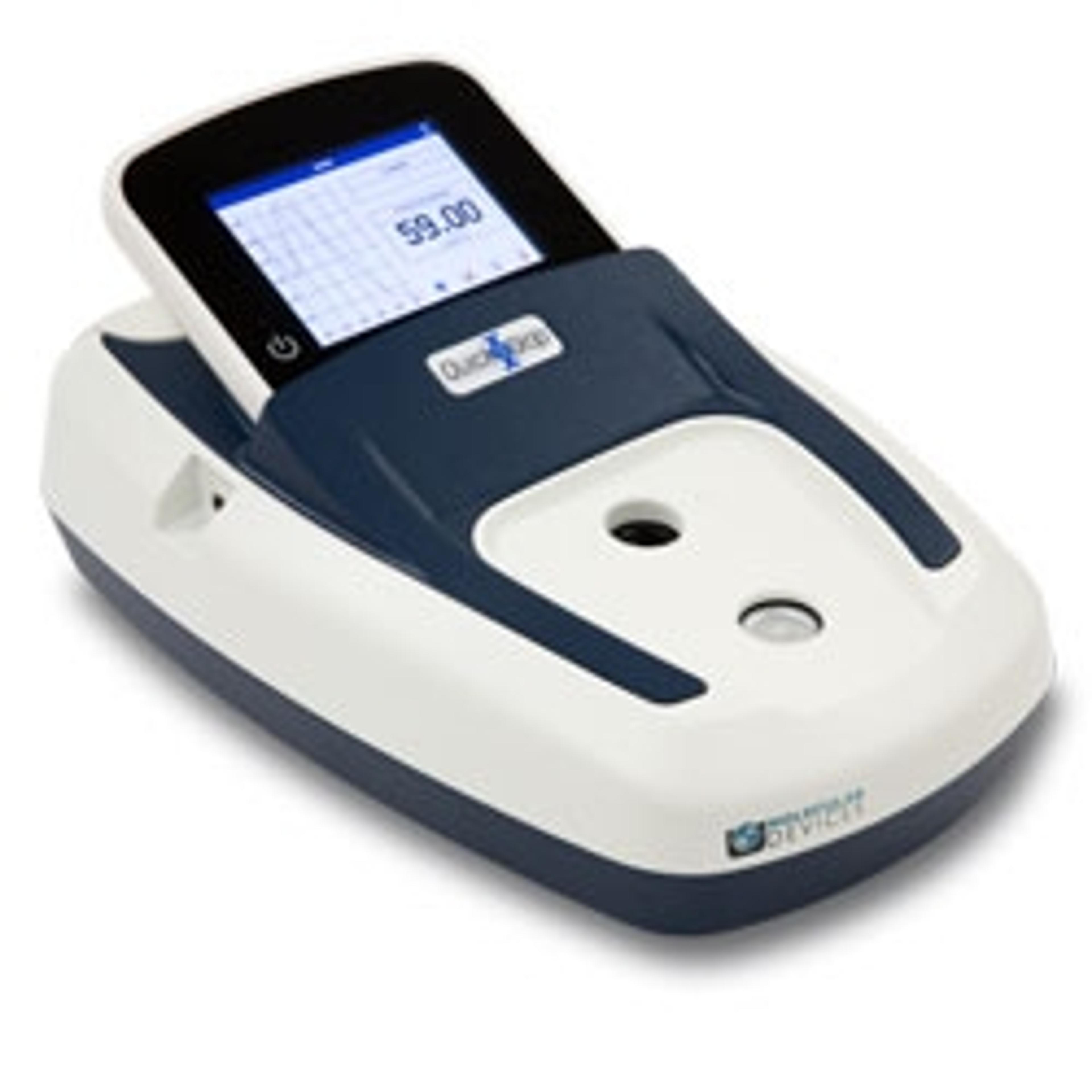
SpectraMax QuickDrop Micro-Volume Spectrophotometer
Molecular Devices®Rapid, accurate DNA, RNA, and protein quantitation in a one-touch, full-spectrum micro-volume absorbance reader.
Links
Tags
UV-Visible SpectroscopyUltraviolet-visible (UV-Vis) spectrophotometers are used to measure the interaction of UV and visible light with a sample, including transmission, reflectance & absorbance. The two major instrument classes are single-beam or double-beam spectrophotometers. More specialized equipment includes colorimeters, spectroradiometers and refractometers. Portable and microvolume spectrophotometers are also available. For the modular spectroscopy lab, explore a range of light sources for combination with a spectrograph/spectrometer and optics. Find the best UV-Vis spectroscopy products in our peer-reviewed product directory: compare products, check customer reviews and receive pricing direct from manufacturers.DNA / RNA Extraction and PurificationPurified DNA and RNA are required for numerous downstream molecular biology applications. Consequently, the importance of high-quality DNA/RNA extraction and purification equipment cannot be underestimated. Many purification kits are available and are typically optimized for nucleic acid type and source, including plasmid DNA, genomic DNA, mRNA, RNA and viral nucleic acid purification kits. Automated extraction and purification of nucleic acids can be implemented with magnetic bead separator instruments or high-throughput purification workstations. Find the best DNA/RNA extraction and purification equipment in our peer-reviewed product directory: compare products, check customer reviews and receive pricing direct from manufacturers.DNA / RNA QuantificationDetection and quantification of nucleic acids is important in molecular biology, cloning, expression, forensics and clinical diagnostics. Nucleic acids can be detected by labeling with colorimetric, fluorescent or radio labels and using in situ hybridization kits to identify specific sequences. Multiple nucleic acids can be detected and quantified at once using RNA / DNA detection beads or RNA / DNA microarrays. Find the best DNA / RNA Quantification products in our peer-reviewed product directory: compare products, check customer reviews and receive pricing direct from manufacturers.Nucleic Acid ConcentrationqPCRQuantitative PCR (qPCR) is a molecular biology technique used to amplify and measure the amount of a specific DNA or RNA target. It plays a crucial role in gene expression analysis, pathogen detection, and quantifying DNA or RNA in various applications. Real-time PCR provides precise, quantitative results and is widely used in research, diagnostics, and clinical studies. Browse our peer-reviewed product directory to find the best qPCR solutions; compare products, check reviews, and get pricing directly from manufacturers.DNA QuantificationDNA quantification is the process of measuring the amount of DNA in a sample. It is vital in genomics, molecular biology, and biotechnology, helping to ensure accurate experiments and data analysis. Explore DNA quantification tools in our peer-reviewed product directory; compare products, check reviews, and get pricing directly from manufacturers.DNADeoxyribonucleic Acid (DNA) is the main component of chromosomes and the carrier of genetic information of living organisms. Find out here about PCR, NGS, ChIP-Seq, gel imaging, and many other techniques which can be used for the analysis of DNA.RNARNA is a nucleic acid that plays a key role in gene expression and protein synthesis. It serves as a messenger between DNA and ribosomes, carrying genetic instructions to produce proteins. Advances in RNA-based therapies, such as mRNA vaccines and gene editing, have revolutionized treatment strategies for genetic disorders and infectious diseases. Explore RNA research tools and therapies in our peer-reviewed product directory; compare products, check customer reviews, and get pricing directly from manufacturers.SequencingSequencing refers to determining the order of nucleotides in a DNA or RNA molecule. This process is essential in genomics, diagnostics, and evolutionary biology. Techniques like next-generation sequencing (NGS) and Sanger sequencing provide high-throughput and precise data for analyzing genomes and transcriptomes. Browse our peer-reviewed product directory to find the best sequencing tools and reagents, compare products, check reviews, and get pricing directly from manufacturers.UV-Visible-NIRUV-Visible-NIR spectroscopy is used to analyze a wide range of samples based on their absorption of ultraviolet, visible, and near-infrared light. It is commonly applied in chemical analysis, material science, and quality control. Browse our peer-reviewed product directory to find the best UV-Visible-NIR spectroscopy systems, compare products, check reviews, and get pricing directly from manufacturers.UVUltraviolet (UV) light is used in a variety of applications, including disinfection, spectrophotometry, and molecular biology. UV light can damage DNA, making it a powerful tool in sterilization and in studies of mutagenesis and gene repair. Explore UV-related products in our peer-reviewed product directory; compare products, check reviews, and get pricing directly from manufacturers.SpectrophotometrySpectrophotometry is a technique used to measure the absorption or transmission of light through a sample. It is commonly used in chemical analysis, environmental monitoring, and quality control. Explore spectrophotometry tools in our peer-reviewed product directory; compare products, check reviews, and get pricing directly from manufacturers.