
ResourceLife Sciences
Novel method to assess primary hepatocyte concentration and viability
31 Jul 2019In this application note, Nexcelom outlines its new method for use in complex cell population characterization assays, such as the reliable counting and viability determination of primary hepatocytes. With dual fluorescence detection capabilities, the Cellometer® Vision Cell Analyzer incorporates image-based cell counting and fluorescence detection in a compact and easy-to-use instrument.
Related products
Request Quote for All Products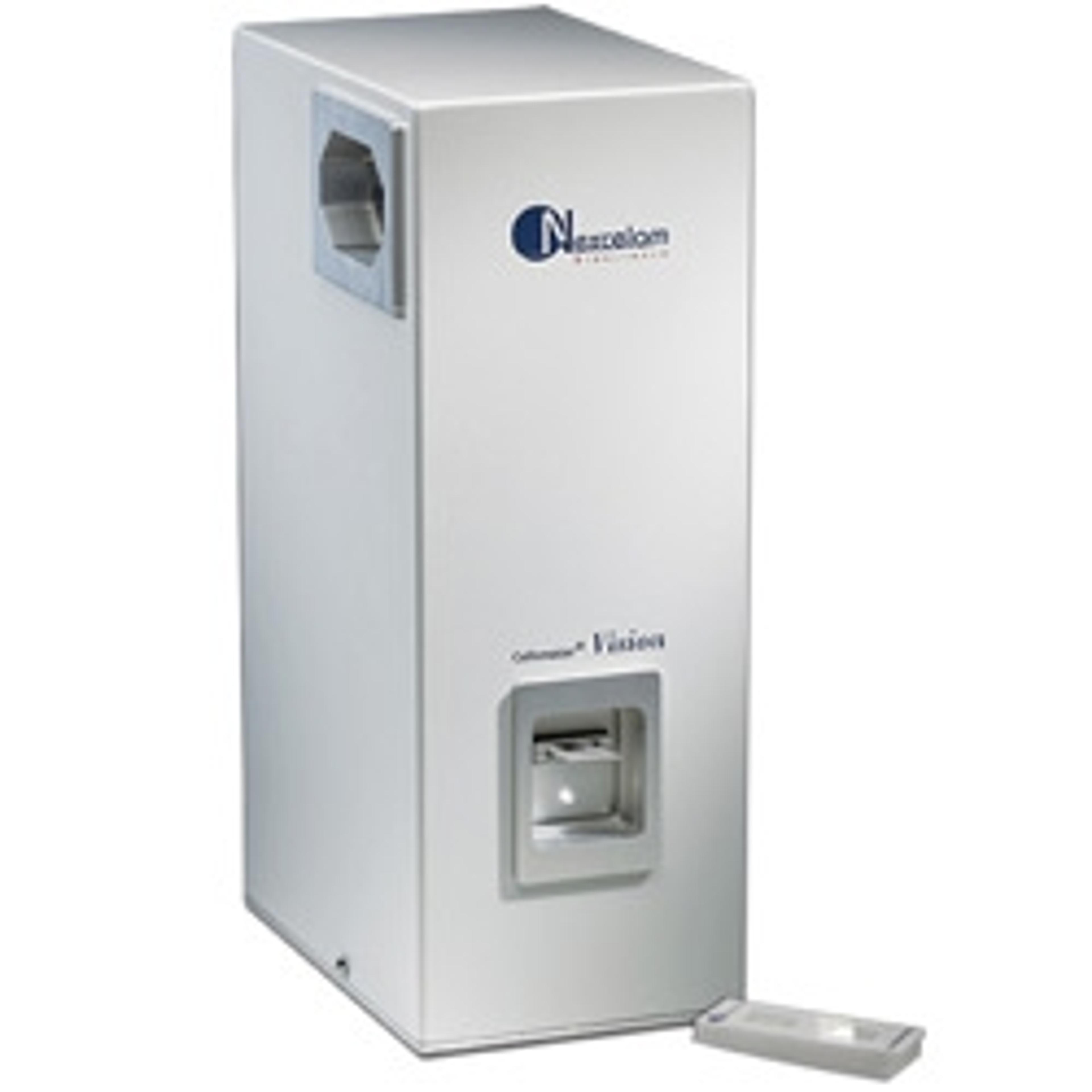
Cellometer Vision CBA Image Cytometer
Image cytometer with two interchangable fluorescent optic modules for simple, single-sample 20 uL cell-based assays with flow-like data output.
Tags
Flow Cytometry / Cell CountingFlow cytometers are used to count, sort and examine multiple characteristics of cells. Other cell analysis equipment includes image cytometers, cell counters, fluorescence-activated cell sorters (FACS), magnetic-activated cell sorters (MACS), and a range of flow cytometry assay kits. Flow cytometers can reveal information on cell viability, cell proliferation, apoptosis and cell cycle progression, as well as identify cell populations and intracellular or cell-surface molecules. Additionally, some flow cytometers, known as FACS, have an additional sorting function after analysis. Cell counters and image cytometers count live and dead cell populations and can also conduct cell proliferation assays. Find the best flow cytometers, cell counters and cell sorters in our peer-reviewed product directory: compare products, check customer reviews and receive pricing direct from manufacturers.Cell ViabilityCell viability assays assess the health of cells and their ability to proliferate. These tests are crucial in drug development, toxicity testing, and cell-based research. Common methods for assessing viability include MTT, live/dead assays, and flow cytometry. Browse our peer-reviewed product directory to find the best tools for cell viability assays, compare products, check reviews, and get pricing directly from manufacturers.FluorescenceThe emission of fluorescence occurs when a photon of energy is supplied to a fluorescent chemical compound by an external source, causing it to become excited. Fluorescence can be detected and measured for different purposes using microplate readers, fluorescence microscopes, fluorescence scanners, and flow cytometers.Cell ImagingCell imaging can be achieved using a number of techniques including confocal microscopy, transmission electron microscopy, atomic force microscopy, and light sheet microscopy.Cell AnalysisThe analysis of cells allows researchers to understand the factors which contribute to cell health and function. These influencing processes can then be predicted and altered, leading to the development of medication and disease treatments.Image AnalysisImage analysis involves the extraction of meaningful information from images, often using software to quantify and interpret visual data. It is widely used in cell biology, material science, and diagnostics. Increasingly, AI is being used to streamline image analysis. Explore image analysis tools in our peer-reviewed product directory; compare products, check reviews, and get pricing directly from manufacturers.ToxicityToxicity is defined as the degree to which a substance can harm humans or animals. It is essential to study the toxicity of pharmaceutical products during the development process so that optimum dosage can be established for the administration of the drug.Hepatocytes