
ResourceLab Automation
Nano High-Throughput Screening (nHTS) Platform - Miniaturization of Cell-based GPCR and Kinase Assays
10 Jul 2012Read this poster to learn how BMG LABTECH has demonstrated the application of the PathHunter® GPCR and cell-based kinase assays 3456 and 1536 platforms using Labcyte’s ECHO® Liquid handler and BMG LABTECH’s PHERAstar FS. Labcyte uses acoustic energy to transfer fluids in a gentle, non-contact manner, without tips, tubes, or nozzles that can create challenges in small high-throughput assays, while direct optic bottom reading, high resolution cell layer scanning.
Related products
Request Quote for All Products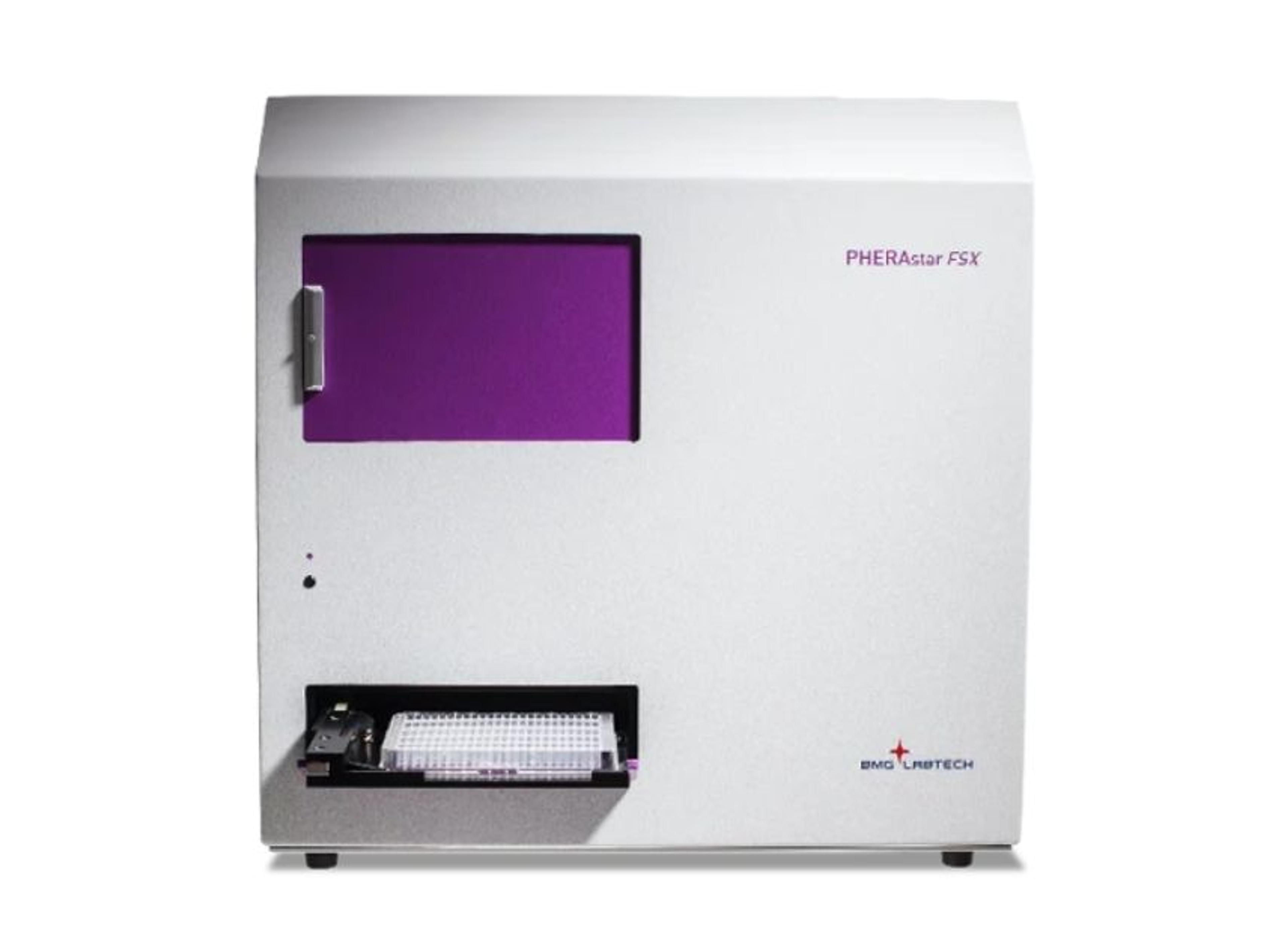
PHERAstar® FSX HTS Microplate Reader
BMG LABTECHThe most sensitive microplate reader for high-throughput screening
Links
Tags
MicroplatesMicroplates are multi-well plates used to increase the throughput of biological investigations. The number of wells microplates contain can range from 6 to 3243 wells, with the 96-well format being the most commonly used. Microplates can come tailored for a range of applications including cell culture, PCR, filtration, storage, non-binding surface, protein crystallization, as well as pre-coated, deep well and normal Standard microplates. Additionally, options for microplate colors include clear , black, white or black with clear bottom and white with clear bottom for absorbance microplate reader applications. Find the best microplates for your lab in our peer-reviewed product directory: compare products, check customer reviews and receive pricing direct from manufacturers.High-Throughput ScreeningHigh-throughput screening (HTS) is an automated drug discovery technique for identification of active compounds against a compound library. Use HTS readers and integrated assay preparation / analysis workstations to screen your compounds. Identify active compounds against various HTS libraries, including membranes, proteins and peptides and HTS cell lines. Find the best high-throughput screening products in our peer-reviewed product directory: compare products, check customer reviews and receive pricing direct from manufacturers.Microplate Readers / DetectorsMicroplate readers are used to automate the detection and analysis of labeled or label-free components in microplates during assays or live-cell monitoring. Microplate readers are generally distinguished by their mode of detection. Types include absorbance, luminescence, fluorescence intensity, fluorescence polarization, TRF / FRET and multimode microplate readers. Microplate readers deliver a high throughput of samples by reading multiple wells simultaneously, with the 96-well format the most commonly used. As a result, microplate readers are often used in the drug discovery, bioassays, research and pharmaceutical industries for screening applications. Microplate loading can also be automated, with robotic microplate stackers to increase throughput. Find the best microplate readers in our peer-reviewed product directory: compare products, check customer reviews and receive pricing direct from manufacturers.Automated Liquid HandlingAutomated liquid handling equipment is used to mix, dilute and dispense allotted volumes of liquid into microplates and other vessels automatically. The robotic, liquid handling arms can dispense from single channel to 3456 multichannel as well as operate nanoliter dispensing, enabling high throughput of samples. Find the best automated liquid handlers in our peer-reviewed product directory: compare products, check customer reviews and receive pricing direct from manufacturers.Acoustic Liquid HandlingLiquid Handling WorkstationLiquid handling workstations automate the process of sample preparation, improving accuracy and efficiency. These systems are essential for high-throughput applications in biological, chemical, and pharmaceutical research, reducing human error and increasing reproducibility. Workstations come equipped with robotic arms, pipetting tools, and other accessories to streamline lab workflows. Explore liquid handling workstations in our peer-reviewed product directory; compare products, check reviews, and get pricing directly from manufacturers.