
ResourceSeparations
Multiresidue Pesticides Screening and Quantitation in Complex Food Matrices Using an Agilent Ultivo Triple Quadrupole LC/MS
15 May 2018This application note describes a UHPLC/MS/MS-based multiresidue method for the determination of more than 250 pesticides and their metabolites in food samples. The method has been applied to the analysis of pesticide residues in complex matrices such as avocado and black tea. Demonstrating that most of the compounds can be accurately quantified below maximum residue limits in matrices with excellent precision.
Related products
Request Quote for All Products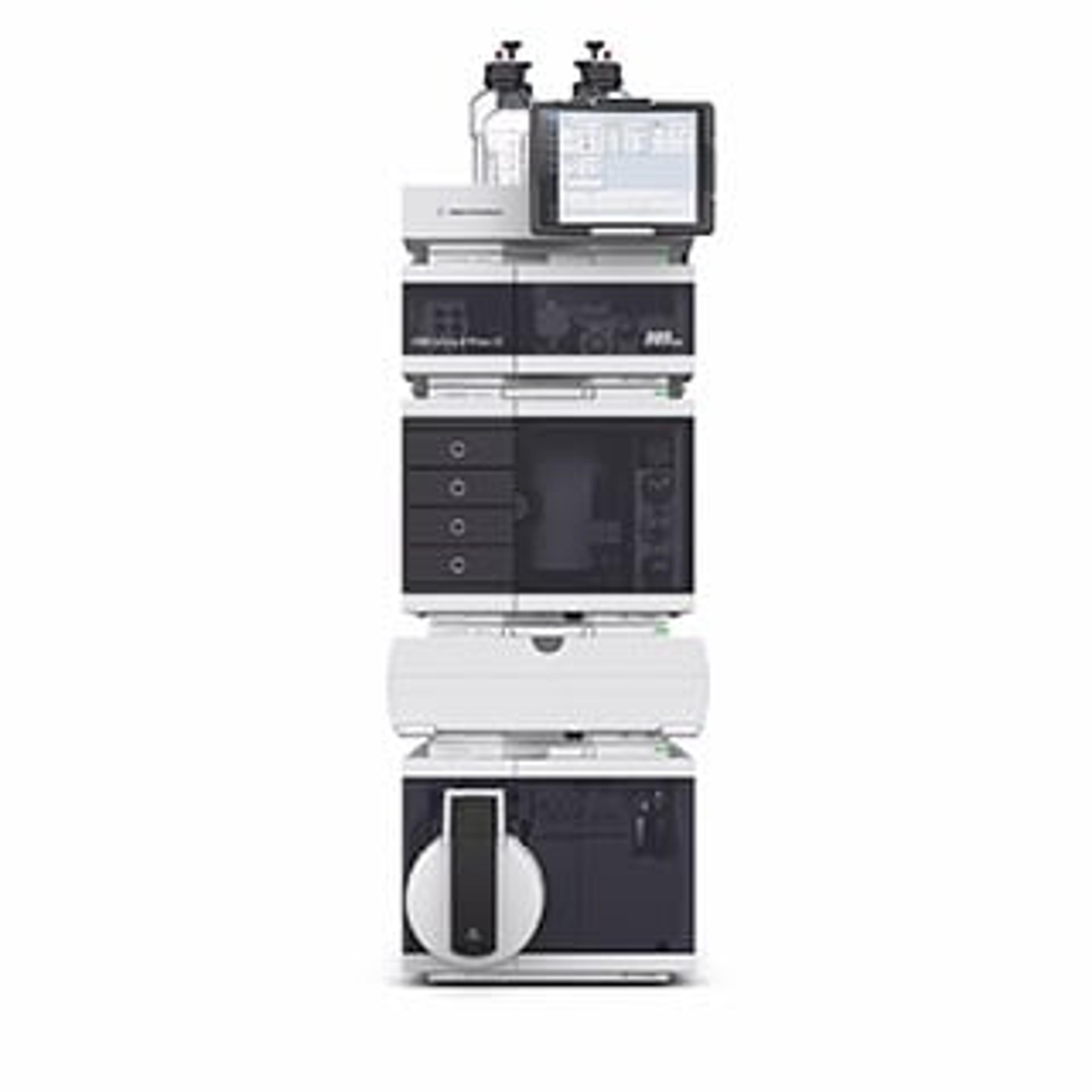
Ultivo triple quadrupole LC/MS (LC/TQ)
Agilent TechnologiesUltivo presents a transformative approach to LC/TQ and is the newest member of the Agilent Triple Quadrupole family.
Links
Tags
UHPLC and HPLCHigh performance liquid chromatography (HPLC) and ultra high performance liquid chromatography (UHPLC), also known as UPLC, are analytical techniques used to separate, identify and quantitate components of complex mixtures including biological samples such as proteins and lipids as well as chemical mixtures of pesticides, drugs and oils. Both techniques are liquid chromatographic methods but differ by operating pressures (HPLC < 6000 psi < UHPLC ). Components of HPLC and UHPLC systems include columns, detectors, pumps, autosamplers and column heaters. Explore a range of UHPLC and HPLC columns for your specific sample needs including reverse phase, normal phase, ion exchange, HILIC, ion exclusion and size exclusion columns. For more specialized HPLC, explore FPLC, countercurrent LC and simulated moving bed systems. Find the best UHPLC and HPLC equipment in our peer reviewed product directory: compare products, check customer reviews and receive pricing direct from manufacturers.LC-MSLC-MS (liquid chromatography-mass spectrometry) systems and equipment are used for separation and quantitative analysis of complex mixtures, combining liquid chromatography and mass spectrometry. Quantify proteins, contaminants, pesticides or screen for drug metabolites with a high level of sensitivity. LC-MS systems and equipment include reverse phase, normal phase and specialized columns integrated with various MS detectors such as time-of-flight (TOF), quadrupole, orbitrap or ion trap mass analyzers. LC-MS/MS instruments equipped with a qTOF or triple quadrupole analyzer give greater sensitivity and resolving power to your analysis. Find the best LC-MS equipment in our peer-reviewed product directory: compare products, check customer reviews and receive pricing direct from manufacturers.PesticidesPesticides are used to protect crops from diseases, pests and unwanted plants. They are classed as persistent organic pollutants (POPs) and can be harmful to humans. The Environmental Protection Agency (EPA) currently regulates the use of pesticides in the USA. Food SafetyFood safety describes the prevention of food-borne illnesses. Contamination with a variety of pathogens can be prevented with adequate temperature control, hygiene and labeling. Food samples can be tested using GC/MS, HPLC, SPE, and qPCR to ensure their adherence to regulations.Food QualityFood quality refers to the attributes of food that influence its safety, nutrition, and taste. Monitoring and ensuring food quality are essential in production to meet health regulations and consumer expectations. Techniques like spectroscopy, chromatography, and microbial testing are used to assess food properties and detect contaminants. Browse our peer-reviewed product directory to find food quality testing solutions; compare products, check reviews, and get pricing directly from manufacturers.LC-MSLiquid Chromatography-Mass Spectrometry (LCMS) is a powerful analytical technique that combines the separation power of liquid chromatography with the detection capabilities of mass spectrometry. It is widely used for qualitative and quantitative analysis of complex mixtures in pharmaceuticals, proteomics, and environmental studies. Browse our peer-reviewed product directory to find the best LCMS systems, compare products, check reviews, and get pricing directly from manufacturers.