Multi-Fluorescence Imaging of Protein Crystals

11 May 2017

The unambiguous and reliable identification of biological crystals remains a major obstacle in crystallography, particularly in the critical stage of initial screening experiments. Crystallographers have often relied on the intrinsic fluorescence of aromatic amino acids, such as tryptophan, to differentiate between salt and protein crystals. In some cases, proteins have very few tryptophan amino acids, or none at all, making it impossible to use UV fluorescence for imaging. The addition of a fluorescent molecule to one’s protein enables the ability to do visible fluorescence imaging and acquire high contrast images in very short imaging times with no sample damage.

ROCK MAKER®

FORMULATRIX®, Inc.

One Software for Your Entire Protein Crystallization Workflow One protein crystallization software to manage the entire experimentation process, from design and dispense to image viewing and analysis. ROCK MAKER® is a Laboratory Information Management System (LIMS) that is there every step of the way, with powerful yet easy-to-use tools that help you get the results you need quickly.  

(0)

ROCK IMAGER®

FORMULATRIX®, Inc.

Crystal Clear Imaging. Unparalleled Speed. ROCK IMAGER ® - Crystallization Imagers are a series of automated imaging systems designed for protein crystallization screening. Capture superior quality images of your protein drops while learning critical information about your crystals. ROCK IMAGERs are available with various plate capacities and imaging features, so there is a model to fit every lab's budget and workflow.
(5)

NT8® v4

FORMULATRIX®, Inc.

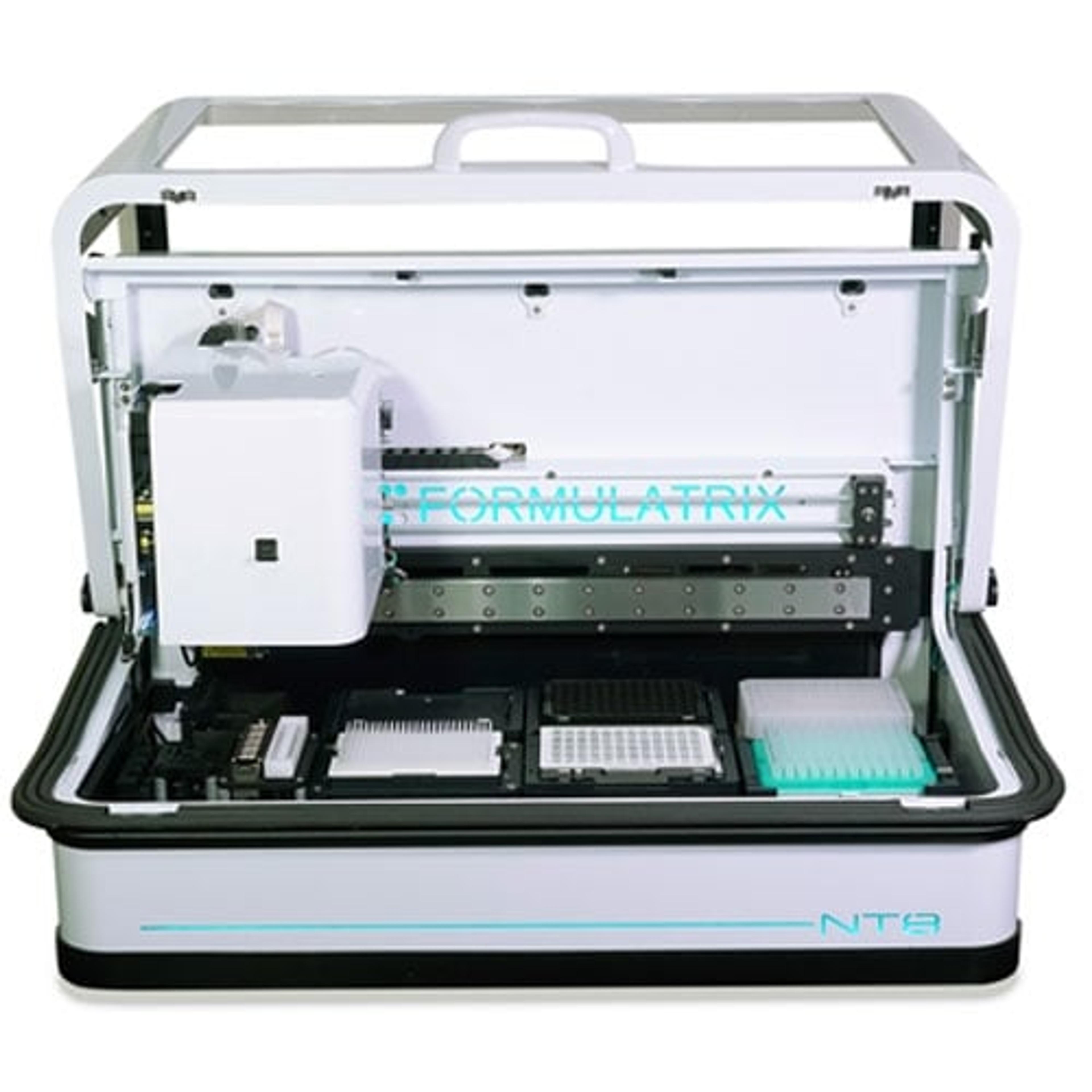
Reliable Drop Setting: Reduce Costs + Increase Reproducibility The NT8 ® - Drop Setter/Crystallization Robot is a fast, nanoliter-volume liquid handler with drop dispensing capability, including setting drops for Lipidic Cubic Phase (LCP) experiments. The 8-tip head aspirates and dispenses drops from 10 nL to 1.5 μL.

(2)

Links

Tags

ProteomicsProteomics is the systemic bioinformatics study of proteins and amino acids, including their structure, size, function and identification. Tools used in proteomics include chromatography, blotting and gels, protein arrays, mass spectrometry and ELISA and associated analysis software. Analyzers and proteomic systems should be sensitive, high resolution, fast and may be automated for high-throughput.Protein CrystallographyProtein crystallization is the process of crystallizing purified proteins for 3D structure analysis by x-ray crystallography. The main methods of protein crystallization include sitting drop, hanging drop and microbatch. It is important to control parameters such as pH, temperature and concentration. Following crystallization, detectors and software are used for data collection and analysis.Amino AcidsFluorescence Based AssayFluorescence based assays are widely used in life science research and high-throughput screening to measure a broad range of cellular activities.ImagingImaging techniques are essential for obtaining visual representations of samples to understand structures, processes, and function in biological, chemical, and physical research. These tools range from traditional light microscopy to advanced imaging modalities like MRI and electron microscopy, providing researchers with valuable data for diagnostics, drug discovery, and material analysis. Explore imaging solutions in our peer-reviewed product directory to compare products, check reviews, and get pricing directly from manufacturers.UVUltraviolet (UV) light is used in a variety of applications, including disinfection, spectrophotometry, and molecular biology. UV light can damage DNA, making it a powerful tool in sterilization and in studies of mutagenesis and gene repair. Explore UV-related products in our peer-reviewed product directory; compare products, check reviews, and get pricing directly from manufacturers.CrystallographyProtein BiologyThe analysis of protein expression, identity and function is vital for many areas of life science research and drug discovery. Some of the most commonly used techniques in protein analysis include Western blotting, electrophoresis and mass spectrometry.