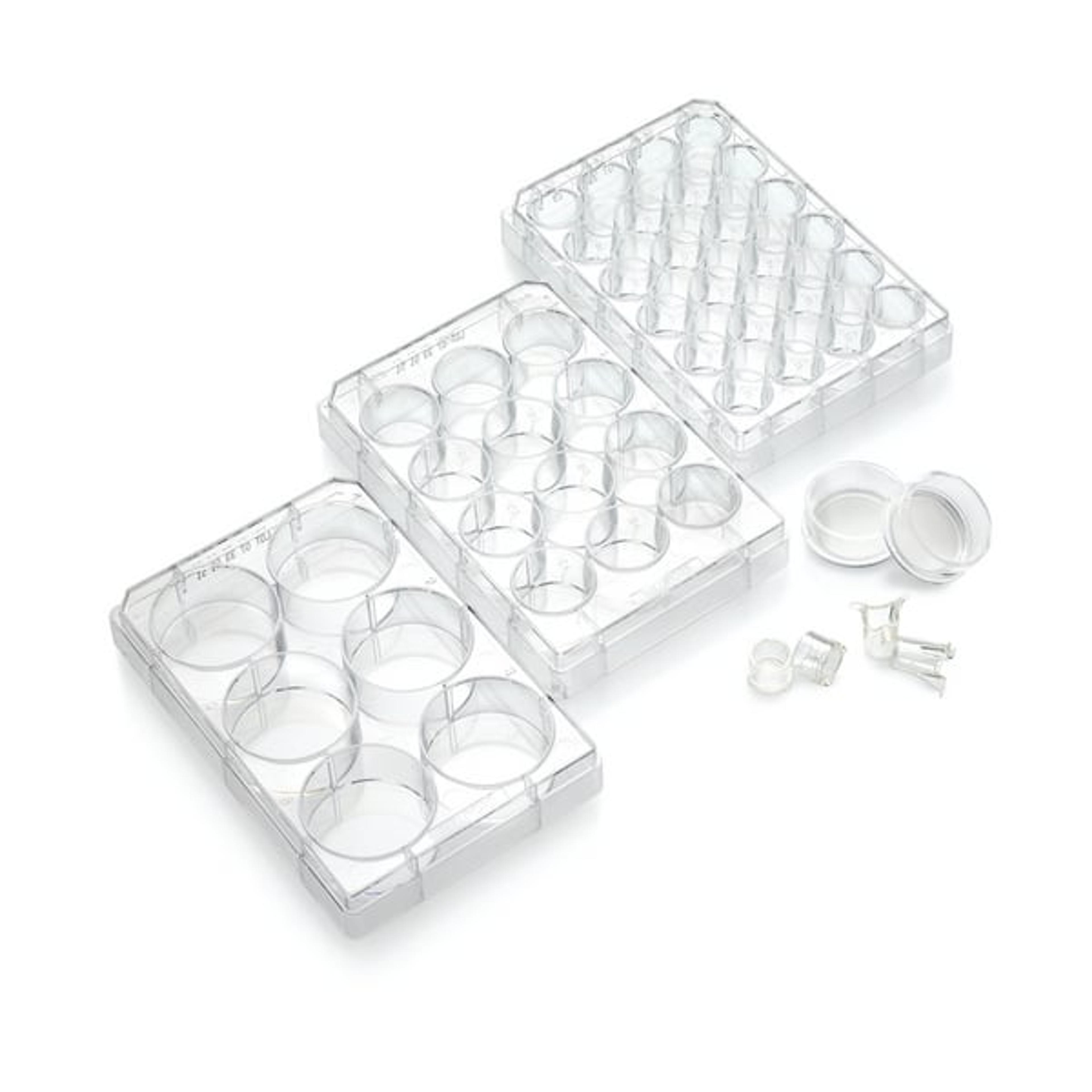
More like life: Microporous membrane-based culture systems

28 Apr 2020

Membrane-based culture systems foster a more in vivo-like cell growth environment and support a range of applications including primary and secondary screening, transport assays, toxicity screening, cell signaling, cell proliferation and ADME/toxicity drug studies. In this application note, Millipore details the features of the Millicell® cell culture product family and reveals how membrane-based cultureware can closely recapitulate in vivo conditions.

Millicell® Cell Culture Inserts

Merck

With Millicell inserts, attachment or suspension cells can access media from both their apical and basolateral sides. Cell growth, structure, and function more closely mimic what occurs in vivo. In addition, Millicell inserts make it possible to study both sides of the cell monolayer. Millicell inserts are available for 24-, 12-, or 6-well plates.

(1)

Millicell® 24 & 96-well Cell Culture Insert Plates

Merck

Millicell® cell culture insert plates are a patented device designed to support cell growth and differentiation of endothelial and epithelial cell lines, including CaCo-2. The Millicell® device is available with a 0.4 µm PCF and a variety of PET membrane pore sizes. The plate is designed for maximum user convenience and incorporates features such as apical assist for easier pipetting and basolateral access.

(1)

Links

Tags

Cell / Tissue CultureCell culture or tissue culture is used to study the biology of cells or tissues and to isolate cellular products in an environment which can be manipulated and well defined. Accurately control your culture environment with bioreactors or culture incubators, bind your cells to a surface or together with an extracellular matrix. Distinguish cell types with differential media or proliferate cells with certain characteristics using selective media. Enrich your media with supplements such as growth factors, sera and vitamins. Find the best cell and tissue culture products, kits and equipment in our peer-reviewed product directory: compare products, check customer reviews and receive pricing direct from manufacturers.Flow Cytometry / Cell CountingFlow cytometers are used to count, sort and examine multiple characteristics of cells. Other cell analysis equipment includes image cytometers, cell counters, fluorescence-activated cell sorters (FACS), magnetic-activated cell sorters (MACS), and a range of flow cytometry assay kits. Flow cytometers can reveal information on cell viability, cell proliferation, apoptosis and cell cycle progression, as well as identify cell populations and intracellular or cell-surface molecules. Additionally, some flow cytometers, known as FACS, have an additional sorting function after analysis. Cell counters and image cytometers count live and dead cell populations and can also conduct cell proliferation assays. Find the best flow cytometers, cell counters and cell sorters in our peer-reviewed product directory: compare products, check customer reviews and receive pricing direct from manufacturers.In VitroIn vitro refers to experiments conducted outside living organisms, often in controlled lab environments such as petri dishes or test tubes. In vitro models are widely used in drug testing, cell biology, and disease research. Explore in vitro research tools in our peer-reviewed product directory; compare products, check reviews, and get pricing directly from manufacturers.