
Miniaturized HTRF® Assays Using the Echo® Liquid Handler
23 Apr 2013Cisbio’s HTRF assay technology has a wide range of applications in cell-based and biochemical assays. These assays are readily adaptable to high-throughput screening in 384-well and 1536-well formats. This application note demonstrated how the Echo liquid handler enables the miniaturization of HTRF assays to 2 µL assay volumes in 1536-well microplates. Reagents and compounds were transferred at 2.5 nL increments, which enabled flexibility in assay setup and reduced reagent costs.
Related products
Request Quote for All Products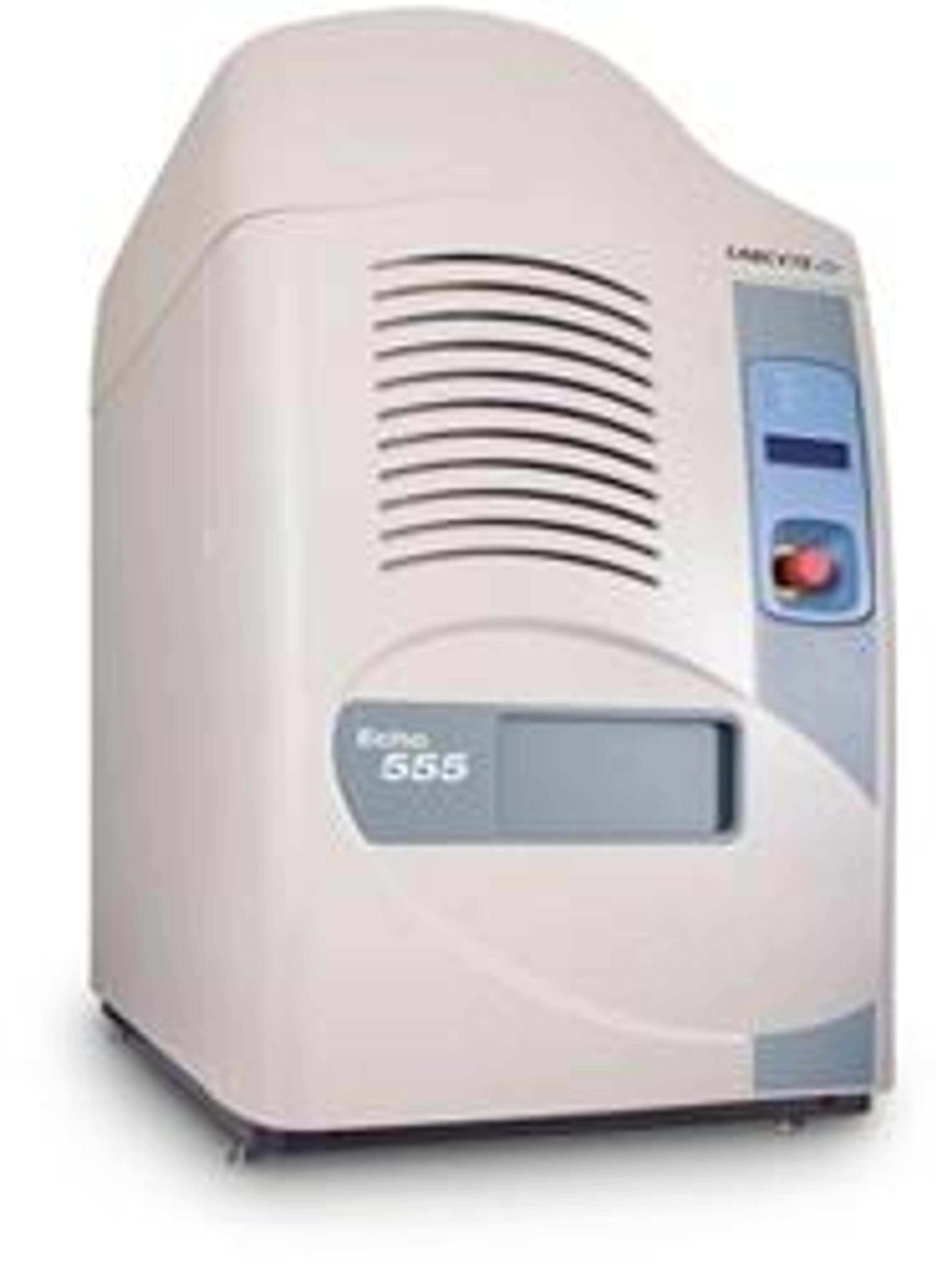
Echo® 555 Liquid Handler
Beckman Coulter Life SciencesEcho® 555 liquid handler - the world's fastest acoustic dispensing platform for life science applications. The Echo® 555 liquid handler is the world’s fastest acoustic liquid handling platform for life science applications. Laboratories that demand very high throughput rely upon the Echo 555 liquid handler for round-the-clock trouble-free operation to enable the fastest discovery.The Echo 555 doubles the throughput of the Echo 550 and provides transfers from as many as 660,000 wells per day. Like the Echo 520 and Echo 550 liquid handlers, the Echo 555 uses "touchless" ADE transfer technology. ADE uses sound energy to transfer 2.5 nL droplets from Echo-qualified 384- and 1536-well source plates into 96-, 384-, 1536- and 3456-well destination plates.This unique touchless technology eliminates consumable tip costs, washing, and cross-contamination. Unsurpassed volumetric precision (≤ 8% CV) and accuracy (≤ 10% CV) ensure superior results. Independent studies have shown that Echo liquid handlers eliminate false negatives due to sample loss on tip surfaces in low-concentration transfers. Like the Echo 550 liquid handler, the Echo 555 liquid handler reports both fluid volume and DMSO hydration.Echo® 555 Liquid Handler Features: Tipless transfer, resulting in dramatic cost savings Accurate, precise movement of nanoliter-scale quantities, enabling assay miniaturization and further reducing costs Elimination of cross-contamination, carryover or leachates Better results through direct dilution of compounds, an improvement over serial dilution methods Improved information about sample integrity and improved transfer quality through measurement of DMSO hydration level Applications: Compound management Compound screening siRNA screening Biochemical assays Cell-based assays PCR Genotyping Gene expression