
Miniaturized Drug Sensitivity and Resistance Testing with the Echo® Liquid Handler and Access™ Workstation
17 Jan 2014Recently identified associations between variants of cancer genes and drug resistance increase the value for comprehensive drug sensitivity and resistance testing in combination with molecular profiling of cancer cells. This application note discusses the implementation of miniaturized drug sensitivity and resistance testing, at the Institute of Molecular Medicine in Finland (FIMM), with assay-ready plates produced by the Echo liquid handler.
Related products
Request Quote for All Products
Echo® 550 Liquid Handler
Beckman Coulter Life SciencesImagine preparing assay plates for siRNA screening, compound screening with biochemical and cell-based assays, PCR reactions and more all on a single liquid handling platform, with no tips and no cross-contamination. Labcyte has developed new acoustic droplet ejection (ADE) parameters that deliver built-in intelligence to enable users to transfer many different fluid types from a single instrument. All Echo systems come pre-calibrated so that you can switch among different fluid types with just a click of the mouse. No further adjustment is required for you to be productive immediately. These developments combine the latest discoveries in wavelength, power and timing requirements for ADE with real-time fluid measurement at multiple points during a run. The resulting algorithms solve some of the most significant liquid handling challenges with volatile, low-surface tension and/or meniscus-shifting fluids. Volumetric accuracy and precision for all fluids tested so far—including buffers, nucleic acid and protein solutions, surfactants, serum and cell culture media—are comparable to established performance with DMSO. The Echo® 550 liquid handler introduced the world to acoustic droplet ejection (ADE). This award-winning instrument remains the proven choice for low-volume liquid handling in leading pharmaceutical and biotechnology companies worldwide. Like the Echo 520 and Echo 555 liquid handlers, the Echo 550 uses "touchless" ADE transfer technology. ADE uses sound energy to transfer 2.5 nL droplets from Echo-qualified 384- and 1536-well source plates into 96-, 384-, 1536- and 3456-well destination plates. This unique touchless technology eliminates consumable tip costs, washing, and cross-contamination. Unsurpassed volumetric precision (≤ 8% CV) and accuracy (≤ 10% CV) ensure superior results. Independent studies have shown that Echo liquid handlers eliminate false negatives due to sample loss on tip surfaces in low-concentration transfers. Like the Echo 555 liquid handler, the Echo 550 liquid handler reports both fluid volume and DMSO hydration. Applications: Compound management Compound screening siRNA screening Biochemical assays Cell-based assays PCR Genotyping Gene expression
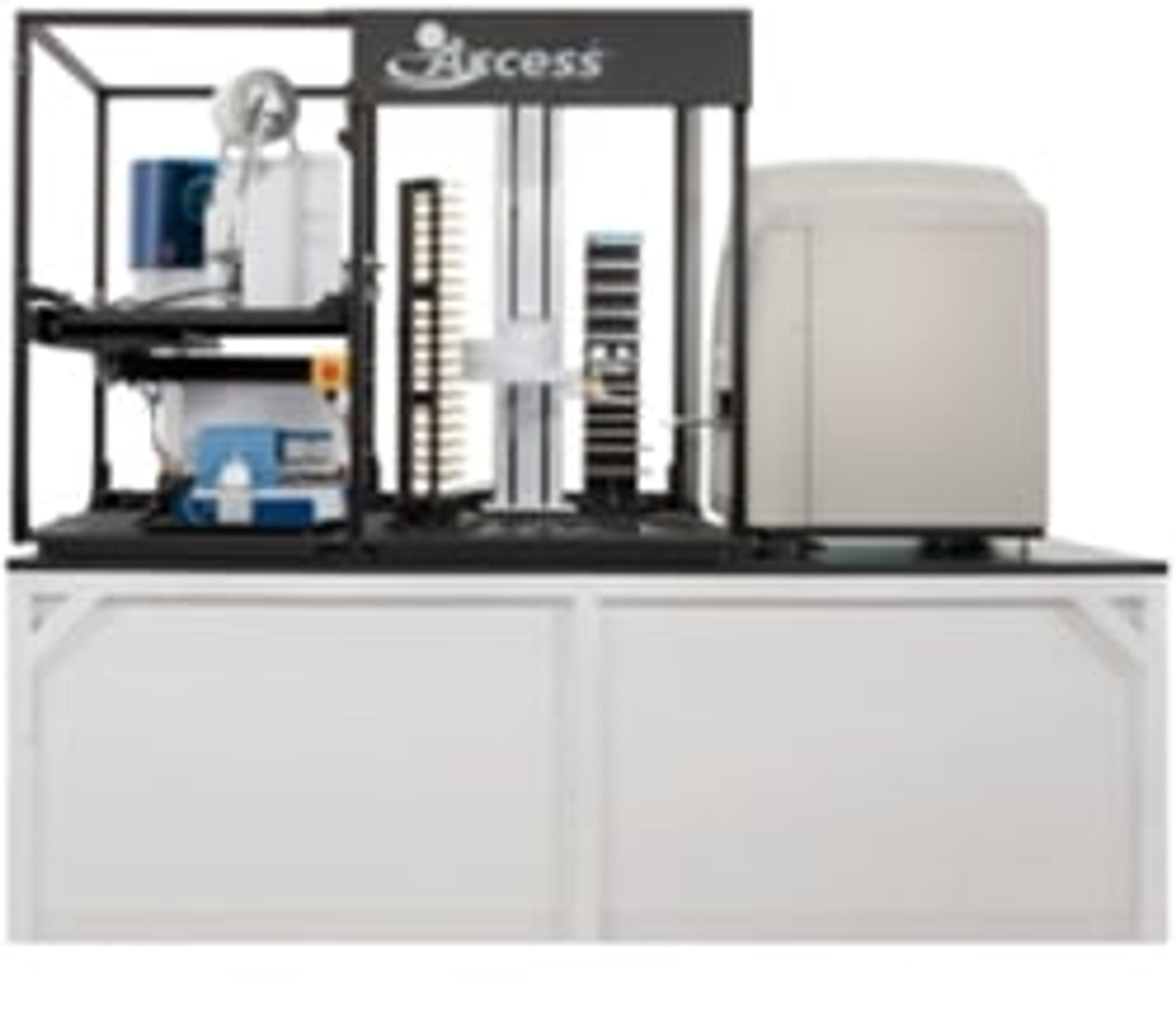
Access™ Laboratory Workstation
Small-Scale Automation with Large-Scale Results Access™ laboratory workstations multiply the benefits of the Echo® liquid handler by improving overall assay throughput and reproducibility. With the ability to integrate a variety of devices and the modularity to scale when needed, each workstation offers the flexibility required by frequently-changing assay requirements. All Access workstations are optimized at install and include all safety mechanisms required for CE compliance. Access workstations use Labcyte Tempo™ automation control software to manage the system configuration and schedule automated routines. Protocols created from Echo® software applications can be imported into Tempo™ software and quickly converted into fully automated routines. Support for a Range of Applications Assay ready plate preparation Lead optimization and secondary screening assays High-throughput gene expression assays Automated protein crystallography setup