Miniaturization of an HTRF Methyltransferase Assay that Detects Histone Modifying Activity

9 Apr 2017

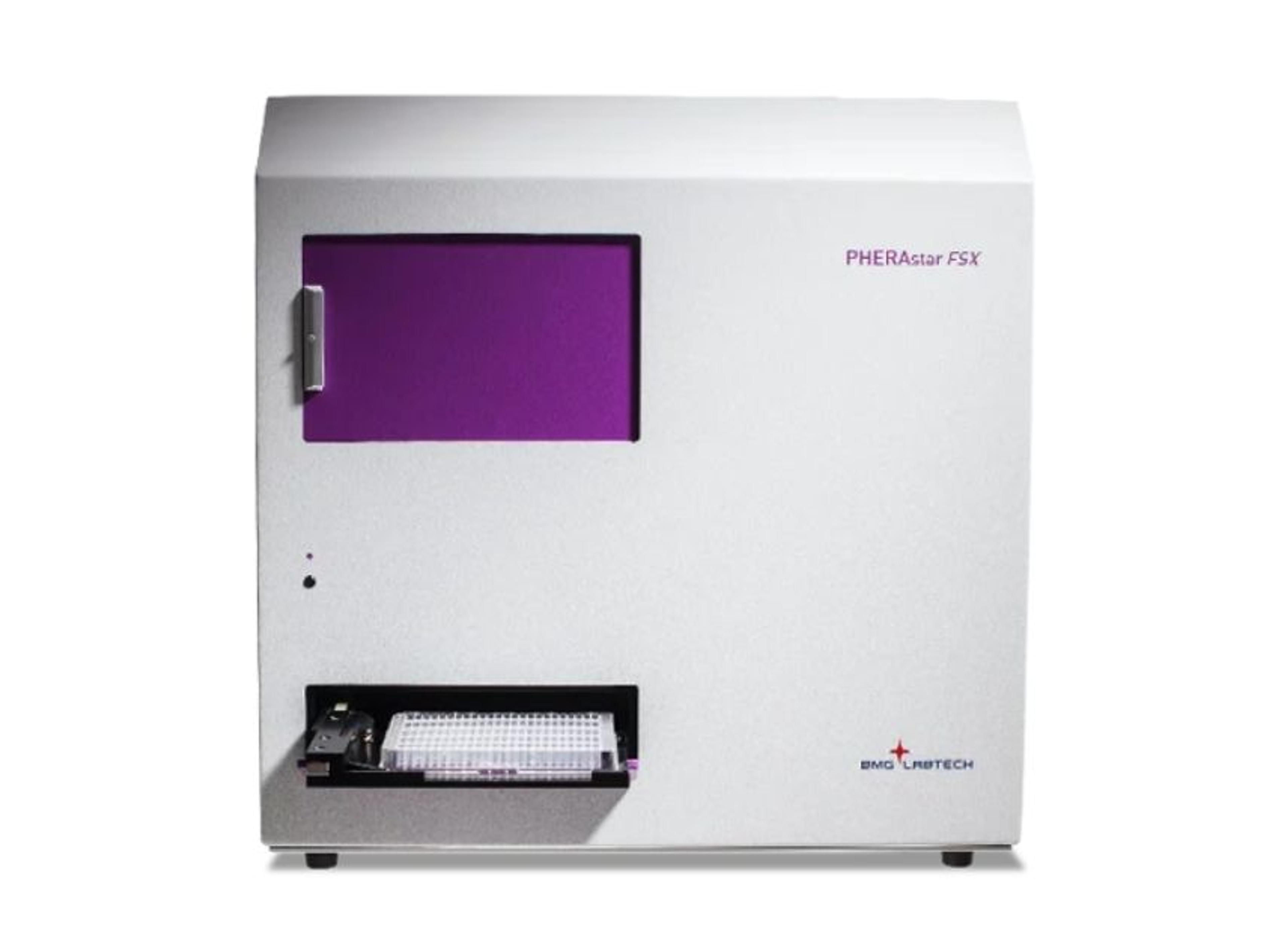
This application note demonstrates the use of an HTRF methyltransferase assay to assess the methyl transferase activity of histone modifying protein SET7/9. The EPIgeneous Methyltransferase Assay kit from Cisbio is used, however the assay is miniaturized to reduce the volume of assay reagents, using Labcyte’s Echo liquid handler and BMG LABTECH’s PHERAstar FS microplate reader. This article shows how miniaturization of assays using precise instrumentation can reduce the cost of reagents but still provide excellent experimental data.

Echo® 550 Liquid Handler

Beckman Coulter Life Sciences

Imagine preparing assay plates for siRNA screening, compound screening with biochemical and cell-based assays, PCR reactions and more all on a single liquid handling platform, with no tips and no cross-contamination. Labcyte has developed new acoustic droplet ejection (ADE) parameters that deliver built-in intelligence to enable users to transfer many different fluid types from a single instrument. All Echo systems come pre-calibrated so that you can switch among different fluid types with just a click of the mouse. No further adjustment is required for you to be productive immediately. These developments combine the latest discoveries in wavelength, power and timing requirements for ADE with real-time fluid measurement at multiple points during a run. The resulting algorithms solve some of the most significant liquid handling challenges with volatile, low-surface tension and/or meniscus-shifting fluids. Volumetric accuracy and precision for all fluids tested so far—including buffers, nucleic acid and protein solutions, surfactants, serum and cell culture media—are comparable to established performance with DMSO. The Echo® 550 liquid handler introduced the world to acoustic droplet ejection (ADE). This award-winning instrument remains the proven choice for low-volume liquid handling in leading pharmaceutical and biotechnology companies worldwide. Like the Echo 520 and Echo 555 liquid handlers, the Echo 550 uses "touchless" ADE transfer technology. ADE uses sound energy to transfer 2.5 nL droplets from Echo-qualified 384- and 1536-well source plates into 96-, 384-, 1536- and 3456-well destination plates. This unique touchless technology eliminates consumable tip costs, washing, and cross-contamination. Unsurpassed volumetric precision (≤ 8% CV) and accuracy (≤ 10% CV) ensure superior results. Independent studies have shown that Echo liquid handlers eliminate false negatives due to sample loss on tip surfaces in low-concentration transfers. Like the Echo 555 liquid handler, the Echo 550 liquid handler reports both fluid volume and DMSO hydration. Applications: Compound management Compound screening siRNA screening Biochemical assays Cell-based assays PCR Genotyping Gene expression

(22)

Links

Tags

Assay AssemblyAssay Assembly is technique used in drug discovery to develop assays to test the cytotoxicity, genotoxicity, or other activities of a compound on a cell. Assay assembly requires chip assembly, a delivery system and a detection and analysis method. Beneficial features of assay kits or automated systems include high-throughput, high speed and sensitivity and low signal to noise ratio.Protein PurificationProtein purification is a vital step in drug discovery, therapeutics, biotech and life science research. The purification process typically involves subcellular or membrane protein extraction with cell lysis kits, separation of proteins from cell debris by filtration or spin columns, and the isolation of proteins of interest from other proteins and impurities with affinity purification (including fusion protein tags and antibody binding proteins A, G and L), immunoprecipitation or chromatographic methods, such as ion exchange, size exclusion and immobilized metal affinity chromatography. All purification methods come in multiple formats for your laboratory needs, including agarose or magnetic beads, resins, columns and filter plates. Find the best protein purification equipment in our peer-reviewed product directory: compare products, check customer reviews and receive pricing direct from manufacturers.Gene Expression and Molecular CloningMolecular cloning is a set of techniques that utilizes vectors to transfer recombinant DNA into host cells and is an essential tool for investigating the expression of genes and proteins in bacterial or mammalian cells. A variety of vectors optimized for gene cloning and expression in a range of host organisms are available, alongside competent cells for genetic replication. Here, you can explore a range of molecular tools, high-quality genomic and cDNA libraries, premade clones, transformation and transfection reagents and mutagenesis or gene expression detection assays and expression arrays. Find the best gene expression and molecular cloning products in our peer-reviewed product directory: compare products, check customer reviews and receive pricing direct from manufacturers.Epigenetic AnalysisEpigenetic analysis products are used to study heritable phenotype changes that do not alter the DNA sequence, such as DNA modifications affecting gene activity. Determine whether genes have been methylated with DNA methylation quantification kits or methylation microarrays. Assess epigenetic regulation with histone modification kits or ChIP-on-chip microarrays. Kits are also available for bisulfite conversion and amplification of your samples, as well as epigenomic library preparation kits for next-generation sequencing (NGS). Find the best epigenetic products in our peer-reviewed product directory: compare products, check customer reviews and receive pricing direct from manufacturers.Histone ModificationAssay DevelopmentThe process of proving an assay to be sensitive with respect to the target is known as assay development. The assay should be able to characterize novel compounds and measure the potency of these compounds against a validated biological target.HTRFProtein BiologyThe analysis of protein expression, identity and function is vital for many areas of life science research and drug discovery. Some of the most commonly used techniques in protein analysis include Western blotting, electrophoresis and mass spectrometry.
Miniaturization of an HTRF Methyltransferase Assay that Detects Histone Modifying Activity