
Microscopic analysis of the orientation and secondary structure of spider silk using polarized Raman spectroscopy
14 Mar 2022In this application note, JASCO demonstrates the structural analysis of spider silk proteins by polarized Raman micro-spectroscopy. This promises to be an effective approach for evaluating the orientation and composition of minute regions such as single fibers and multilayer films.
Related products
Request Quote for All Products
NRS-4100 Raman Micro-spectrometer
JASCO (USA)For the first time, the NRS-4100 brings together a number of critical elements to make Raman spectroscopy accessible not only to experienced spectroscopists, but also to first-time users. Features Class 1 laser safety Rigid optical bench and laser image Flexible sampling options Powerful 'UserAssist' control for experienced spectroscopists and new users alike 'Simple Search' function Chemical Image identification and functional groups registry
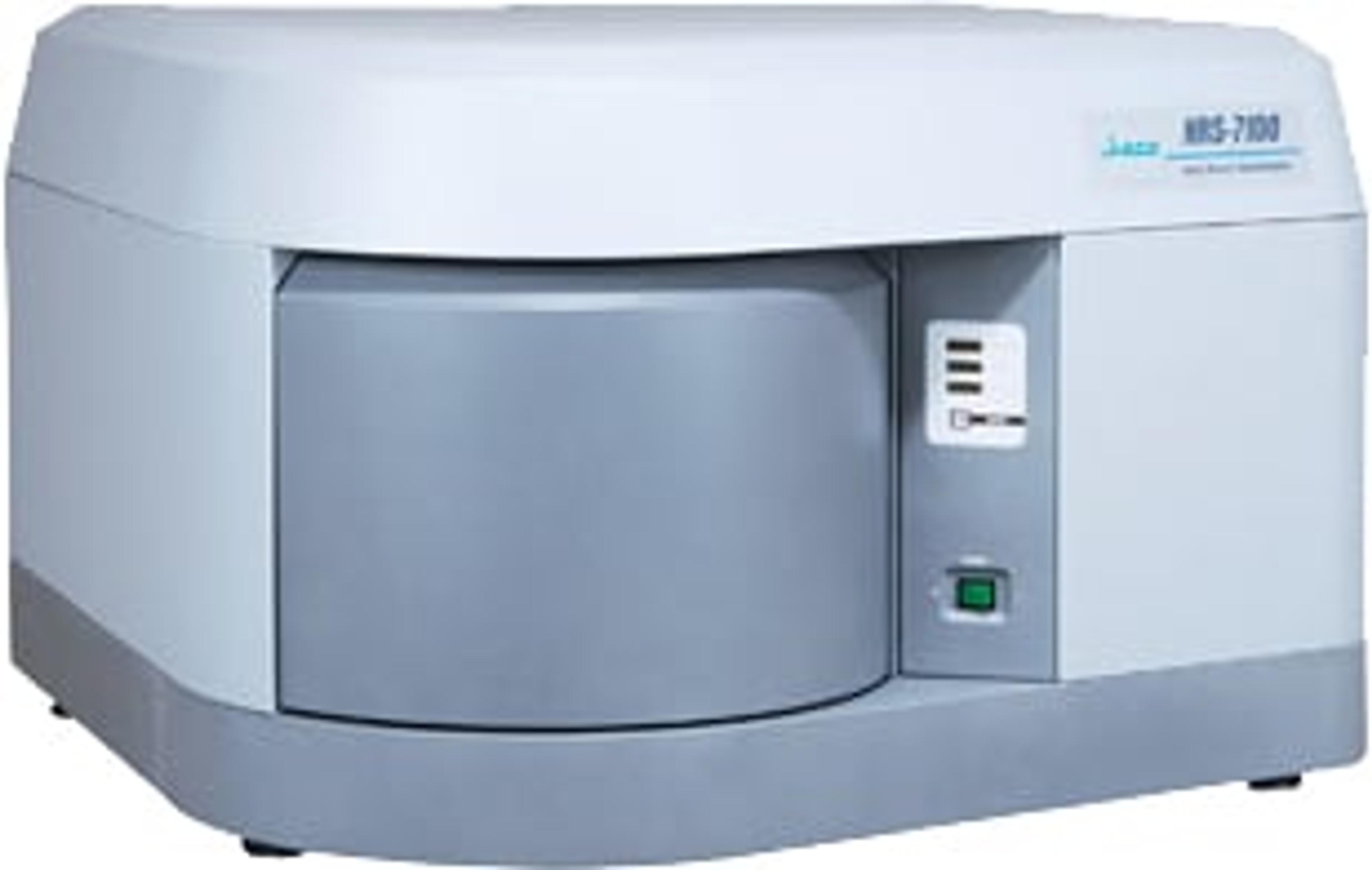
NRS-7000 Series Raman Spectrometer
JASCO (USA)The performance and functions expected on a micro-Raman spectrometer are all provided with the NRS-7000 series Raman systems, assuring consistent performance for rapid acquisition of high quality data with automated system control and minimal optical adjustments. For application expansion, an automated multi-grating turret, 2 internally mounted detectors and a maximum of 8 lasers ranging from the UV through the NIR are capable of integration with the instrument system, all optical components are PC controlled for maximum flexibility with minimum user interaction. Features Research-grade model assuring high spectral quality Exceptional wavenumber accuracy with a high-precision rotary-encoder direct drive mechanism Low wavenumber measurement (NRS-5200/7200) Auto-alignment of microscope laser introduction optics and Raman scattering light path Wavenumber calibration using an integrated Ne lamp Unique Dual Spatial Filter (DSF) for higher spatial resolution than conventional confocal optics Patented Spatial Resolution Image (SRI) function for simultaneous observation of sample image, laser spot and aperture image Full range of options including macro-Raman measurement unit and fiber optic probes

NRS-5000 Series Raman Spectrometer
JASCO (USA)The performance and functions expected on a micro-Raman spectrometer are all provided with the NRS-5000 series Raman systems, assuring consistent performance for rapid acquisition of high quality data with automated system control and minimal optical adjustments. For application expansion, an automated multi-grating turret, 2 internally mounted detectors and a maximum of 8 lasers ranging from the UV through the NIR are capable of integration with the instrument system, all optical components are PC controlled for maximum flexibility with minimum user interaction. Features Research-grade model assuring high spectral quality Exceptional wavenumber accuracy with a high-precision rotary-encoder direct drive mechanism Low wavenumber measurement (NRS-5200/7200) Auto-alignment of microscope laser introduction optics and Raman scattering light path Wavenumber calibration using an integrated Ne lamp Unique Dual Spatial Filter (DSF) for higher spatial resolution than conventional confocal optics Patented Spatial Resolution Image (SRI) function for simultaneous observation of sample image, laser spot and aperture image Full range of options including macro-Raman measurement unit and fiber optic probes