
ResourceMaterials
Measuring Small Volumes of Nanoparticles Using the Mastersizer 3000 and Hydro SV
31 Mar 2015Nanoparticles are an increasingly important class of materials with wide-ranging applications in catalysis, coatings, pigments, cosmetics, electronics, food and medical industries. It is often desirable to make particle size measurements from only a few milligrams of material and to be able to recover the sample after measurement for further testing. This application note demonstrates that the Mastersizer 3000 and Hydro SV obtain accurate and precise measurements of nanoparticle particle size and allow sample recovery after testing.
Related products
Request Quote for All Products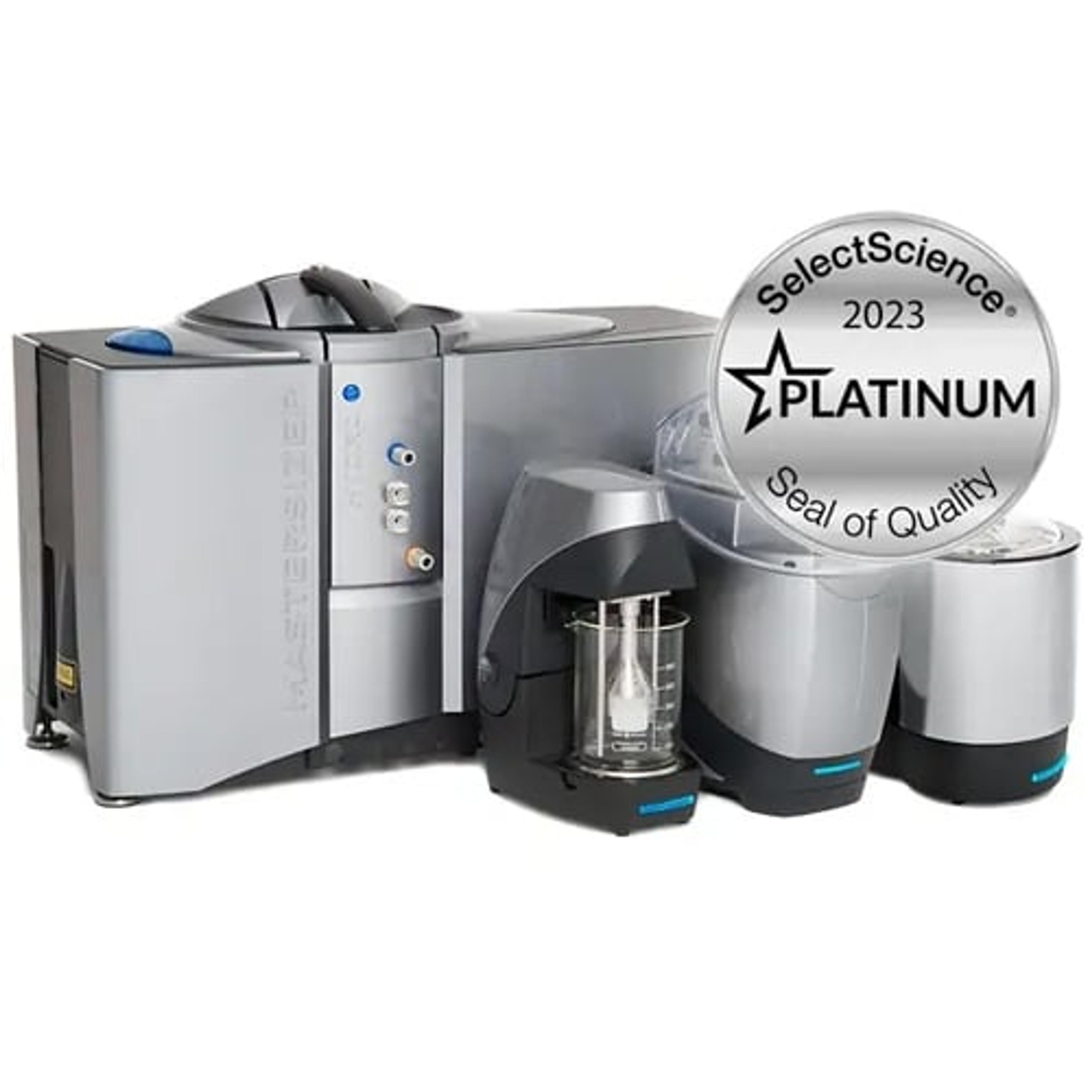
Mastersizer 3000
Malvern PanalyticalWorld’s most widely used particle size analyzers, the smartest way to measure particle size. There is a newer version of this product avilable, the Mastersizer 3000+ Ultra.
Links
Tags
Particle CharacterizationParticle characterization instruments are used to determine particle size distribution, shape, surface area, zeta potential, density and porosity of particles and materials. Multiple tecchniques are available for determining particle size, shape and count including dynamic light scattering (DLS), laser diffraction, electrozone (Coulter technique), imaging particle analysis and single particle optical sensing. Determine the density of your material with a gas pycnometer or examine its surface area and porosity with gas adsorption analyzers and mercury porosimeters. Find the best particle characterization instruments in our peer-reviewed product directory: compare products, check customer reviews and receive pricing direct from manufacturers.NanoparticlesNanoparticles are between 1-100nm in size. Nanoparticles can be used for a wide variety of applications including biomedical, catalysis and electronics.