
Mass Spectrometry for Polymers
25 Mar 2015In this white paper, the benefits and analytical considerations for MS analysis of polymers is considered. The benefit of mass spectrometry is the ability to make absolute mass measurements at a molecular level rather than an average across a whole sample, making mixtures easier to deal with. Dual-stage mass spectrometry (MS/MS) can provide detailed structural information about the repeat unit chemistry, end groups and backbone connectivity with both detail and confidence.
Related products
Request Quote for All Products
SYNAPT G2-Si MS
WatersTransform your lab's discovery capability with the SYNAPT G2-Si MS. Information. Informatics. Impact. SYNAPT enables extensive characterization of complex mixtures and molecules with uncompromising qualitative and quantitative performance, streamlined workflows and unparalleled platform versatility. With the SYNAPT G2-Si you get ultimate UPLC/MS/MS performance, powerful data independent & data dependant solutions, CID and ETD fragmentation capabilities, and a wide range of experimental options.
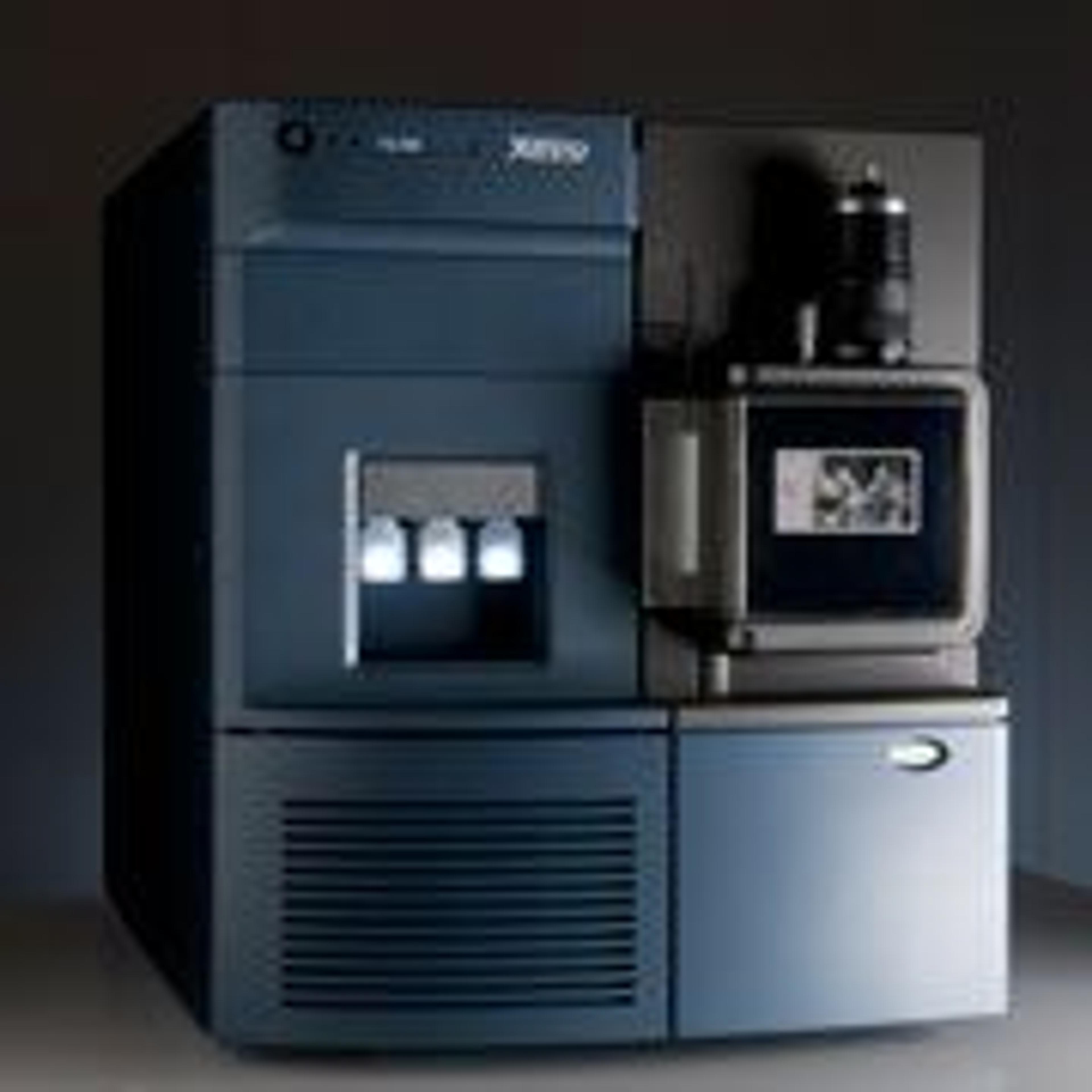
Xevo TQ MS
WatersWaters Xevo™ TQ MS provides the ultimate in quantitative capabilities for your most demanding applications and your most complex sample matrices. It is a highly advanced tandem quadrupole mass spectrometer designed to enable uncomplicated access to superior HPLC and UPLC®/MS/MS performance, delivering the highest levels of sensitivity, selectivity, robustness, speed, and accuracy. Waters Xevo TQ MS is equipped with unique collision cell technology (ScanWave™) to provide new enhanced spectral LC/MS/MS data acquisition capabilities. Unlike conventional tandem quadrupole mass spectrometers, the Xevo TQ MS is designed not only to provide the very best quantitative data, but also to provide you with superior spectral MS/MS information. Xevo TQ MS offers you much more versatility in a single instrument platform that is adaptable to a variety of different UPLC/MS/MS applications both quantitative and qualitative: bioanalysis, ADME screening, food safety, environmental monitoring, forensic, and more. Features: Automated system set up and system checks for simple access Automated instrument optimization and quantitative method development tools for ease-of-use The latest innovations in high efficiency, robust, easy-to-use ZSpray™ atmospheric pressure ion source technology Versatile range of ionization options, including multi-mode ionization capability in a single run Unique, innovative T-Wave™ and ScanWave enabled collision cell technology Footprint that sits easily on your laboratory benchtop Dedicated application managers for your specialized analytical requirements