
Mass detection: The key to faster biopharma analysis
10 Oct 2019As the biopharmaceutical industry continues to grow and expand into new and ever more complex modalities, biopharmaceutical developers and manufacturers are in urgent need of optimized analytical solutions. This application-based compendium is intended as a resource for anyone in biopharmaceutical development, manufacturing, and QC who wishes to streamline their drug development, accelerate time-to-market, and enable greater productivity in the laboratory.
Download this eBook to find more about the biopharmaceutical applications of the ACQUITY QDa Mass Detector and the BioAccord system from Waters, including:
- Increasing specificity and sensitivity in routine peptide analyses
- LC-UV-MS-based synthetic peptide identification and impurity profiling
- Improving glycan profiling in process development
- Monitoring multiple attributes in a single assay
- Enabling routine & reproducible intact mass analysis when data integrity matters
- An integrated peptide attribute profiling and monitoring workflow for improved productivity
- A platform method for the molecular mass analysis of the light & heavy chains of monoclonal antibodies
- Increasing productivity and confidence for N-linked glycan analysis of biosimilars
Related products
Request Quote for All Products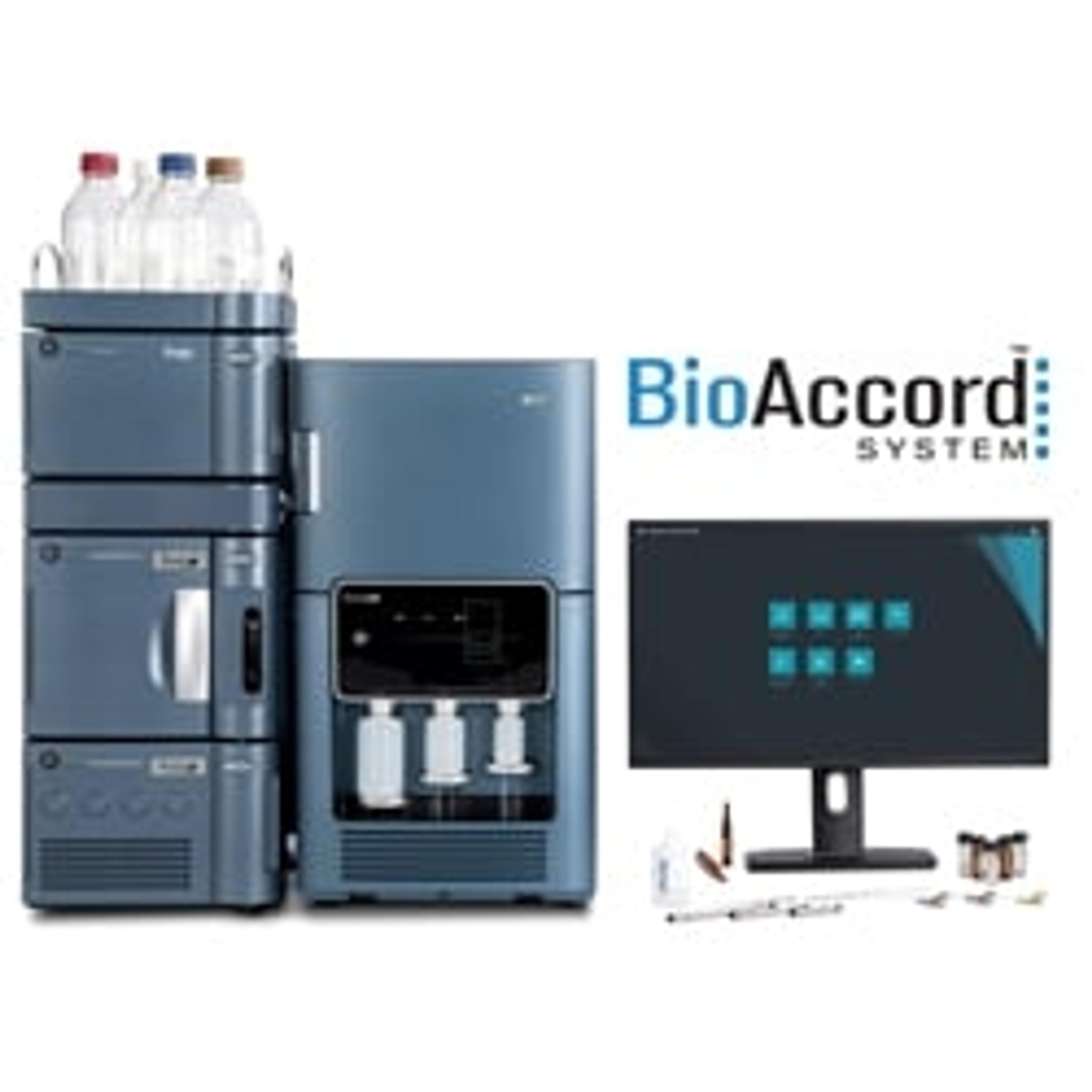
BioAccord LC-MS System
WatersThe First SmartMS-Enabled Biopharma Solution The Waters BioAccord System is an integrated system that simplifies high performance LC-MS biopharmaceutical analysis for every user. An easy-to-use system solution that puts the power to make decisions directly in your hands; a self-calibrating, self-optimizing, self-sufficient tool that equips you with high quality data you can use to tackle the challenges you face every day during biopharmaceutical development.

ACQUITY QDa Mass Detector
WatersThe ACQUITY QDa® Mass Detector gives you certainty above all else. You can minimize the risk of unexpected coelutions or components and confirms trace components with the analytical confidence of mass detection. The ACQUITY QDa® Detector is a mass detector built around the needs of analytical scientists for chromatographic analysis. Robust, reliable and requiring no sample adjustments, it just integrates with your current LC, ACQUITY UPLC, ACQUITY UPC2 and purification systems. You'll enhance the analytical value and productivity of each analysis, and you won't need to run all the additional assays or time-consuming alternative techniques or even wait for results from specialist labs that cost your laboratory productivity. With the ACQUITY QDa® Detector, you now have information-rich mass spectral data to complement data from your current Waters® optical detectors, including the ACQUITY UPLC PDA, TUV, ELS, and FLR detectors, as well as the ACQUITY UPC² PDA Detector. This mass spectral information integrates seamlessly into the same workflow; routinely giving you more complete separation characterization. Features: Intuitive operation More information from every sample Effortless integration Increased efficiency Resolving complexity Applications: Food & Environment Life Sciences and Pharmaceuticals Chemical