ResourceMaterials
Local work hardening of steel
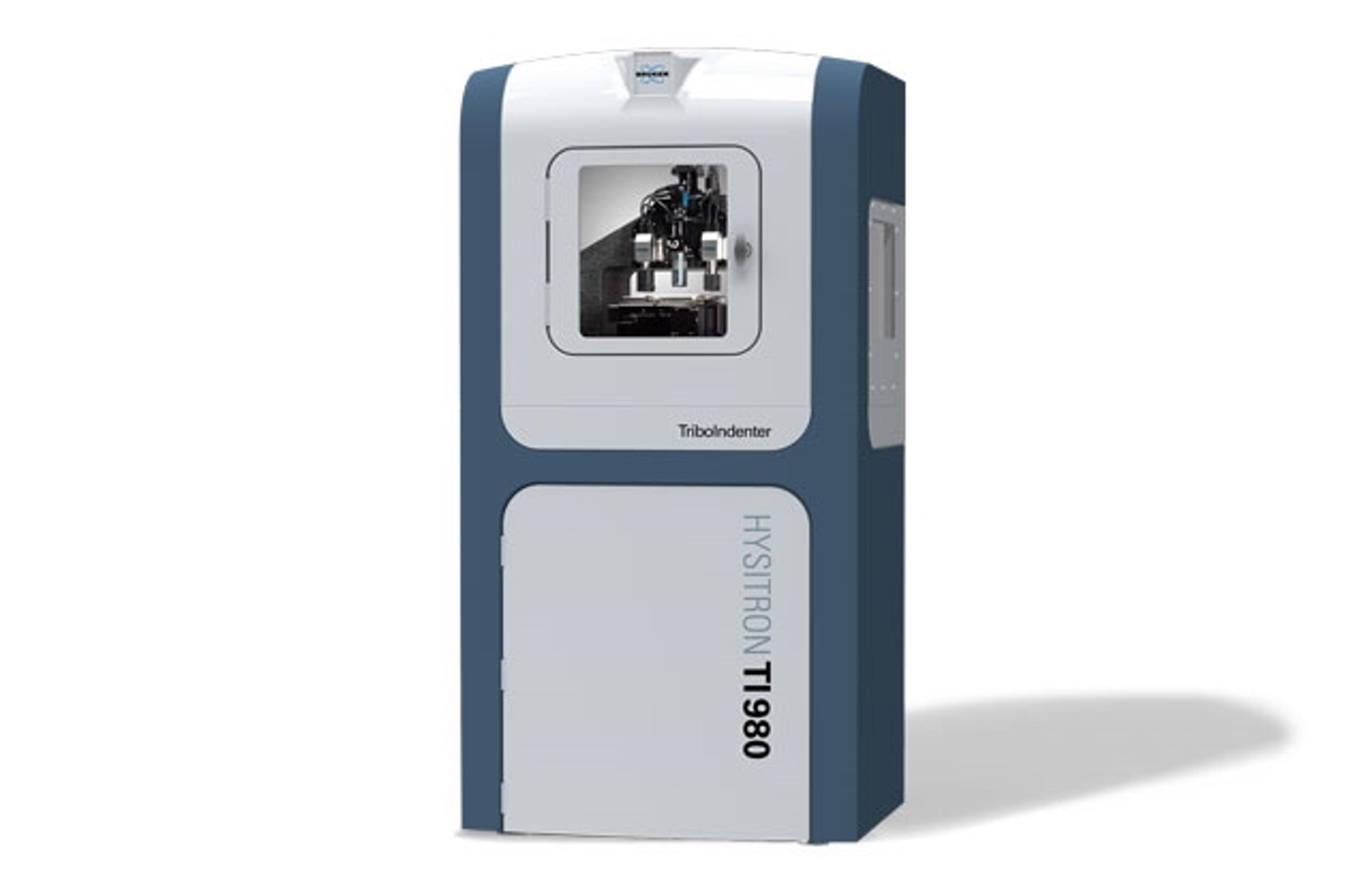
16 Jul 2023In this application note, Bruker Nano provides experimental data on the local work hardening of steel using nanoindentation. In metal production, the mechanical properties of wrought material are well controlled during manufacturing but may be altered by subsequent forming into the final product. Welding or joining, as well as deep drawing, causes local changes of materials properties. In the present example, a can has been seamed by folding metal sheets. The local work hardening of the bent metal in the folded areas is of specific interest. Nanoindentation is an ideal method for mapping mechanical property changes and getting work hardening information with micrometer resolution.
Links
Tags
InterferometryInterferometry is an investigative technique used to analyze the pattern of interference created during the superposition of 2 or more waves. An interferometer is used to produce 2 or more overlapping waves. The interferometer is comprised of 2 or more telescopes, a detector and a correlator. The interferometer detector may utilize homodyne or heterodyne detection of the interference pattern.Mechanical TestingMechanical testing explores the elastic and inelastic nature of a material when force is applied. A mechanical test shows whether a material is suitable for its intended application by measuring hardness, tensile strength, elongation, elasticity, and fatigue limit.Non-Destructive TechniquesNon-destructive techniques (NDT) describes a variety of analytical techniques used to evaluate the properties of a material. Common methods include ultrasonic, magnetic-particle, liquid penetrant, radiographic, remote visual inspection (RVI), and eddy-current testing. NDT is regularly used in forensic engineering, civil engineering, mechanical engineering, electrical engineering, systems engineering, aeronautical engineering, and medicine.Surface Area TestingPhysisorption studies fundamental parameters essential for the characterization of materials such as the specific surface area and pore size distribution. Properties such as porosity, strength, hardness, permeability, separation selectivity, corrosion, and thermal stress resistance can all be directly correlated to the porous structure of a material.ProfilometersProfilometers are instruments used to measure a surface's profile, in order to quantify etch depth, deposited film thickness, and surface roughness. They operate in either contact or non-contact modes and may use optical or stylus techniques to make the actual measurements.NanoindentationMechanical properties