
ResourceLife Sciences
Live-cell imaging & analysis: Capture important cellular events in live-cell assays
Download the new live-cell imaging & analysis infographic
11 Jan 2022Within heterogeneous culture systems, important cellular events are often missed that, if detected, could give a whole new level of biological insight. In this infographic, discover an automated platform that combines lab-tested protocols and reagents with powerful, automated image acquisition and analysis.
Related products
Request Quote for All Products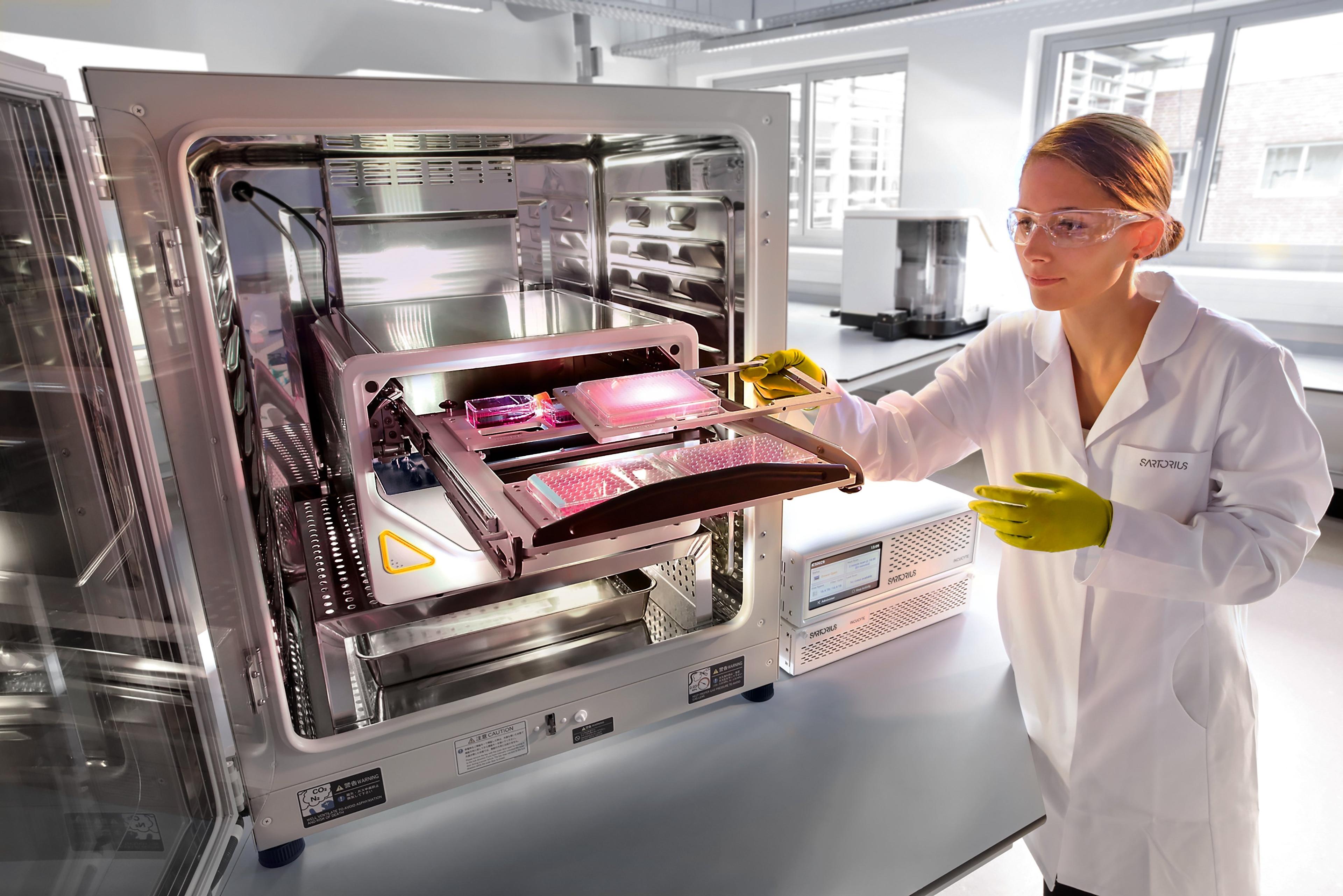
Incucyte® Live-Cell Analysis Systems
Sartorius GroupIncucyte ® , Empower Live-Cell Analysis Inside Your Incubator
Links
Tags
Cell / Tissue CultureCell culture or tissue culture is used to study the biology of cells or tissues and to isolate cellular products in an environment which can be manipulated and well defined. Accurately control your culture environment with bioreactors or culture incubators, bind your cells to a surface or together with an extracellular matrix. Distinguish cell types with differential media or proliferate cells with certain characteristics using selective media. Enrich your media with supplements such as growth factors, sera and vitamins. Find the best cell and tissue culture products, kits and equipment in our peer-reviewed product directory: compare products, check customer reviews and receive pricing direct from manufacturers.Cell Lines Stem Cells and Primary CellsPrimary cell cultures, established cell lines and stem cells are vital for <i>in vitro</i> and <i>ex vivo</i> experimentation. High-quality cells, optimized for your applications, alongside optimized cell substrates, growth medium and supplements, are critical for experimental success. Explore a range of cells suitable for your applications, including isogenic cell lines, competent cells, induced pluripotent stem cell (iPSC)-derived cell lines, fungal/bacterial/mammalian cell lines, stem cells and cancer cell lines. Find the best cells for your research in our peer-reviewed product directory: compare products, check customer reviews and receive pricing direct from manufacturers.IncubatorsLaboratory incubators are used to provide a stable environment to cultivate and store samples in, giving you optimal control of temperature, humidity, oxygen and CO<sub>2</sub> levels. Incubators are necessary equipment for cell culture and microbial research. Control temperature with heated or refrigerated incubators, or the levels of CO<sub>2</sub> and oxygen with CO<sub>2</sub> incubators. Using environmental chambers, create a humid climate for testing samples. Find the best incubators in our peer-reviewed product directory: compare products, check customer reviews and receive pricing direct from manufacturers.Flow Cytometry / Cell CountingFlow cytometers are used to count, sort and examine multiple characteristics of cells. Other cell analysis equipment includes image cytometers, cell counters, fluorescence-activated cell sorters (FACS), magnetic-activated cell sorters (MACS), and a range of flow cytometry assay kits. Flow cytometers can reveal information on cell viability, cell proliferation, apoptosis and cell cycle progression, as well as identify cell populations and intracellular or cell-surface molecules. Additionally, some flow cytometers, known as FACS, have an additional sorting function after analysis. Cell counters and image cytometers count live and dead cell populations and can also conduct cell proliferation assays. Find the best flow cytometers, cell counters and cell sorters in our peer-reviewed product directory: compare products, check customer reviews and receive pricing direct from manufacturers.Cell-Based AssaysCell-based assays are used to monitor the presence, quantity and activities of a desired cellular analyte including drug molecules or biomarkers. This can reveal information on cell health (apoptosis, cytotoxicity, viability and proliferation assays), cell metabolism, cell migration and cell signaling mechanisms. Find the best cell-based assay products, kits and equipment with our peer reviewed product directory: compare products, check customer reviews and receiving pricing direct from manufacturers.BiomarkersBiomarkers are biological markers which can be measured and evaluated to indicate a biological state. The use of biomarkers in research and diagnosis can indicate a normal or disease state or drug response of cells / tissues. Biomarkers include genetic markers, cell surface markers such as antigens, antibodies or receptors and secreted molecules such as cytokines. An assay system is required for identification of biomarkers. :Cell ViabilityCell viability assays assess the health of cells and their ability to proliferate. These tests are crucial in drug development, toxicity testing, and cell-based research. Common methods for assessing viability include MTT, live/dead assays, and flow cytometry. Browse our peer-reviewed product directory to find the best tools for cell viability assays, compare products, check reviews, and get pricing directly from manufacturers.Cancer CellsCancer cells are abnormal cells that divide uncontrollably, leading to the formation of tumors and the spread of cancer. Studying cancer cells is crucial for developing new treatments and understanding tumor biology. Explore cancer cell research products in our peer-reviewed product directory; compare products, check reviews, and get pricing directly from manufacturers.Cell ImagingCell imaging can be achieved using a number of techniques including confocal microscopy, transmission electron microscopy, atomic force microscopy, and light sheet microscopy.Cell AnalysisThe analysis of cells allows researchers to understand the factors which contribute to cell health and function. These influencing processes can then be predicted and altered, leading to the development of medication and disease treatments.Stem Cell ResearchStem cells have the ability to produce identical daughter cells as well as progeny, which commit and differentiate. Stem cell research has exciting prospects of biomedical applications in cellular disease modeling, pharmaceutical screening, and regenerative medicine. Single Cell AnalysisSingle-cell analysis involves studying individual cells to gain insights into their behavior, gene expression, and function. This approach is valuable in cancer research, stem cell biology, and immunology. Explore single-cell analysis products in our peer-reviewed product directory; compare products, check reviews, and get pricing directly from manufacturers.Cell GrowthCell growth refers to the process by which cells increase in size and number. It is essential for tissue development, wound healing, and cancer research. Understanding and controlling cell growth is a fundamental part of cell biology and regenerative medicine. Browse our peer-reviewed product directory to find the best tools for studying cell growth, compare products, check reviews, and get pricing directly from manufacturers.Cancer ResearchCancer research aims to understand the mechanisms of cancer development and progression to improve prevention, diagnosis, and treatment. From molecular biology to clinical trials, research spans a wide range of disciplines, including immunotherapy, targeted therapies, and drug discovery. Explore the best cancer research products in our peer-reviewed product directory; compare products, check reviews, and get pricing directly from manufacturers.Live Cell ImagingLive cell imaging is the study of living cells using microscopes and high-content imaging systems. This technique provides in-depth insight into fast and complex biological processes, by allowing dynamic imaging of living cells instead of acquiring an individual image at a single point in time.