ResourceMaterials

<em>In-situ </em> fiber push-out tests with the Hysitron PI 88 SEM PicoIndenter

16 Jul 2023

In this application note, Bruker Nano utilizes the Hysitron® PI 88 SEM PicoIndenter® equipped with the 800°C heating option to characterize the interfacial strength between individual carbon fibers and the surrounding polyamide matrix, as a function of temperature.

Carbon fiber reinforced polymer composites (CFRPs) possess outstanding mechanical properties including high stiffness, high strength-to-weight ratios, and the ability to withstand dynamic loading in service without catastrophic failure. As a result, CFRPs excel as structural components in numerous applications, especially in the aerospace industry where they are quickly replacing heavier metallic components. The mechanical strength of a composite is a combination of the mechanical properties of the constituent fiber and matrix materials, as well as the strength of the interface between them.

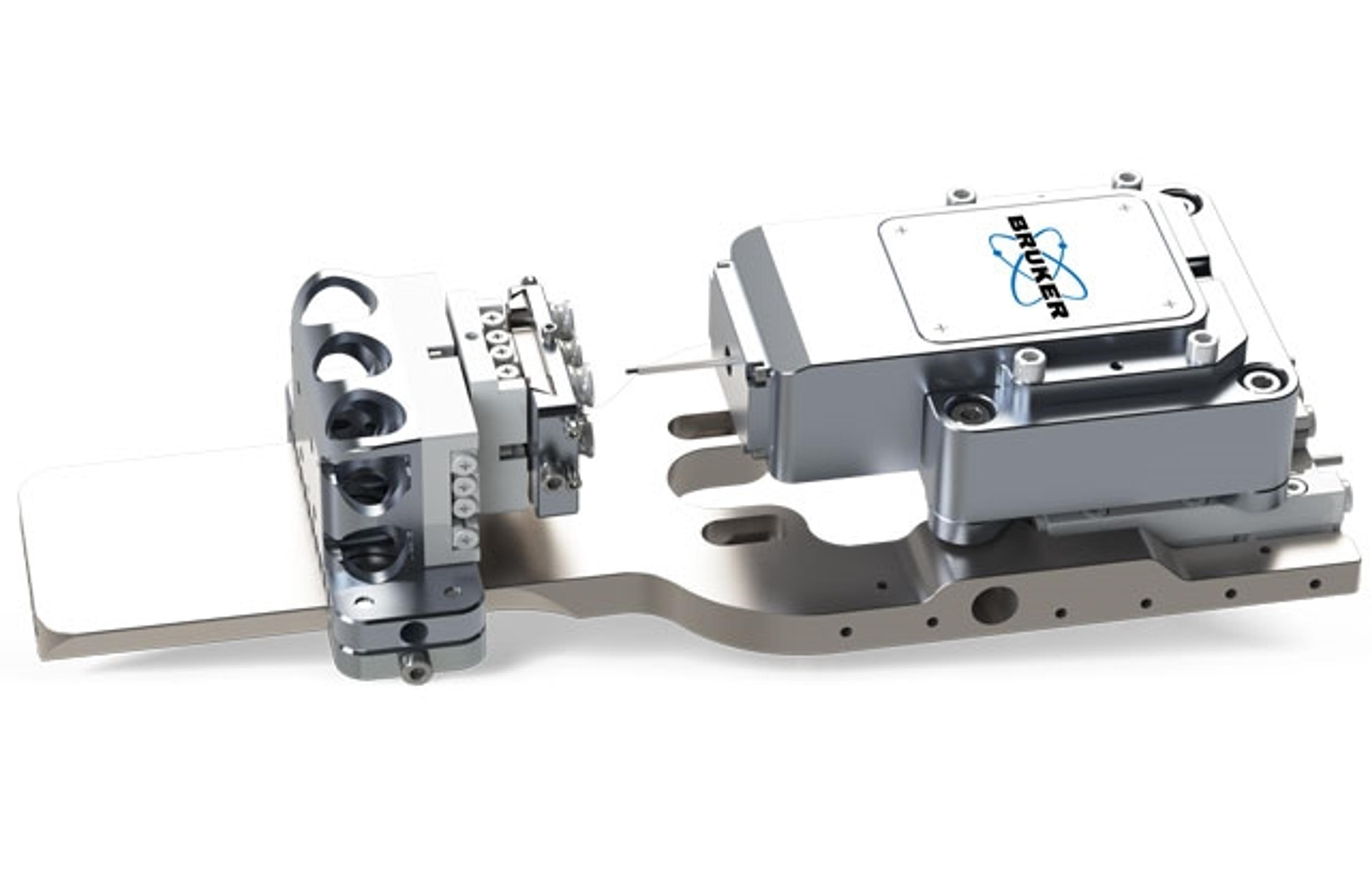
Hysitron PI 89

Bruker Nano Surfaces and Metrology

The Hysitron PI 89 SEM PicoIndenter leverages the advanced imaging capabilities of scanning electron microscopes (SEM, FIBSEM, PFIB), making it possible to perform quantitative nanomechanical testing while simultaneously imaging. Enabled testing techniques include nanoindentation, tensile testing, pillar compression, particle compression, cantilever bending, fracture, fatigue, dynamic testing, and mechanical properties mapping.

(0)

Links

Tags

Mechanical TestingMechanical testing explores the elastic and inelastic nature of a material when force is applied. A mechanical test shows whether a material is suitable for its intended application by measuring hardness, tensile strength, elongation, elasticity, and fatigue limit.Non-Destructive TechniquesNon-destructive techniques (NDT) describes a variety of analytical techniques used to evaluate the properties of a material. Common methods include ultrasonic, magnetic-particle, liquid penetrant, radiographic, remote visual inspection (RVI), and eddy-current testing. NDT is regularly used in forensic engineering, civil engineering, mechanical engineering, electrical engineering, systems engineering, aeronautical engineering, and medicine.Surface Area TestingPhysisorption studies fundamental parameters essential for the characterization of materials such as the specific surface area and pore size distribution. Properties such as porosity, strength, hardness, permeability, separation selectivity, corrosion, and thermal stress resistance can all be directly correlated to the porous structure of a material.ProfilometersProfilometers are instruments used to measure a surface's profile, in order to quantify etch depth, deposited film thickness, and surface roughness. They operate in either contact or non-contact modes and may use optical or stylus techniques to make the actual measurements.Electron MicroscopyElectron microscopes (EM) are used to create high-resolution images of samples at the nanoscale by means of an accelerated beam of electrons as a source of illumination. Types of electron microscope include scanning electron microscopes (SEM), transmission electron microscopes (TEM), scanning transmission electron microscopes (STEM) and cryo-electron microscopes. Focused ion beam (FIB) microscopes are useful for modifying or milling a sample surface with nanometer precision, as well as imaging. Find the best electron microscopes in our peer-reviewed product directory: compare products, check customer reviews and receive pricing direct from manufacturers.SEMScanning Electron Microscopy (SEM) is a technique that uses a focused electron beam to scan a sample and create high-resolution images. It is widely used in materials science, nanotechnology, and biological research. Explore SEM systems in our peer-reviewed product directory; compare products, check reviews, and get pricing directly from manufacturers.CompositesCarbon fiberStrength testing
<em>In-situ </em> fiber push-out tests with the Hysitron PI 88 SEM PicoIndenter