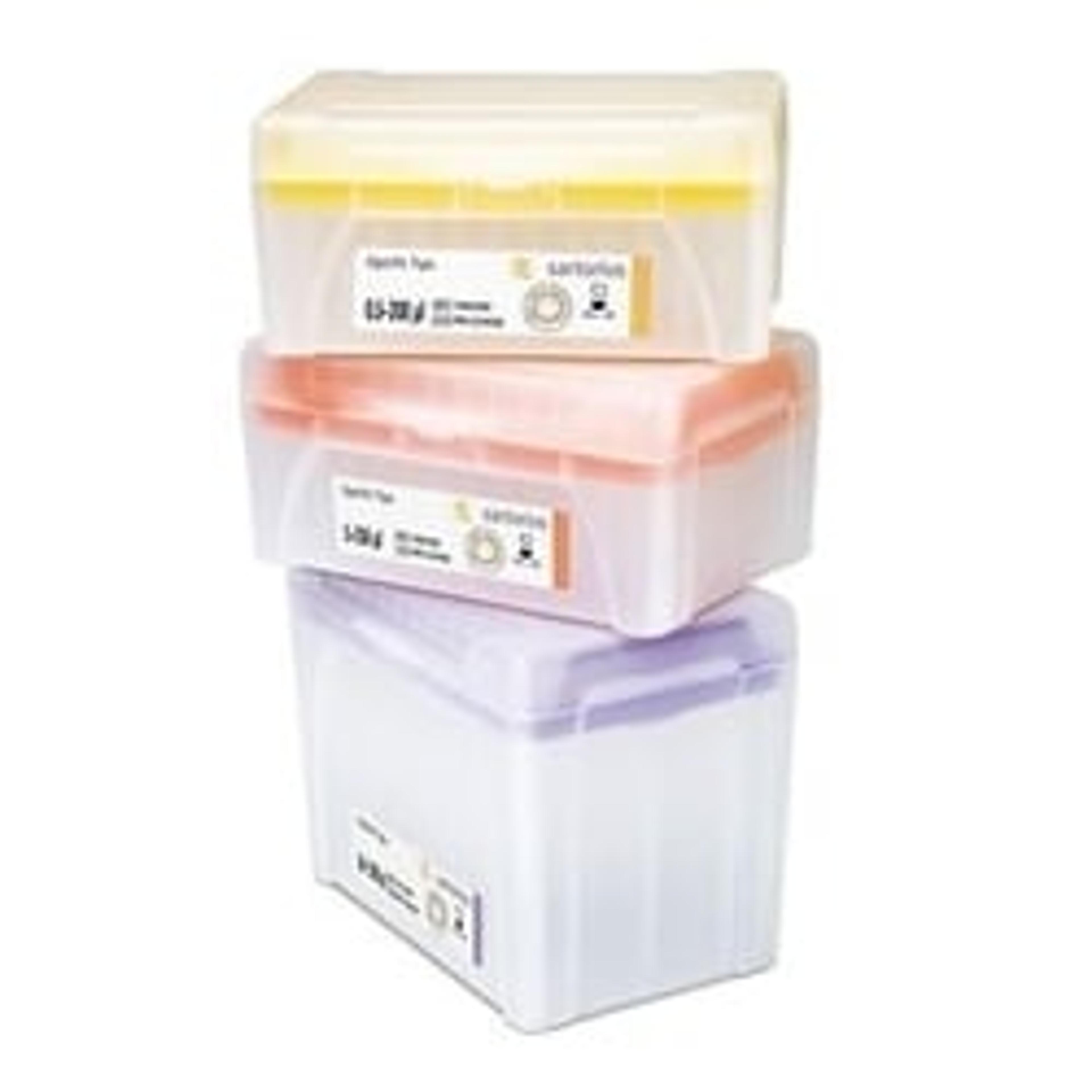
Leachable-free pipette tips for analytical cannabis testing from Sartorius

16 Mar 2020

Contaminants from common plastic labware can interfere with the quality and potency testing by HLPS or GC-MS and heavy metal testing by ICP-MS. With the cannabis industry analyzing contaminants in concentrations as low as parts-per-billion it is important to choose labware that have been tested not to release interfering compounds of interest of cannabis quality control such as arsenic, cadmium, mercury, lead or pesticides.

SafetySpace Filter Tips

Sartorius Group

SafetySpace Filter Tips leave more space between the sample and the filter than conventional filter tips. This allows pipetting any type of liquid or using any pipetting technique without the risk of the precious sample absorbing into the filter. In effect, this secures 100% sample recovery and thus greater accuracy. The safety space feature is particularly useful in: pipetting foaming liquids such as buffers and proteins pipetting solvents multiple dispensing functions of electronic pipettes reverse pipetting any other application requiring extra space in the tip. The tips are made of virgin polypropylene and the filter of polyethylene without "self-sealing" additives to avoid any interference with the sample and the results. The filter barrier helps protect against cross-contamination of the sample and/or the pipette, and reduces the need for pipette maintenance. The filter tips are available in multiple volumes from 10 µl to 1200 µl and are packed in colour coded single tray racks. They are certified free of DNase, RNase and endotoxins, and are pre-sterilised. The filter barrier and the certified purity makes the filter tips ideal for: molecular biology microbiology cell culture applications radioactive work

(0)

Links

Tags

UHPLC and HPLCHigh performance liquid chromatography (HPLC) and ultra high performance liquid chromatography (UHPLC), also known as UPLC, are analytical techniques used to separate, identify and quantitate components of complex mixtures including biological samples such as proteins and lipids as well as chemical mixtures of pesticides, drugs and oils. Both techniques are liquid chromatographic methods but differ by operating pressures (HPLC < 6000 psi < UHPLC ). Components of HPLC and UHPLC systems include columns, detectors, pumps, autosamplers and column heaters. Explore a range of UHPLC and HPLC columns for your specific sample needs including reverse phase, normal phase, ion exchange, HILIC, ion exclusion and size exclusion columns. For more specialized HPLC, explore FPLC, countercurrent LC and simulated moving bed systems. Find the best UHPLC and HPLC equipment in our peer reviewed product directory: compare products, check customer reviews and receive pricing direct from manufacturers.GC-MS GC-MS (gas chromatography-mass spectrometry) instruments and equipment are used to separate, quantify and identify mixtures of small and volatile compounds, such as polycyclic aromatics, fatty acids and alcohols. Often used in drug detection, forensic investigation and environmental analysis for pesticides and contaminants, GC-MS is a powerful addition to your lab’s analytical capabilities. GC-MS/MS instruments equipped with a qTOF or triple quadrupole analyzers can give greater sensitivity and resolution to your analysis. Find the best GC-MS instruments and equipment in our peer-reviewed product directory: compare products, check customer reviews and receive pricing direct from manufacturers.ICP-MSInductively Coupled Plasma Mass Spectrometry (ICP-MS) is a powerful analytical technique used to determine the concentrations of elements and their isotopes in a variety of samples, including water, soil, and biological tissues. It involves ionizing elements in the samples with extremely high-temperature Argon (Ar) plasma and then using a mass spectrometer to measure the number of ions based on their mass-to-charge ratio (m/z). Explore ICP-MS systems in our peer-reviewed product directory; compare products, check reviews, and get pricing directly from manufacturers.CannabisGC-MSGas Chromatography-Mass Spectrometry (GC-MS) combines the separation power of gas chromatography with the detection capabilities of mass spectrometry, allowing for the analysis of complex mixtures. It is widely used in environmental, forensic, and pharmaceutical analysis. Explore GC-MS systems in our peer-reviewed product directory; compare products, check reviews, and get pricing directly from manufacturers.