ResourceLife Sciences
Label-Free SoPRano™ Gold Nano-Rod (GNR) Assays on a Spectrometer-Based Microplate Reader
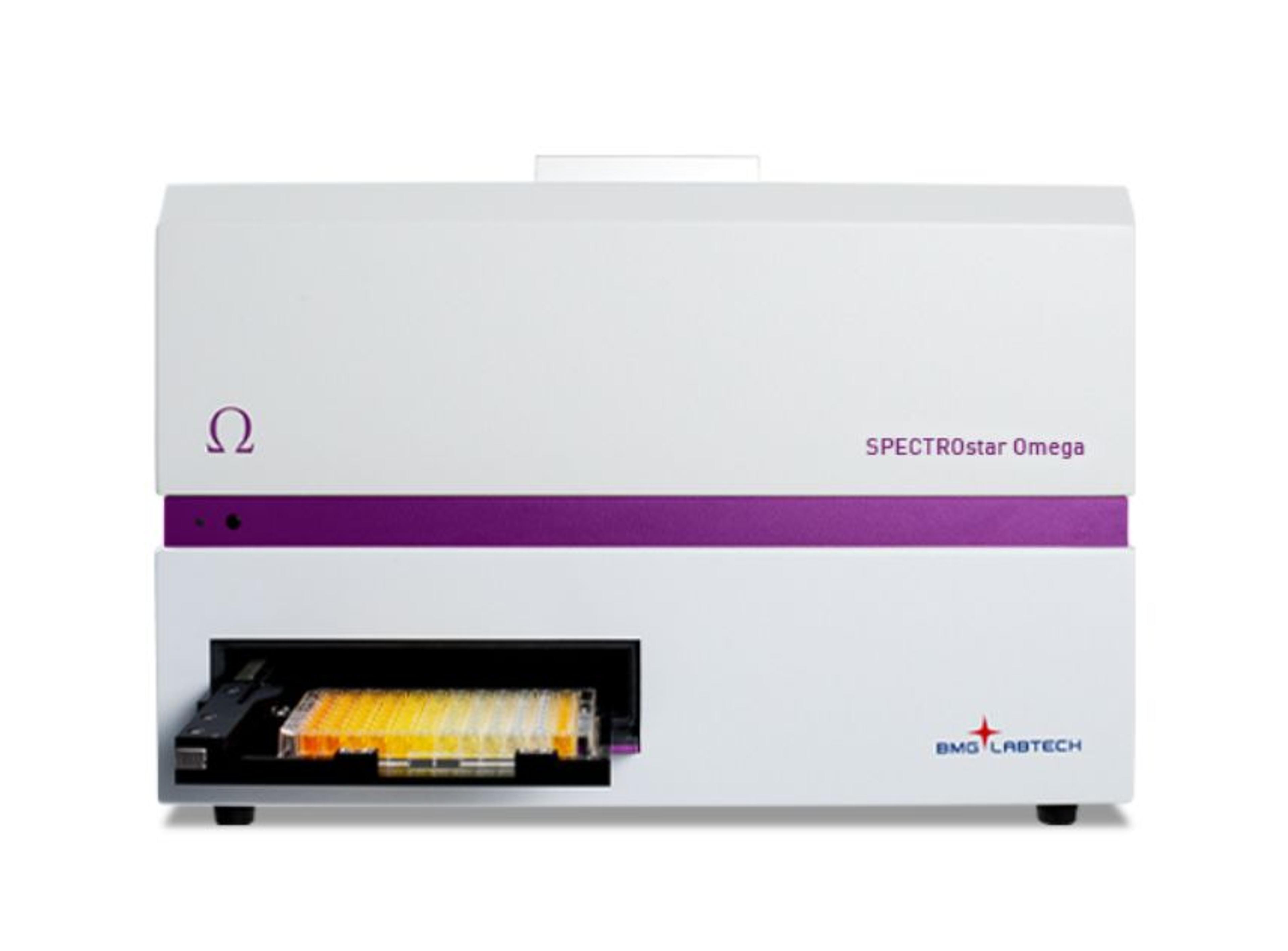
21 Jul 2012A label-free SoPRano™ assay from PharmaDiagnostics benefits from fast, full-spectrum analysis found on all BMG LABTECH spectrometer-based microplate readers. The label-free SoPRano™ assay uses the Localized Surface Plasmon Resonance (LSPR) properties of Gold Nano Rods (GNRs) to determine protein-protein interaction such as antibody-antigen binding. The change in LSPR signal upon protein binding can be measured as an absorbance change in the max, which is easily detected with a BMG LABTECH spectrometer-based microplate reader. Read BMG LABTECH’s application note for more details.
Links
Tags
AntibodiesAntibodies are used in techniques such as confocal and fluorescence microscopy, flow cytometry, ELISA, ELISPOT, immunohistochemistry, western blotting and immunopreciptation. Select specific antigen reactivity, high specific affinity, low non-specific binding, monoclonal or polyclonal, primary or secondary antibodies and associated conjugates such as an enzyme or dye for visualization.MicroplatesMicroplates are multi-well plates used to increase the throughput of biological investigations. The number of wells microplates contain can range from 6 to 3243 wells, with the 96-well format being the most commonly used. Microplates can come tailored for a range of applications including cell culture, PCR, filtration, storage, non-binding surface, protein crystallization, as well as pre-coated, deep well and normal Standard microplates. Additionally, options for microplate colors include clear , black, white or black with clear bottom and white with clear bottom for absorbance microplate reader applications. Find the best microplates for your lab in our peer-reviewed product directory: compare products, check customer reviews and receive pricing direct from manufacturers.Microplate Readers / DetectorsMicroplate readers are used to automate the detection and analysis of labeled or label-free components in microplates during assays or live-cell monitoring. Microplate readers are generally distinguished by their mode of detection. Types include absorbance, luminescence, fluorescence intensity, fluorescence polarization, TRF / FRET and multimode microplate readers. Microplate readers deliver a high throughput of samples by reading multiple wells simultaneously, with the 96-well format the most commonly used. As a result, microplate readers are often used in the drug discovery, bioassays, research and pharmaceutical industries for screening applications. Microplate loading can also be automated, with robotic microplate stackers to increase throughput. Find the best microplate readers in our peer-reviewed product directory: compare products, check customer reviews and receive pricing direct from manufacturers.Antibody ArraysLSPR