ResourceLab Automation
Lab automation for synthetic biology workflows
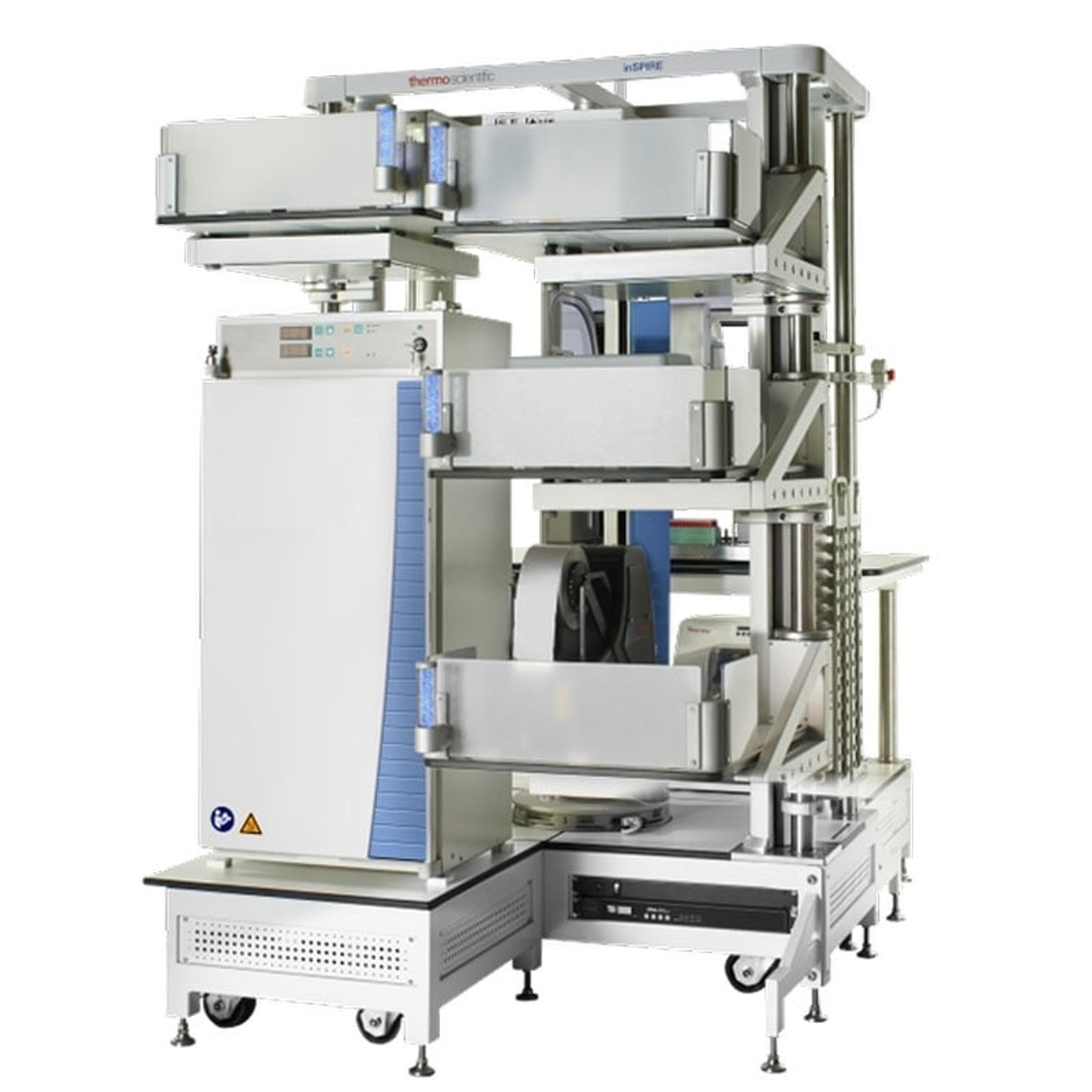
17 Nov 2020In this article, Thermo Fisher Scientific discuss lab automation in the context of the design, build, test, and learn (DBTL) workflow and explore how researchers at biofoundries are currently applying lab automation to accomplish their goals. The latest innovative lab automation options that can be applied to common workflows in the synthetic biology lab for optimization of the DBTL cycle are also highlighted.
Links
Tags
Microplate Readers / DetectorsMicroplate readers are used to automate the detection and analysis of labeled or label-free components in microplates during assays or live-cell monitoring. Microplate readers are generally distinguished by their mode of detection. Types include absorbance, luminescence, fluorescence intensity, fluorescence polarization, TRF / FRET and multimode microplate readers. Microplate readers deliver a high throughput of samples by reading multiple wells simultaneously, with the 96-well format the most commonly used. As a result, microplate readers are often used in the drug discovery, bioassays, research and pharmaceutical industries for screening applications. Microplate loading can also be automated, with robotic microplate stackers to increase throughput. Find the best microplate readers in our peer-reviewed product directory: compare products, check customer reviews and receive pricing direct from manufacturers.Sample ManagementSample management systems include sample storage devices such as freezers and plate storers, sample environment enclosures and sample organization, retrieval and sorter systems. Useful system features include high-throughput, automation, robotic arms, automated liquid handling and associated database systems. Accessories in sample management include barcode scanners, heat sealers and tubes.Robotic InstrumentsRobotic instruments can be used for high-throughput automation of many lab processes. Such processes use instruments for assays like cell based assays and ELISA, for sample preparation like shakers, centrifuges and incubators, and for analysis such as sequencing and western blot analyzers. Useful features of robotic instruments include speed, reproducibility, barcode readers, software and automation.Automated Liquid HandlingAutomated liquid handling equipment is used to mix, dilute and dispense allotted volumes of liquid into microplates and other vessels automatically. The robotic, liquid handling arms can dispense from single channel to 3456 multichannel as well as operate nanoliter dispensing, enabling high throughput of samples. Find the best automated liquid handlers in our peer-reviewed product directory: compare products, check customer reviews and receive pricing direct from manufacturers.AutomationAutomation in laboratories and manufacturing processes enhances efficiency, precision, and scalability by reducing the need for manual intervention. It plays a critical role in improving productivity, minimizing human error, and accelerating workflows in fields like diagnostics, drug development, and industrial testing. Automation technologies include robotic systems, automated liquid handlers, and process control systems that streamline complex tasks and ensure consistent, reproducible results. Explore our peer-reviewed product directory to discover the best automation solutions, compare options, read user reviews, and get prices directly from manufacturers.Synthetic Biology