ResourceSpectroscopy

IR-based Protein Quantitation Surpasses Colorimetric Assay Quantitation and Results are Independent of Detergents, Reducing Agents and Analysis Time

25 Mar 2012

Read this application note to learn about a comparison for infrared (IR)-based protein quantitation using the Direct Detect™ quantitation system to Bradford and bicinchoninic acid (BCA) colorimetric assays. Results show that IR-based quantitation provides results that match concentrations, determined by amino acid analysis, even in the presence of detergent or reducing agent. Also it is shown that, unlike colorimetric assays, the calculated protein concentration obtained from IR-based analysis is
unchanged regardless of the time delay between assay and data acquisition.

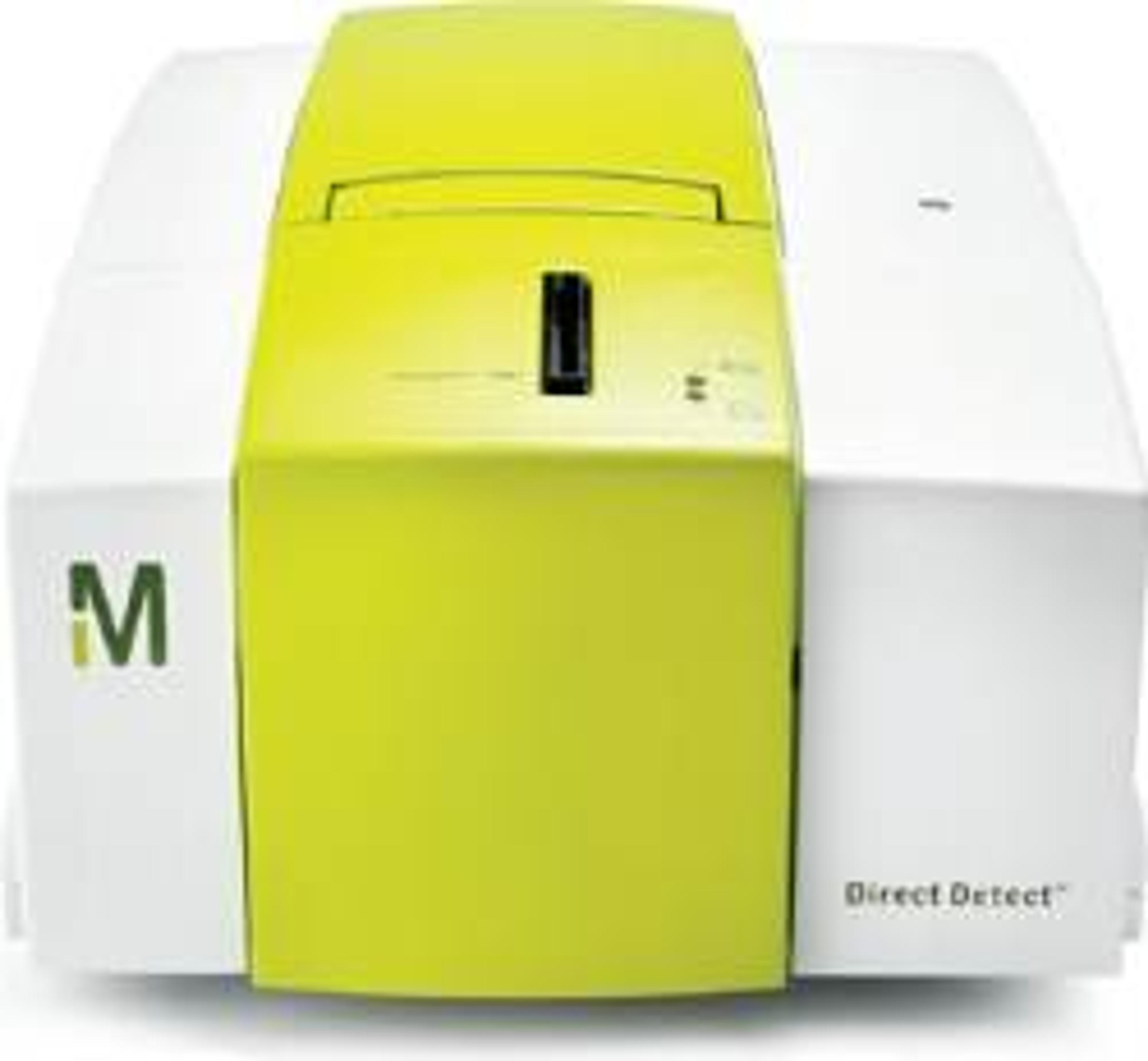
Direct Detect® Spectrometer

Merck

Introducing Direct Detect™, the first infrared (IR)-based biomolecular quantitation system. Just spot your sample, blank, and read! No sample prep, standard curves, messy cuvettes or liquid waste. With inherent amide bond detection, the Direct Detect™ system distinguishes proteins and peptides from interfering sample components, providing more accurate results without the pitfalls of colorimetric assays. Technology: FTIR Spectrometry and Protein Quantitation By measuring amide bonds in protein chains, the system accurately determines an intrinsic component of every protein without relying on amino acid composition, dye binding or redox potential. Accurately analyze components of complex mixtures: proteins, lipids, carbohydrates, and nucleic acids have separable IR spectra. Advantages of FTIR Quantitation: •  Independent of amino acid composition •  No extinction coefficient required, unlike UV-Vis/A280 methods •  Improves speed and accuracy over traditional colorimetric assays •  Works in the presence of detergents and reducing agents •  Compatible with lysates and membrane preps

(1)

Links

Tags

Infrared / IR SpectroscopyInfrared (IR) spectroscopy measures the interaction of infrared light with a sample, including transmission, reflectance & absorbance, facilitating the identification of analytes. Equipment used for quantitative analysis includes Fourier-transform infrared (FTIR) spectrometers, infrared cameras, FTIR gas analyzers, as well as attenuated total reflectance (ATR) accessories and pellet or film presses. Find the best IR spectroscopy products in our peer-reviewed product directory: compare products, check customer reviews and receive pricing direct from manufacturers.ProteomicsProteomics is the systemic bioinformatics study of proteins and amino acids, including their structure, size, function and identification. Tools used in proteomics include chromatography, blotting and gels, protein arrays, mass spectrometry and ELISA and associated analysis software. Analyzers and proteomic systems should be sensitive, high resolution, fast and may be automated for high-throughput.Cell-Based AssaysCell-based assays are used to monitor the presence, quantity and activities of a desired cellular analyte including drug molecules or biomarkers. This can reveal information on cell health (apoptosis, cytotoxicity, viability and proliferation assays), cell metabolism, cell migration and cell signaling mechanisms. Find the best cell-based assay products, kits and equipment with our peer reviewed product directory: compare products, check customer reviews and receiving pricing direct from manufacturers.Protein PurificationProtein purification is a vital step in drug discovery, therapeutics, biotech and life science research. The purification process typically involves subcellular or membrane protein extraction with cell lysis kits, separation of proteins from cell debris by filtration or spin columns, and the isolation of proteins of interest from other proteins and impurities with affinity purification (including fusion protein tags and antibody binding proteins A, G and L), immunoprecipitation or chromatographic methods, such as ion exchange, size exclusion and immobilized metal affinity chromatography. All purification methods come in multiple formats for your laboratory needs, including agarose or magnetic beads, resins, columns and filter plates. Find the best protein purification equipment in our peer-reviewed product directory: compare products, check customer reviews and receive pricing direct from manufacturers.Protein QuantificationThe detection and quantification of proteins in a sample is vital across life sciences, pharmaceutical research and clinical diagnostics, and a variety of equipment is available to scientists to simplify the workflow. Proteins of interest can be easily labeled and detected on light-based detection instruments. Immunoassay kits allow you to identify a specific protein of interest and protein detection beads or antibody microarrays allow you to identify multiple specific proteins at once. Protein interactions and enzyme activity can also be monitored with protein-protein interaction assays. Additionally, the biophysical characterization of proteins is made easy with biokinetic analyzers. Find the best protein detection and quantification products in our peer-reviewed product directory: compare products, check customer reviews and receive pricing direct from manufacturers.Colorimetric Assays
IR-based Protein Quantitation Surpasses Colorimetric Assay Quantitation and Results are Independent of Detergents, Reducing Agents and Analysis Time