ResourceSpectroscopy

Investigating Solid State Materials Using ZEISS Scanning Electron Microscopes with Integrated Raman Spectrometers

Investigating Solid State Materials Using ZEISS Scanning Electron Microscopes with Integrated Raman Spectrometers

17 Apr 2016

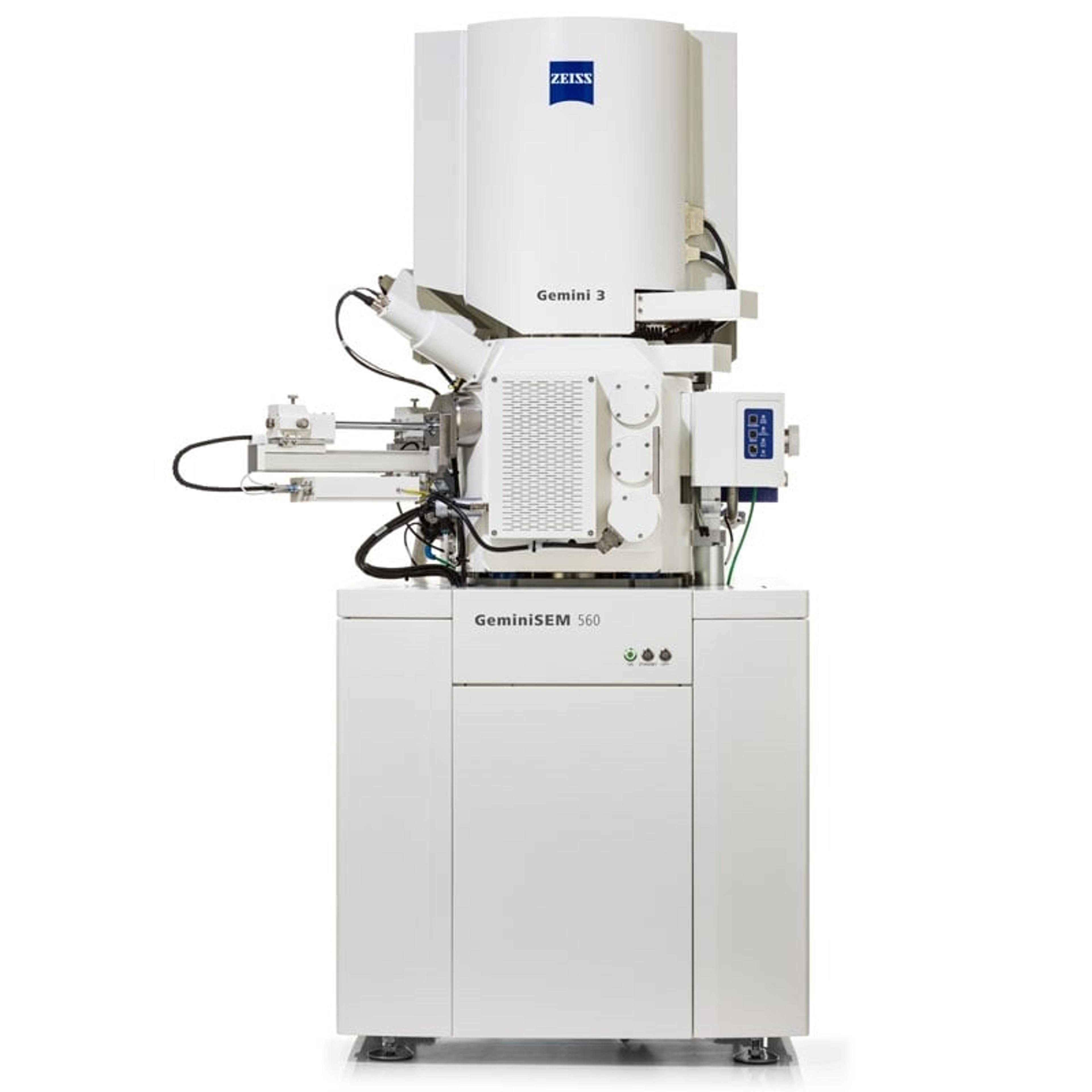
Raman spectroscopy is non-destructive and allows for the detection, identification and quantification of solid state materials and molecules through their unique vibrational and rotational energy level structure. Since the Raman signal is quite weak very sensitive detectors are used to detect the very faint signal. Excellent filtering is therefore essential to block the very intense laser light while still allowing high transmission of the slightly wavelength-shifted Raman scattered signal. Plotting the intensity of this “shifted” light versus frequency results in a Raman spectrum of the sample. Chemical identifications can be performed by using search algorithms against digital databases. This application note demonstrates the analysis of graphene using SEM and integrated Raman.

Links

Tags

Raman SpectroscopyRaman spectroscopy is used to discern the vibrational and rotational states of molecules and hence the chemical composition of a sample by measuring the inelastic scattering of monochromatic light. Explore a range of Raman spectrometers, including handheld/portable Raman spectrometers for QC/QA labs and in situ spectrometers for processes. Conduct Raman imaging for microanalysis of mixed samples using a Raman microscope. Raman spectrographs are also available. Find the best Raman spectroscopy products in our peer-reviewed product directory: compare products, check customer reviews and receive pricing direct from manufacturers.Non-Destructive TechniquesNon-destructive techniques (NDT) describes a variety of analytical techniques used to evaluate the properties of a material. Common methods include ultrasonic, magnetic-particle, liquid penetrant, radiographic, remote visual inspection (RVI), and eddy-current testing. NDT is regularly used in forensic engineering, civil engineering, mechanical engineering, electrical engineering, systems engineering, aeronautical engineering, and medicine.Electron MicroscopyElectron microscopes (EM) are used to create high-resolution images of samples at the nanoscale by means of an accelerated beam of electrons as a source of illumination. Types of electron microscope include scanning electron microscopes (SEM), transmission electron microscopes (TEM), scanning transmission electron microscopes (STEM) and cryo-electron microscopes. Focused ion beam (FIB) microscopes are useful for modifying or milling a sample surface with nanometer precision, as well as imaging. Find the best electron microscopes in our peer-reviewed product directory: compare products, check customer reviews and receive pricing direct from manufacturers.MicroscopyMicroscopy is a technique used to observe small objects in detail, from cells to materials, using light or electron microscopes. It enables researchers to examine structures with high resolution, aiding in fields such as biology, medicine, and materials science. With advanced microscopy techniques, scientists can gain insights into cellular processes, tissue structures, and material properties. Explore the best microscopy solutions in our peer-reviewed product directory, compare products, read customer reviews, and get pricing directly from manufacturers.GrapheneGraphene is a two-dimensional structure that comprises of a hexagonal honeycomb lattice of carbon atoms. Graphene can conduct electricity and heat, is almost transparent and is 100x stronger than steel by weight.SEMScanning Electron Microscopy (SEM) is a technique that uses a focused electron beam to scan a sample and create high-resolution images. It is widely used in materials science, nanotechnology, and biological research. Explore SEM systems in our peer-reviewed product directory; compare products, check reviews, and get pricing directly from manufacturers.
Investigating Solid State Materials Using ZEISS Scanning Electron Microscopes with Integrated Raman Spectrometers