
InnoScan® 710IR Infrared Detection for Optimal Scan of Nitrocellulose-Based Protein Arrays
23 Feb 2015This technical note focuses on the application of the InnoScan® 710 and 710IR scanners to scan protein arrays. Its principal goal is to guide customers and distributors in choosing the adequate scanner according to the microarray they want to read.
Related products
Request Quote for All Products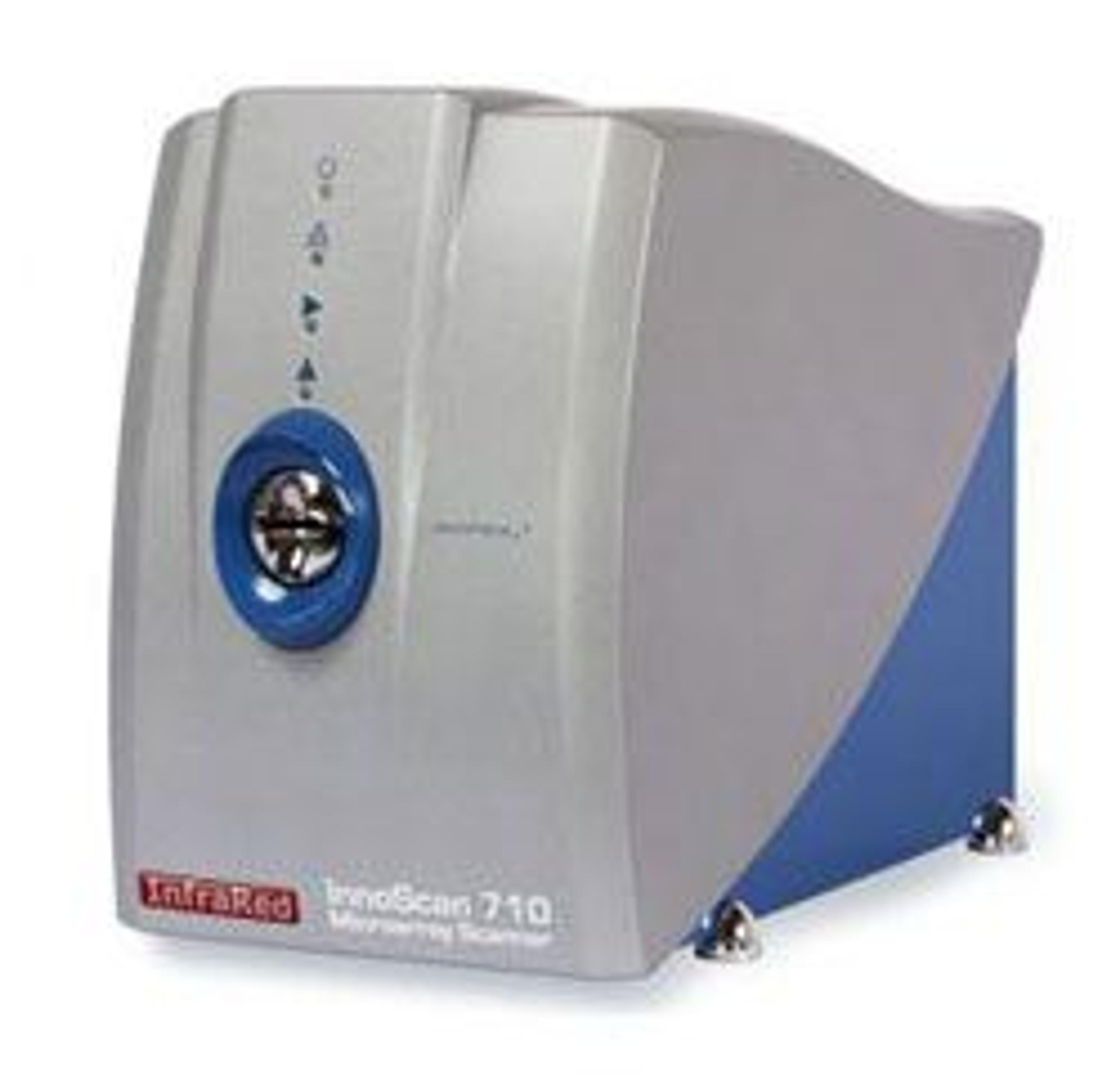
Advanced Infrared 2-colour Microarray Scanner: InnoScan 710IR
InnopsysUnmatched performance for protein assays.Specifically designed to enhance detection in nitrocellulose protein array applications, the InnoScan 710IR near infrared (NIR) fluorescence scanner from Innopsys has on-board 670 nm and 785 nm excitation lasers to optimize performance by reducing the inherent background from the nitrocellulose. No scanner comes close for optical quality and speed of operation. Full compatibility with traceability standards is guaranteed, with a validation slide and associated Mapix software provided.Eliminating one of the most common concerns, the InnoScan 710IR is insensitive to substrate distortion. The real-time autofocus system makes the entire reading area completely uniform.Sensitivity and signal-to-noise ratio are two of the outstanding characteristics upon which the reputations of InnoScan scanners have been built. Outstanding photometric properties, combined with unique data manipulation software, ensure the most advanced analyses possible on the market for this class of scanner.Features: 670 nm and 785 nm excitation lasers for enhanced IR performance Simple to understand and operate – concentrate on the interpretation High precision - maximum resolution of 3 µm/pixel Under 4 minutes reading time combined with 10µm resolution Unbeatable scanning speed (10 to 35 lines/sec) Barcode identification for reliable traceability Portable, compact design; can be shared by labs Attractive price
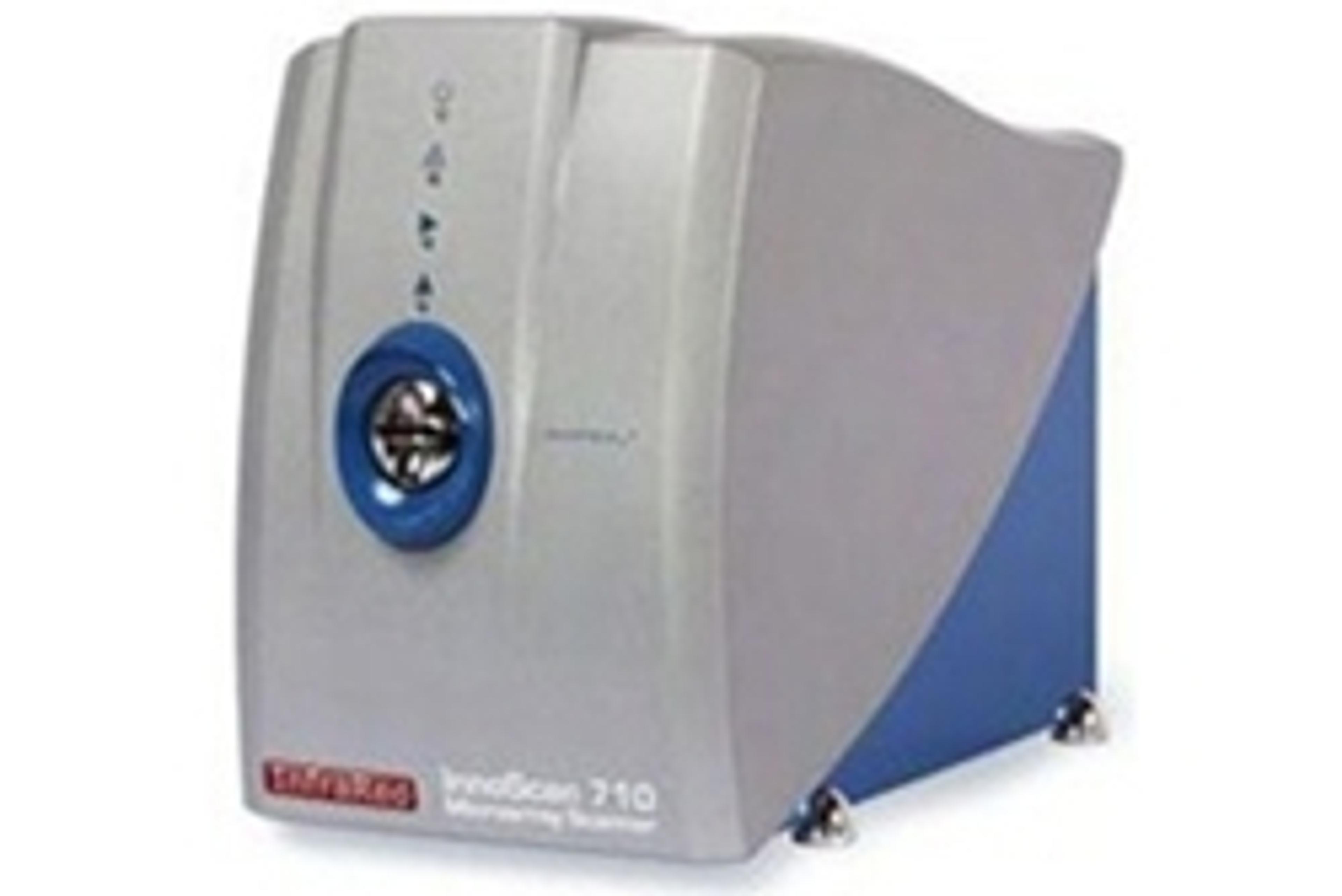
Advanced 2-colour Fluorescence Microarray Scanner: InnoScan 710
InnopsysReliability, speed, traceability. Characterised by its ease-of-use, speed and image quality, the InnoScan 710 from Innopsys is an ideal tool for routine microarray reading. Supplied with a validation slide and associated Mapix software, full compatibility with traceability standards is assured.InnoScan 710 has a special feature of using a real-time autofocus system that offers the advantage of making it insensitive to substrate distortion and so making the entire reading area completely uniform. InnoScan scanners are well known for their excellent photometric properties, particularly in terms of sensitivity and signal-to-noise ratio.Features: High precision - maximum resolution of 3 µm/pixel The fastest system on the market (10 to 35 lines/sec) Reading time less than 4 minutes at 10µm resolution Simple to use and easy to understand Reliable sample identification by barcode Convenient, compact, portable design Very competitive price