ResourceLife Sciences
In-situ Micro-Volume Bicinchoninic Acid Protein Assay
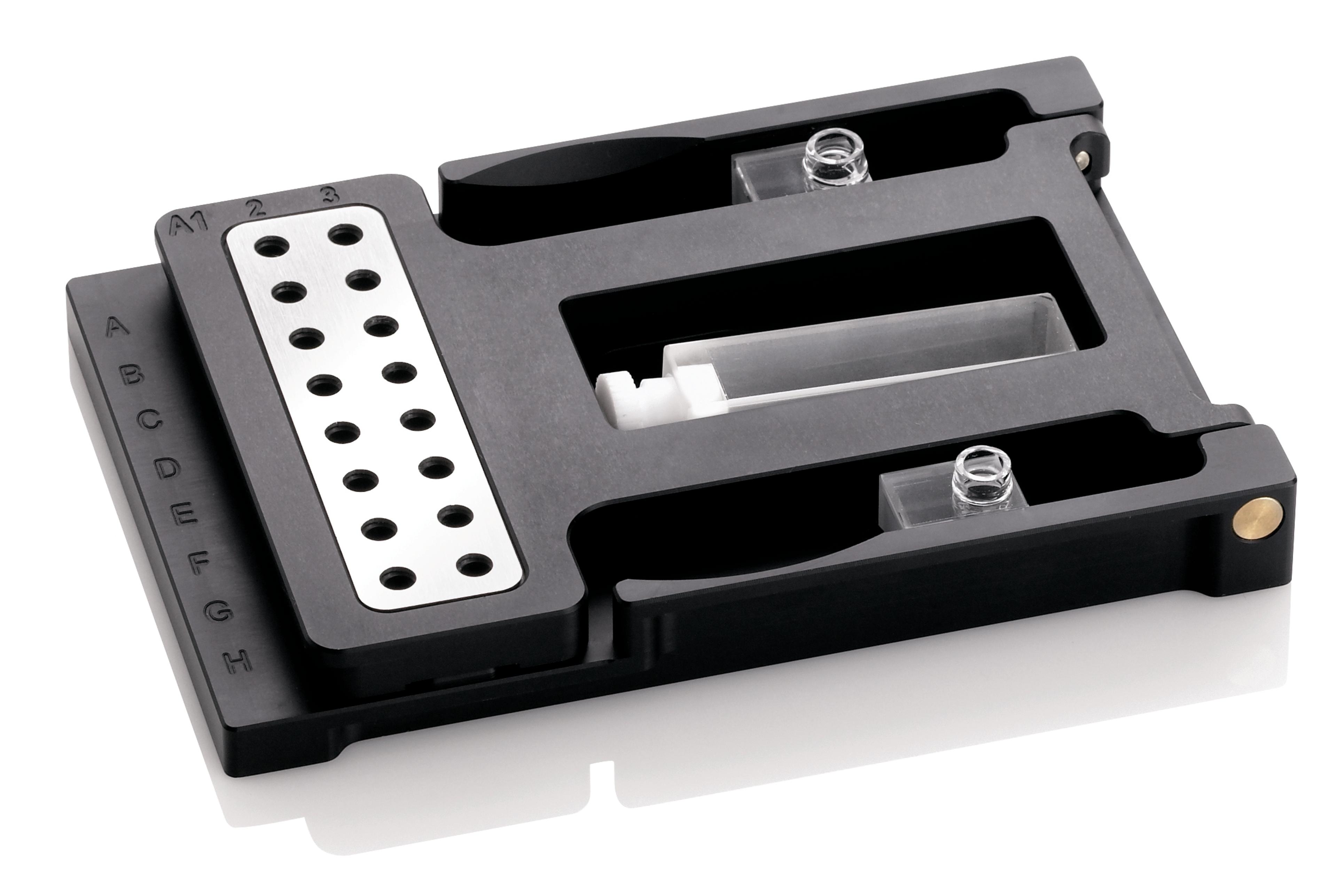
28 Mar 2011This application note by BioTek shows the utility of a Multi-Volume Plate for in-situ microvolume BCA assays mixed and incubated in the microspots of the plate. Bicinchoninic acid (BCA) is one of the most popular reagents for colorimetric protein determinations. The assay workflow is simple and resembles the workflow for a typical microplate assay where reagents and samples are added sequentially to microplate wells without the need for offline color development.
Links
Tags
Genome AnalysisGenomics, the study of genomes, includes functional genomics, evolutionary genomics and comparative genomics. There are many genomic technologies such as DNA sequencing of whole genomes, computational biology and bioinformatics. DNA and nucleic acids must be isolated and concentrated from cells for analysis with kits, automated analyzers and software. Other useful technologies for studying genomics include PCR, microarrays and electrophoresis.ProteomicsProteomics is the systemic bioinformatics study of proteins and amino acids, including their structure, size, function and identification. Tools used in proteomics include chromatography, blotting and gels, protein arrays, mass spectrometry and ELISA and associated analysis software. Analyzers and proteomic systems should be sensitive, high resolution, fast and may be automated for high-throughput.High-Throughput ScreeningHigh-throughput screening (HTS) is an automated drug discovery technique for identification of active compounds against a compound library. Use HTS readers and integrated assay preparation / analysis workstations to screen your compounds. Identify active compounds against various HTS libraries, including membranes, proteins and peptides and HTS cell lines. Find the best high-throughput screening products in our peer-reviewed product directory: compare products, check customer reviews and receive pricing direct from manufacturers.Microplate Readers / DetectorsMicroplate readers are used to automate the detection and analysis of labeled or label-free components in microplates during assays or live-cell monitoring. Microplate readers are generally distinguished by their mode of detection. Types include absorbance, luminescence, fluorescence intensity, fluorescence polarization, TRF / FRET and multimode microplate readers. Microplate readers deliver a high throughput of samples by reading multiple wells simultaneously, with the 96-well format the most commonly used. As a result, microplate readers are often used in the drug discovery, bioassays, research and pharmaceutical industries for screening applications. Microplate loading can also be automated, with robotic microplate stackers to increase throughput. Find the best microplate readers in our peer-reviewed product directory: compare products, check customer reviews and receive pricing direct from manufacturers.Assay AssemblyAssay Assembly is technique used in drug discovery to develop assays to test the cytotoxicity, genotoxicity, or other activities of a compound on a cell. Assay assembly requires chip assembly, a delivery system and a detection and analysis method. Beneficial features of assay kits or automated systems include high-throughput, high speed and sensitivity and low signal to noise ratio.Medicinal ChemistryMedicinal chemistry is a broad discipline encompassing the design, identification, synthesis and development of chemicals in drug discovery. It includes a number of techniques covering structural biology, synthetic chemistry and molecular biology. Technologies used in medicinal chemistry include ADME, lab-on-a-chip, high content screening and assay assembly.High-Content ScreeningHigh-content screening (HCS), also known as high-content analysis (HCA), is a high-throughput technique used in drug discovery to identify substances that alter the phenotype of cells. HCS uses fluorescent microscopic imaging and automated image analysis to investigate cellular events such as apoptosis, cell viability, GPCR activation, oxide production, neurite outgrowth, and cell signaling. Find the best fluorescent labeling reagents, cellular assays, and high-content imaging systems in our peer-reviewed product directory: compare products, check customer reviews and receive pricing direct from manufacturers.Protein PurificationProtein purification is a vital step in drug discovery, therapeutics, biotech and life science research. The purification process typically involves subcellular or membrane protein extraction with cell lysis kits, separation of proteins from cell debris by filtration or spin columns, and the isolation of proteins of interest from other proteins and impurities with affinity purification (including fusion protein tags and antibody binding proteins A, G and L), immunoprecipitation or chromatographic methods, such as ion exchange, size exclusion and immobilized metal affinity chromatography. All purification methods come in multiple formats for your laboratory needs, including agarose or magnetic beads, resins, columns and filter plates. Find the best protein purification equipment in our peer-reviewed product directory: compare products, check customer reviews and receive pricing direct from manufacturers.Plate ProcessingAutomated plate processing is used in microplate technologies for high-throughput, speed and efficiency. Plate processing systems include microplate handlers for moving plates, heat sealers, stackers and carousels for storage, retrieval and delivery, microplate washers and piercers. Useful features of plate processors include walk-away automation, compatibility and easy integration with microplate systems.