ResourceMaterials

In-situ electromechanical testing of ZnO nanowires

6 Jul 2023

In this application note, Bruker Nano presents experimental data on in-situ electromechanical testing of ZnO nanowires. One-dimensional structures such as nanowires and nanotubes are potential materials for future nanoelectronics, optoelectronics, piezoelectric devices, sensors, and actuators. Due to length scale effects and higher surface-to-volume ratios, nanostructures can exhibit superior mechanical and electrical, as well as other length scale-dependent properties. To utilize these fundamental advantages, it is essential to investigate and understand their unique characteristics as a function of the material parameters.

Hysitron PI 89

Bruker Nano Surfaces and Metrology

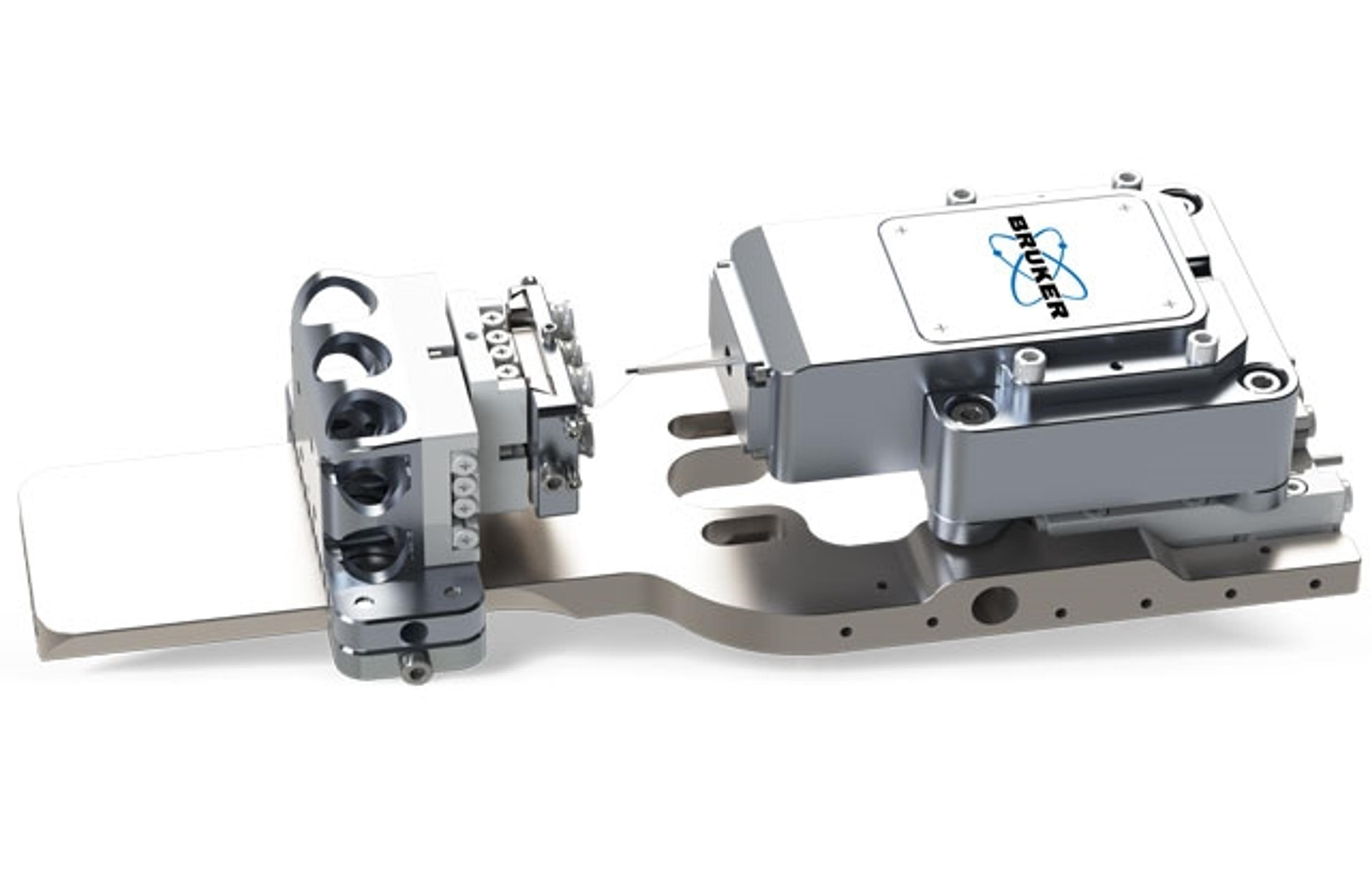
The Hysitron PI 89 SEM PicoIndenter leverages the advanced imaging capabilities of scanning electron microscopes (SEM, FIBSEM, PFIB), making it possible to perform quantitative nanomechanical testing while simultaneously imaging. Enabled testing techniques include nanoindentation, tensile testing, pillar compression, particle compression, cantilever bending, fracture, fatigue, dynamic testing, and mechanical properties mapping.

(0)

Links

Tags

Mechanical TestingMechanical testing explores the elastic and inelastic nature of a material when force is applied. A mechanical test shows whether a material is suitable for its intended application by measuring hardness, tensile strength, elongation, elasticity, and fatigue limit.Non-Destructive TechniquesNon-destructive techniques (NDT) describes a variety of analytical techniques used to evaluate the properties of a material. Common methods include ultrasonic, magnetic-particle, liquid penetrant, radiographic, remote visual inspection (RVI), and eddy-current testing. NDT is regularly used in forensic engineering, civil engineering, mechanical engineering, electrical engineering, systems engineering, aeronautical engineering, and medicine.Light MicroscopyLight microscopes or optical microscopes are used to visualize microscale objects under magnification, including cells, clinical specimens and materials. Lab equipment for light microscopy includes confocal microscopes, fluorescence microscopes, zoom and stereo microscopes. Microscope slides and imaging reagents are available for visualizing samples, as well as various microscope stages and incubators for large or temperature-sensitive samples. Find the best light microscopes in our peer-reviewed product directory: compare products, check customer reviews and receive pricing direct from manufacturers.Atomic Force Microscopy / Scanning Tunneling MicroscopyAtomic force microscopes (AFM) and scanning tunneling microscopes (STM) are high-resolution forms of scanning probe microscope (SPM) used to generate topological information of a sample down to the atomic scale. Instruments can generate an image of the surface topology, manipulate objects and reveal information on localized properties such as Young’s modulus, conductivity, and magnetism. High-quality STM and AFM probes optimized for your application are available, as well as other SPM-based instruments such as scanning ion conductance microscopes (SICM) & near-field scanning optical microscopes (NSOM). Find the best AFM and STM equipment in our peer-reviewed product directory: compare products, check customer reviews and receive pricing direct from manufacturers.Quality ControlQuality control is needed in all production processes. Quality control is a monitoring procedure or set of procedures that are put in place to ensure that a manufactured product adheres to a defined set of quality criteria. Quality TestingQuality testing ensures that products meet required specifications and safety standards in various industries, including pharmaceuticals, food, and materials. It is essential for maintaining product quality and consumer safety. Explore quality testing tools in our peer-reviewed product directory; compare products, check reviews, and get pricing directly from manufacturers.
In-situ electromechanical testing of ZnO nanowires