
In-depth analysis of non-derivatized N-linked glycans using ion chromatography-orbitrap mass spectrometry
26 Mar 2020The development of reliable, high-throughput workflows for analysis of N-linked glycans is required in the biopharmaceutical industry. In this scientific poster, Thermo Fisher Scientific reports a novel method that couples high-performance anion-exchange chromatography and pulsed amperometric detection (HPAEPAD) to a Q Exactive mass spectrometer, a workflow that promises the fast release and subsequent analysis of N-linked glycans.
Related products
Request Quote for All Products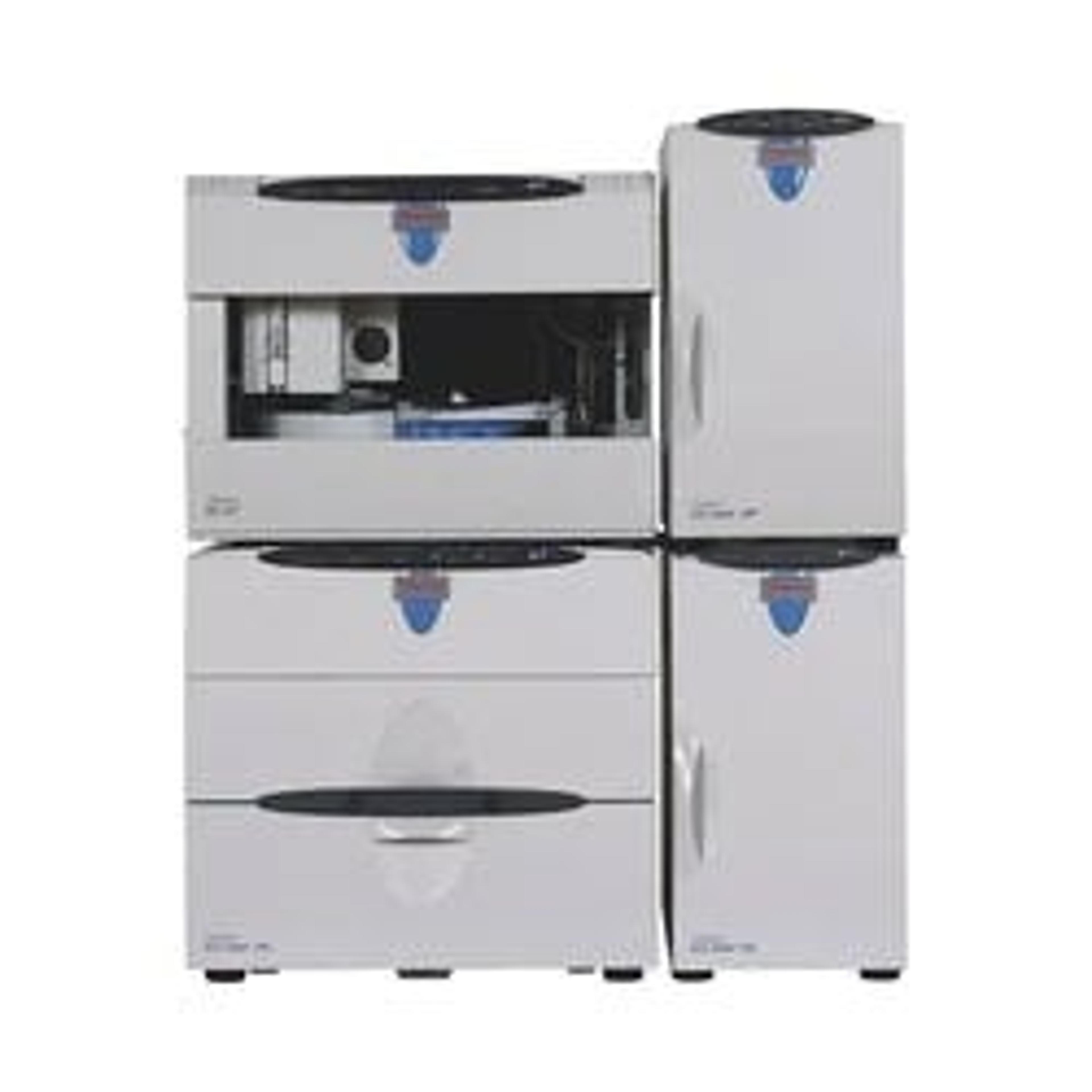
Dionex™ ICS-5000+ Capillary HPIC™ System
Thermo Fisher ScientificBuilt on our top-of-the-line IC platform, this system provides the high performance, convenience, and flexibility of the Thermo Scientific™ Dionex™ ICS-5000+ HPIC System optimized for capillary flow rates. Customize a dual capillary system to run two different analyses concurrently on a single sample, or analyze two samples in parallel. Alternately, run the same analysis on both channels to double throughput. For advanced IC x IC (2D IC) applications and sample pretreatment, combine a capillary channel with a 2- or 4-mm format channel to build a hybrid system. High Pressure, High Performance Fast, sensitive separations without sacrificing resolution—up to two times faster with Fast IC columns Outstanding resolution using columns with small-diameter particles, thanks to high-pressure capability Continuous operation at up to 5000 psi when configured as a Reagent-Free™ IC (RFIC™) system Optimized peak resolution with a choice of isocratic and electrolytic gradient separations on each channel Powerful and user-friendly operation via Thermo Scientific™ Dionex™ Chromeleon™ Chromatography Data System Wide variety of chemistries available in Thermo Scientific™ capillary and Fast IC columns Flexible, easy to configure, modular design Time-saving dual system option The Capillary Advantage Always ready with 24/7 uptime and minimal calibration and equilibration time Up to 18 months of continuous operation on one Eluent Generation cartridge Small dead volumes for minimized peak dispersion Reduced eluent disposal costs—only 15mL/day if eluent used for continuous operation at 10µL/min Enhanced ease-of-use with the Dionex IC Cube, capillary consumable cartridges and simple, color-coded connections Flexible support for capillary columns of 0.2–0.6mm I.D. Application Flexibility Choose from a broad variety of Dionex ICS-5000+ modules and related products. See the Dionex ICS-5000+ HPIC System Product Features for a full list. Sample Preparation and Automation Solutions Dionex autosamplers integrate seamlessly with all Dionex ICS-5000+ HPIC systems, providing effortless automation and advanced sample preparation capabilities.

Thermo Scientific™ Dionex™ Integrion™ HPIC™ System
Thermo Fisher ScientificAs an ion chromatographer, the routine IC applications you run give the rest of us the peace of mind to use everyday resources like water, food and beverages, biofuels and pharmaceuticals without a second thought. Using this high-pressure-capable IC system to separate and quantify common ionic pollutants in municipal drinking water and wastewater can provide faster, more cost-effective methods for regulatory compliance testing. Nothing supports you in this role more than your laboratory instruments. The Thermo Scientific™ Dionex™ Integrion™ HPIC™ system is designed to be your reliable lab partner. Features: Simplified plumbing layout with integrated architecture - Layout based on logical flow-path for easy component access in a compact platform with a small physical footprint. Consumables Device Monitor - Provides positive identification of a consumable's performance metrics, preventing consumable installation errors and mismatches by automatically logging consumable use and performance. Detachable tablet with local language support - Flexible access to IC controls that speak your language Upgradeable features - In a fluid market with changing demands, the Dionex Integrion IC system offers a wide range of upgradable components, so it can grow with your needs over time. These include electrolytic sample preparation and electrolytic water purification Automated Eluent Generation (EG™) - Eliminate human errors associated with manual eluent preparation and improve method reproducibility from operator-to-operator and lab-to-lab. The Dionex Integrion IC system brings consistent results to all your applications. In this case, 100 injections of a simple sugar mixture are highly reproducible. Wide range of column support - Choose the column sizes you need for your applications, including smaller-particle-size 4 µm columns that provide faster run times and better resolution. Flexibility – two different models to choose from and option to choose right detector or column format for your application