ResourceSeparations

Improving the Sustainability and Reducing the Environmental Impact of Cement Manufacture

Improving the Sustainability and Reducing the Environmental Impact of Cement Manufacture

14 Mar 2016

This whitepaper examines three successful sustainability strategies deployed by the cement industry and the analytical instrumentation that has helped to make them successful. The need to improve long-term sustainability is an ongoing stimulus for change in many industries. The cement industry is one of the world’s most energy-intensive sectors and is responsible for ~ 5% of all man-made carbon dioxide emissions. Cement is a crucial global commodity, indeed usage levels are a useful indicator of economic activity, but manufacturers have recognized for some years that to safeguard the industry’s long term health, a reduction in impact is essential.

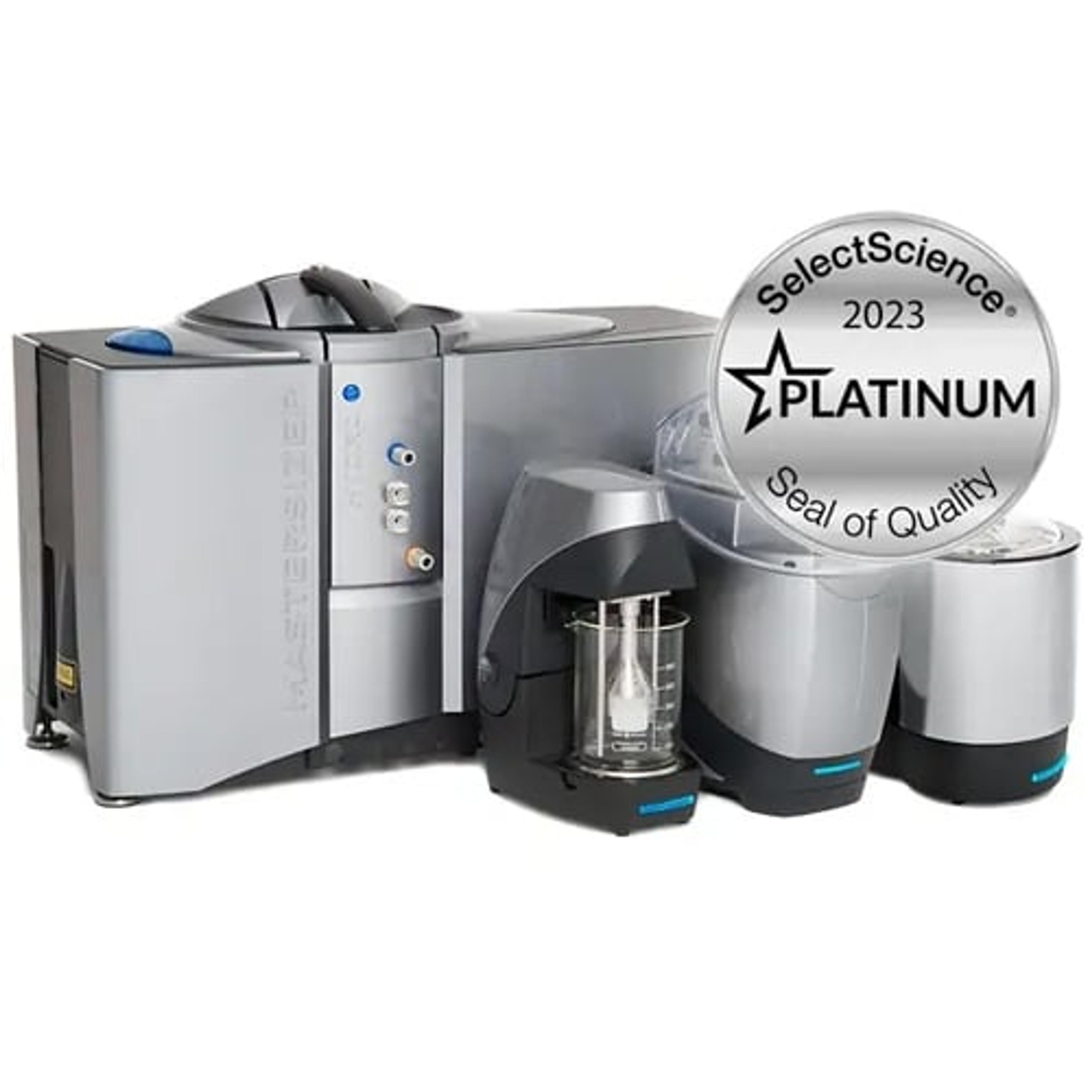
Mastersizer 3000

Malvern Panalytical

World’s most widely used particle size analyzers, the smartest way to measure particle size. There is a newer version of this product avilable, the Mastersizer 3000+ Ultra. 

(245)

Links

Tags

Sample PreparationSample preparation can improve the quality and speed of separation techniques. Products to assist sample preparation include filtration equipment, evaporators, membranes and sieves.Environmental Monitoring and TestingEnvironmental monitoring and testing uses handheld portable analyzers, kits, spectrometers or chromatography systems for air, water, soil, food and other sample testing. Useful features of analyzers such as BOD and COD include portability, easy calibration, automation and sensitivity.  Environmental test kits for pH, water, moisture, etc, should be accurate, sensitive, reliable, fast and easy to use.Particle CharacterizationParticle characterization instruments are used to determine particle size distribution, shape, surface area, zeta potential, density and porosity of particles and materials. Multiple tecchniques are available for determining particle size, shape and count including dynamic light scattering (DLS), laser diffraction, electrozone (Coulter technique), imaging particle analysis and single particle optical sensing. Determine the density of your material with a gas pycnometer or examine its surface area and porosity with gas adsorption analyzers and mercury porosimeters. Find the best particle characterization instruments in our peer-reviewed product directory: compare products, check customer reviews and receive pricing direct from manufacturers.Mechanical TestingMechanical testing explores the elastic and inelastic nature of a material when force is applied. A mechanical test shows whether a material is suitable for its intended application by measuring hardness, tensile strength, elongation, elasticity, and fatigue limit.Non-Destructive TechniquesNon-destructive techniques (NDT) describes a variety of analytical techniques used to evaluate the properties of a material. Common methods include ultrasonic, magnetic-particle, liquid penetrant, radiographic, remote visual inspection (RVI), and eddy-current testing. NDT is regularly used in forensic engineering, civil engineering, mechanical engineering, electrical engineering, systems engineering, aeronautical engineering, and medicine.AutomationAutomation in laboratories and manufacturing processes enhances efficiency, precision, and scalability by reducing the need for manual intervention. It plays a critical role in improving productivity, minimizing human error, and accelerating workflows in fields like diagnostics, drug development, and industrial testing. Automation technologies include robotic systems, automated liquid handlers, and process control systems that streamline complex tasks and ensure consistent, reproducible results. Explore our peer-reviewed product directory to discover the best automation solutions, compare options, read user reviews, and get prices directly from manufacturers.Environmental AnalysisEnvironmental analysis describes a variety of tests that determine the effect of chemicals, processes and particulates such as persistent organic pollutants (POPs) have on the environment.CementCarbon DioxideManufacturingManufacturing is the production of merchandise for use or sale using labor and machines, tools, chemical and biological processing, or formulation.Fuel and Energy