
Implementation of Automated Miniature Bioreactors for Rapid Process Optimization and Development
26 Jan 2016In biopharmaceutical production, there is a great pressure on biotechnology companies to implement new technology that enables higher throughput in development without compromising the quality of research. To address these challenges, automated, miniature, parallel bioreactor systems have been developed to allow high throughput screening and process development for mammalian cell culture. This scientific poster demonstrates the consistent performance of parallel, automated bioreactors and that through good process parameter control these systems can be used to predict larger scale performance early in development.
Related products
Request Quote for All Products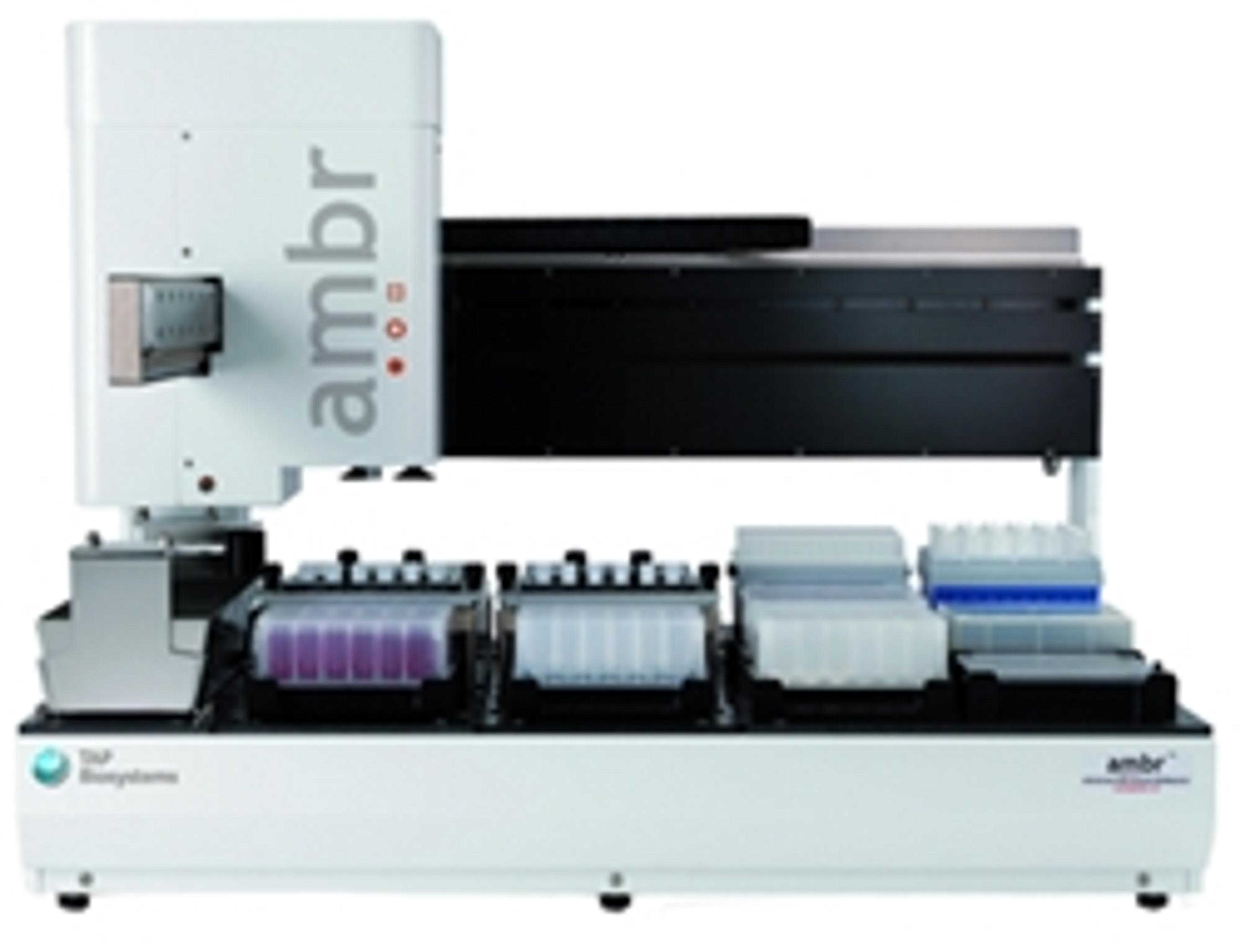
ambr15™ Bioreactor
TAP Biosystemsambr15™ mimics the characteristics of classical bioreactors at microscale (10-15ml), by using cost effective, disposable micro bioreactors, controlled by an automated workstation. ambr15 enables the rapid evaluation of multiple bioreactor cultures at microscale, increasing productivity in cell line development with significant savings on materials and labour. ambr15 is widely used by major Pharma and biologics companies, academic and research institutes as a reliable microscale model for a range of upstream processes.Features & Benefits: A better tool for cell line selection and development - closely mimics the conditions of larger scale bioreactors Simplified adoption of Quality by Design (QbD) principles for cell culture development Significant reduction in cost per experiment More experiments with less operator time for set up and clean down Applications: Cell line selection Process optimisation Media development Media feed strategies QbD and DoE studies Transient Transfection
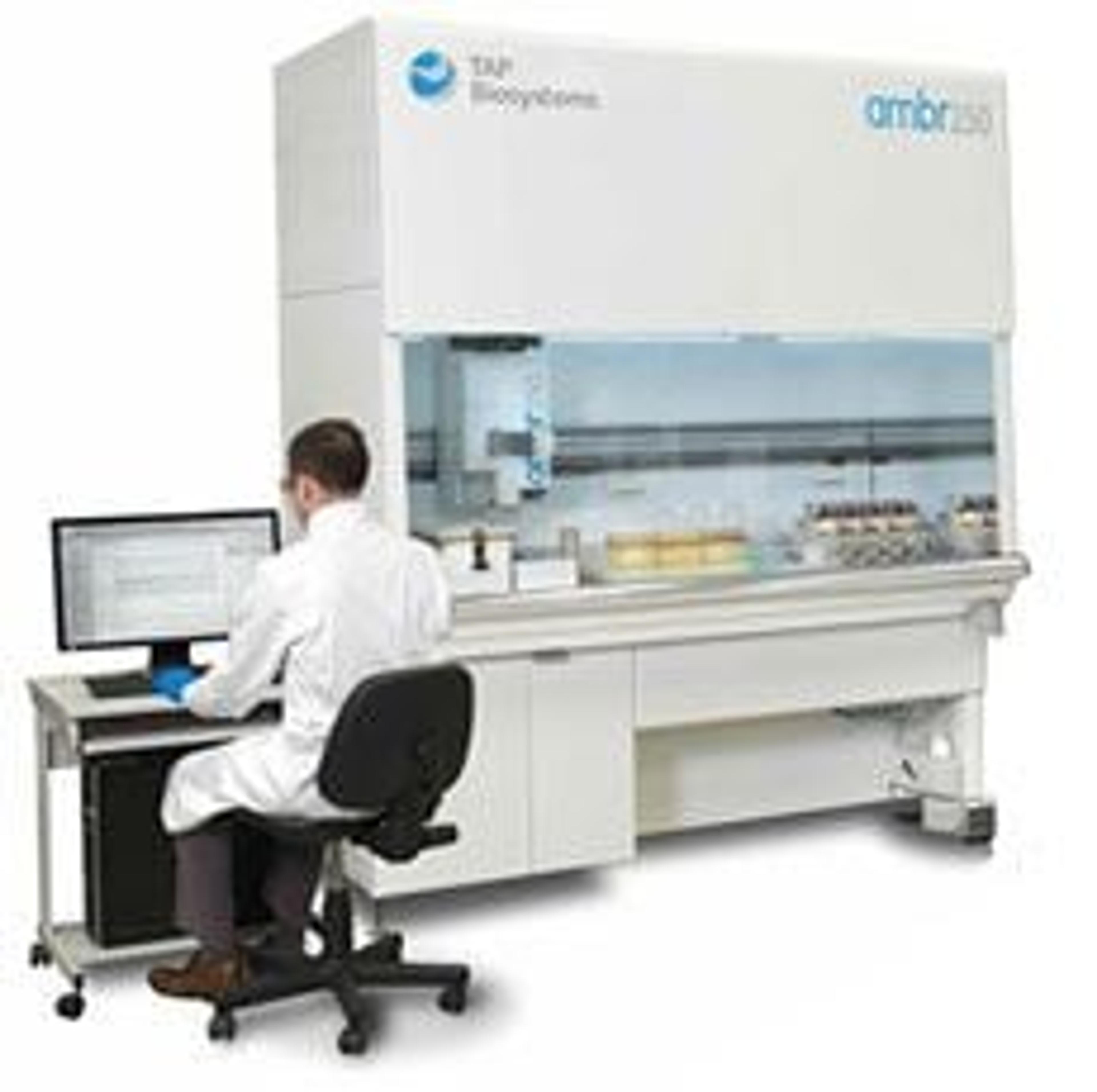
ambr 250 - Bioreactor System
TAP Biosystemsambr 250™ is a new bioreactor system for parallel fermentation using single-use bioreactors controlled by an automated workstation. The new system, developed with two major industrial partners, builds on TAP’s successful microbioreactor technology, adding increased fermentation volumes, as well as individual bioreactor temperature and impeller control. ambr 250 provides an efficient, high throughput scale-down model for process development.New, single use 100-250ml reactor vessels have been developed for use with the system – avoiding the need to clean reactors and sensors between runs. The design includes a novel “easy connect” process enabling all gas, liquid and sensor connections to be made, quickly and simply, for fast turnaround between experiments.ambr 250 - Bioreactor System Benefits: Fully automated system - media fill, inoculation, sampling and feeding Individual control for each bioreactor vessel - temperature, impeller speed, pH and DO Integrated control of multiple bioreactors (12 or 24) A better tool for process development of microbes Rapid evaluation of a wide range of conditions and cell line/strain performance Excellent scalability to large-scale, bench top bioreactors Process development for biopharma and industrial biotech Process robustness experimentation in support of QbD studies Automation of DOE approaches to process automation